Families, attorneys and lawmakers slam ‘cruel’ Rikers visiting process
/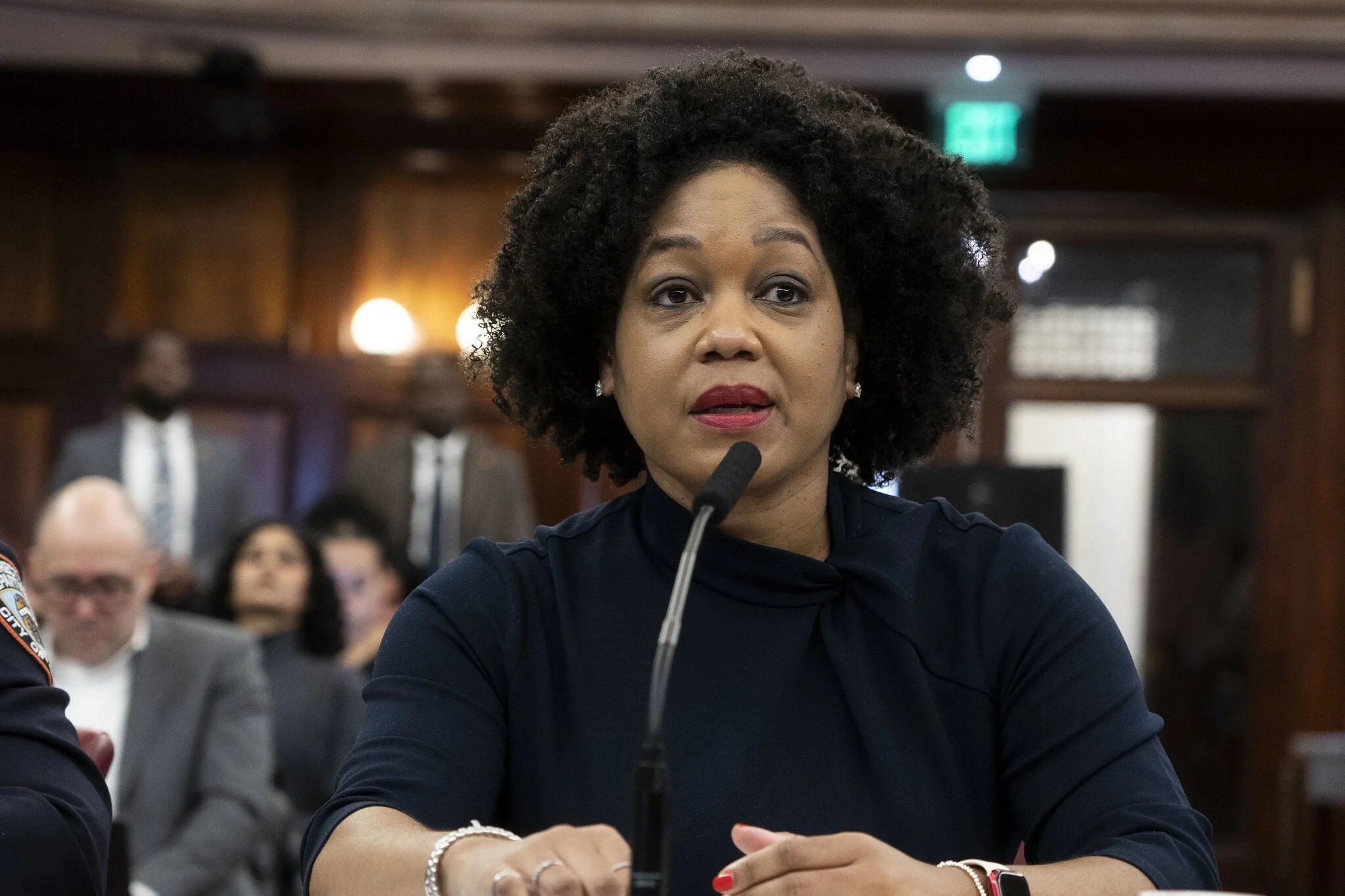
Department of Correction Commissioner Lynelle Maginley-Liddie testifies before the City Council on Wednesday, Dec. 10, 2025. Photo by Gerardo Romo / NYC Council Media Unit
By Jacob Kaye
Attorneys and families of people incarcerated on Rikers Island blasted the Department of Correction on Wednesday for what they described as a cruel, degrading and potentially unconstitutional process for visiting people locked in the dangerous jail complex.
The DOC’s visitation process was heavily scrutinized by people who have had to visit family members or friends in the city’s crumbling jail complex, and by lawyers, who said their ability to represent their clients in court is greatly diminished by the agency’s alleged inability to efficiently connect detainees to visitors.
“The process of visiting a loved one on Rikers Island is not only arduous, but cruel,” said Natalie Fiorenzo, a senior correction specialist at New York County Defender Services. “They're often treated as less than human by the many officers they have to encounter throughout their day, some of whom seem to make up rules as they go, preventing certain visitors or visitees from their precious time together.”
The condemnation came during a City Council hearing on the DOC’s visiting process, which the legislature has been investigating for months.
In a report issued ahead of the Wednesday hearing, the Council found that the troubled agency “subjects visitors to long wait times, appears to routinely violate written regulations, and fails to adequately prepare visitors or staff in a way that would create a more positive visiting process.”
“We should be encouraging healthy connections between the incarcerated and their families, not punishing the people who make the trek to Rikers,” said City Councilmember Gale Brewer, who chairs the legislature’s Committee on Oversight and Investigations.
The families of those currently or previously incarcerated on Rikers said that a trip to have a one-hour visit with their loved ones in the jail complex, connected to the rest of the city by a single bridge in Astoria, can often take up the better part of a day.
While DOC officials said that visits take around four hours on average, others testified on Wednesday that the process could take anywhere from five to seven hours, not including the commute back home. Attorneys similarly testified that legal visits take three to four hours, making it difficult for them to meet with more than one client per day.
In a statement, City Council Speaker Adrienne Adams said those visiting Rikers “too often encounter hurdles and barriers that make their experiences frustrating.”
“Visiting someone at Rikers can be an emotional process, and the Department of Correction should take steps to ensure it is improved,” the speaker said. “Reforms to this process are paramount, and the difficulties described in this investigation only emphasize the need for the next mayoral administration to act with urgency in transitioning to a borough-based system that incorporates them.”
DOC Commissioner Lynelle Maginley-Liddie, who testified before the Council on Wednesday, said that the agency was in the process of overhauling its visitation processes.
“For the first time in decades, the department is making meaningful investments in the visits process and operation,” the commissioner said. “DOC is closely analyzing procedures, data and policies that have contributed to a complex and difficult operation for staff and visitors alike over the years.”
“The work is underway, but it must be thoughtful and intentional – anything short of that will not result in real or sustainable improvements,” she added.
As part of the overhaul, the DOC is in the process of hiring an associate commissioner whose sole responsibility will be to oversee the visitation process. The agency has also recently opened child-friendly learning centers in several jail facilities meant to “reduce some of the unease when visiting within a correctional setting and create opportunities for more meaningful interactions between parents and their children,” Maginley-Liddie said.
But councilmembers, attorneys and families on Wednesday said that despite the commitment from the agency, change should have come far sooner.
Julia Tedesco, an attorney at New York County Defender Services, said that she encountered serious troubles meeting with her client as recently as last month.
At the start of November, Tedesco said that she went to Rikers to meet with a client only to be told by an officer that her client was refusing to meet with her. She was given a document, purportedly signed by her client, stating as much, she testified on Wednesday.
A week later, Tedesco returned to Rikers to meet with the same client. She was again told that they did not want to meet with her and that the refusal had been documented on a body-worn camera.
But after running her request to meet with her client up the chain, the story began to change.
“Magically, 30 minutes later, I was informed that my client was no longer refusing,” Tedesco said. “When we spoke, he told me unequivocally that he never refused a visit that morning.”
Tedesco’s client also allegedly told her that he had never signed a refusal slip. When Tedesco compared a signature she had gotten from her client to the one on the slip she was given, she found that it appeared to be forged.
“The persistent denial of counsel access through fabricated refusals is a direct violation of the Sixth Amendment right to counsel,” Tedesco said. “This is not a clerical error or misunderstanding – it is a deliberate obstruction.”
“My client's experience makes clear that at Rikers Island, constitutional rights are not just neglected, they are actively obstructed,” she added. “This deliberate interference must end.”
In response to complaints from attorneys, Maginley-Liddie said that many of the issues stem from “dated procedures, the physical constraints of older buildings, or the operational demands of safely moving people throughout the complex.”
“But we remain committed to addressing them,” she said. “Visits of all kinds create immediate positive impacts on the well being of people in our care and are closely connected to improved behavior, stronger family bonds, speedier case processing and better outcomes upon release.”