Mamdani expands transition, appoints 400 New Yorkers to 17 committees
/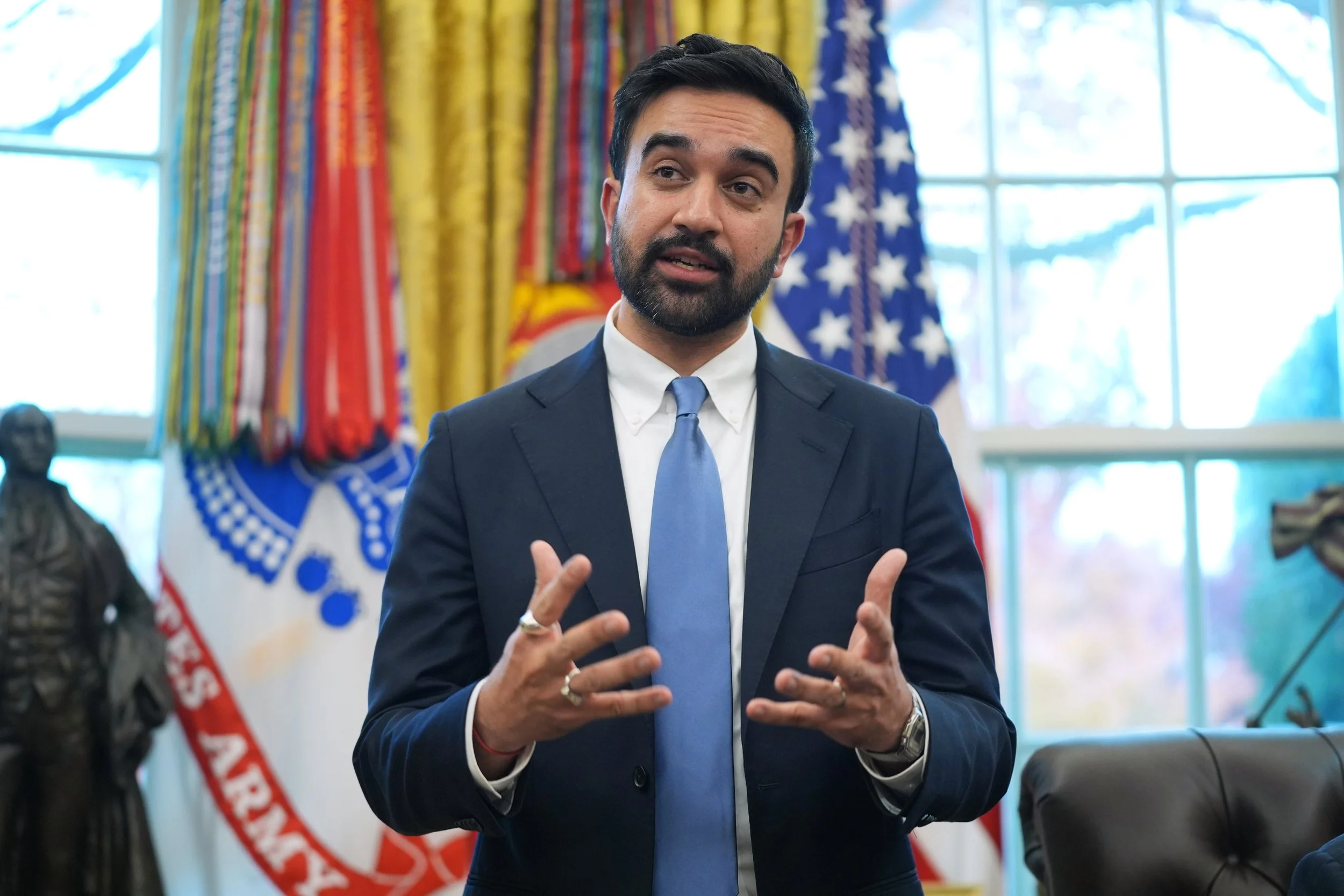
Mayor-elect Zohran Mamdani announced an expanded transition with 17 committees on Monday. AP file photo by Evan Vucci
By Ryan Schwach
Mayor-elect Zohran Mamdani greatly expanded the breadth of his transition team on Monday as he prepares to take office in January.
On Monday, the mayor-elect announced the creation of 17 committees that will make up his transition, and over 400 New Yorkers that will serve those committees.
The teams include a wide-reaching set of longtime civil servants, as well as grassroots organizers who helped Mamdani during his campaign. Many of those appointed to the transition have connections to Queens.
“New Yorkers have given us a mandate to deliver the change that has so often been denied in this city,” Mamdani said. “A change to make this a city that each and every person can afford, and we will now seize that opportunity with both hands to create a transition that will be defined by the same thing as our administration, excellence.”
The 17 committees, which pertain to issues including transportation, immigration and community safety, also include new committees that did not exist under previous transitions, including the committees for worker justice and community organizing.
“These are two critical parts of what it means to be a New Yorker,” Mamdani said.
The committees will report to the directors of Mamdani’s transition, Lina Khan, Grace Bonilla, Maria Torres-Springer and Melanie Hartzog.
They will advise not just on personnel decisions as Mamdani staffs his City Hall, but also on policy, according to the mayor-elect.
“Their recommendations, their analysis, their discussion, will be filtered through the co-chairs into the discussions that we take in making the decisions of who we hire and how we create the City Hall,” Mamdani said.
Among the over 400 New Yorkers listed within the committees are several well known names in New York City politics and many with connections to Queens.
The mayor-elect spoke alongside some of the transition committee members on Monday afternoon, including Annmarie Gray, who leads the pro-housing group Open New York, which many see as a signal of Mamdani’s housing goals.
“I joined this committee because [Mamdani] is committed to the all of the above approach to the housing crisis that we know New York City needs, one that protects current tenants while also building the homes future families need,” said Gray.
Other longtime public servants included among the transition teams; Kathy Wylde, the outgoing leader of the Partnership for NY. Former FDNY Commissioner Laura Kavanagh, former Council Speaker Christine Quinn, Deputy Mayor Meera Joshi, former Correction Commissioner Vincent Schiraldi and CUNY Chancellor Felix Matos Rodriguez are also members of the transition.
The transition committees also include a handful of Legal Aid Society employees, including CEO Twyla Carter.
“I am honored to serve on Mayor-elect Mamdani’s transition team, where I look forward to working alongside the other Legal Affairs Committee members to deliver lasting, positive change for the New Yorkers we all serve,” said Carter. “It is imperative that the incoming Mamdani Administration continues to advocate on behalf of the most vulnerable New Yorkers to ensure all those who call this city home have access to an inclusive, affordable, and equitable city.”
From Queens, there’s Dennis Walcott, the CEO of Queens Public Library and former schools chancellor, who was named to the committee on arts & culture, as was Hal Rosenbluth, the president of Kaufman Astoria studios.
Catie Firman of the Astoria Food Pantry will serve on the newly formed committee for community organizing, as will Jagpreet Singh from Queens-based organization DRUM Beats.
Southeast Queens organizers named to the transition include Mohamed Q. Amin from the Caribbean Equality Project and Felicia Singh from the Coalition for Asian American Children and Families.
Mamdani said on Monday it was important that his transition include New Yorkers with a long resume of high-level government service and those whose work has been more on the local level.
“I think it's a key part of a hunger for change, a hunger for a new kind of politics,” he said. “That's also, however, a hunger that can be had by those who've served in our politics before.”