Heavy traffic and crashes abound around Queens’ 19 last mile warehouses, report finds
/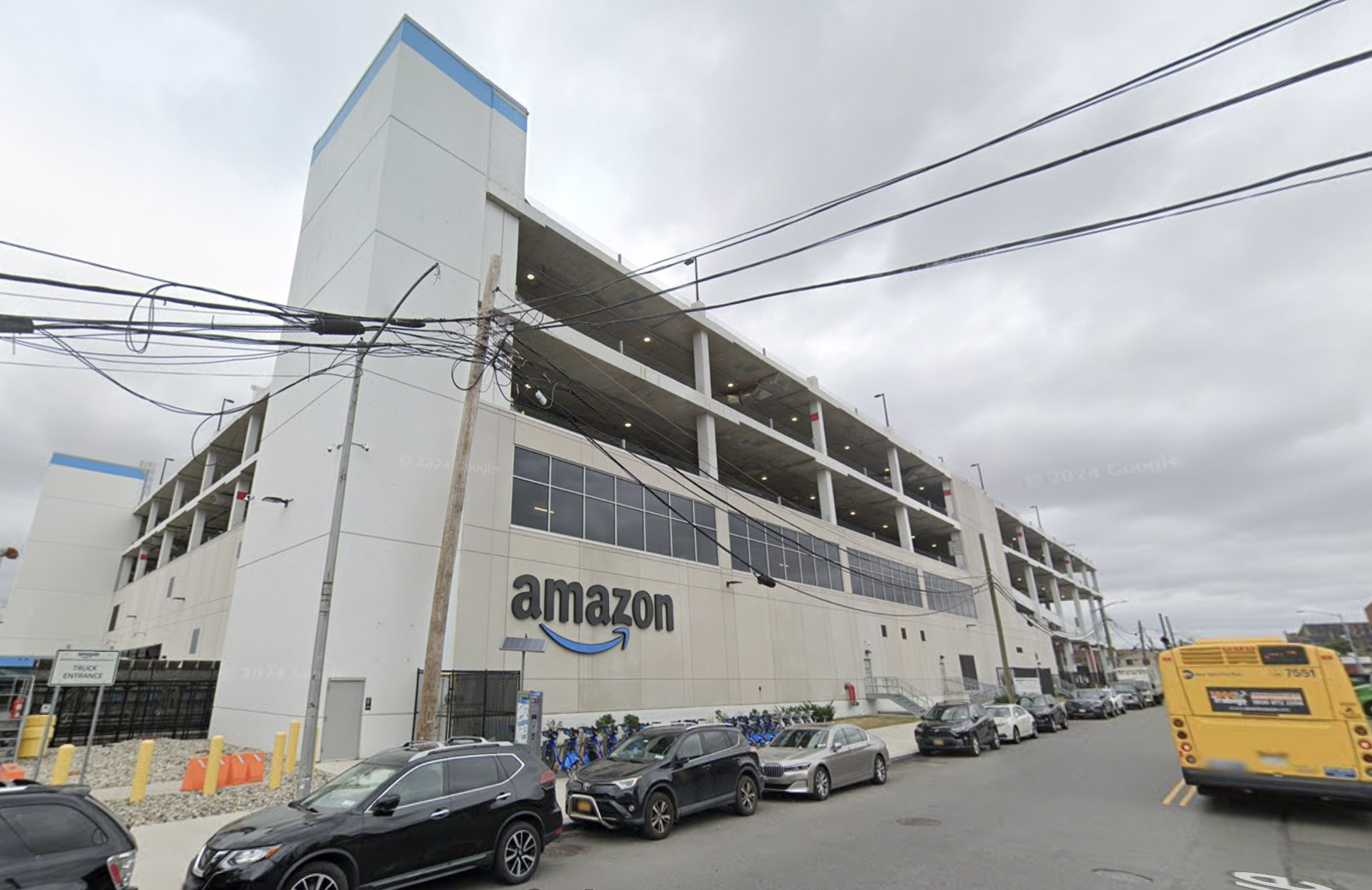
The Amazon DBK4 facility in Maspeth is one of the last mile delivery warehouses cited in a new comptroller report. Screenshot via Google Maps
By Ryan Schwach
Areas around Queens’ nearly 20 last mile warehouses are prone to worse traffic, more crashes and persistent worker safety issues, a new report from the city’s comptroller says.
According to the new report from outgoing Comptroller Brad Lander, last mile warehouses, which supplement the delivery efforts of major companies like Amazon and FedEx, are often connected with various dangerous conditions in the communities where they are built.
Construction of the warehouses have boomed in recent years, and there are currently 19 in Queens and several across the city.
“While they generate a lot of economic activity and there's the opportunity for good jobs and convenience, when we dug in, what we saw is a real significant increase in worker safety hazards, climate hazards and in traffic crashes,” Lander said in front of City Hall last week.
Data analyzed by the comptroller’s office found that in areas where the facilities were opened, injury-causing car crashes went up 78 percent.
In Maspeth, crashes near warehouses operated by FedEx and Amazon rose by 53 percent and 48 percent respectively.
The number of crashes rose in the vicinity of six of Queens’ eight newest facilities after they were opened.
The report also found that the vast majority of the warehouses are in communities that already struggle with environmental issues, which are not aided by an increase in emissions from the warehouses and delivery vehicles.
Lander’s report makes the case that the facilities are not properly regulated, and that worker injuries are common.
Companies like Amazon staff much of the delivery work in the warehouses to third-party “Delivery Service Partners,” who wear Amazon uniforms and often drive trucks with the company’s logo, but are not given many of the same benefits and protections as full-time workers.
“We are here today to demand and win some change so these jobs won't be dangerous, and so they don't harm the native communities there,” said Lander.
Queens Councilmember Tiffany Cabán has a bill – called the Delivery Protection Act – before the Council that would ban the use of third-party delivery drivers, which she says shields the company from any responsibility over the drivers’ employment or injury risks.
“The comptroller's office delivered us deeply unsettling information about the risks that last mile warehouses and delivery operations pose to our city and our neighbors,” Cabán said Monday.
All but one of Queens’ facilities reported injuries in 2024.
Last year, workers at the Amazon DBK4 warehouse in Queens unionized with the Teamsters, and earlier this summer 100 recently unionized workers lost their jobs when Amazon severed a contract with a third-party company that employed the drivers.
“Amazon’s dangerous business model puts workers in harm’s way to maximize profits,” said Brendan Radtke, an Amazon driver from the DBK4 facility in a statement from the union. “The comptroller’s research reveals the dangerous practices that Amazon workers experience every day. Our communities are suffering because of the greed of this $2 trillion company. It’s time to end Amazon’s stranglehold on New York City by passing the Delivery Protection Act.”
Cabán said that while the bill pertains to all last-mile delivery service partners in the city, Amazon is the “best and biggest example” of the issues.
“We're delivering safety to every person who sets foot on the streets of New York and deserves to be able to walk, drive or bike from point A to point B safely,” she said. “We are delivering job security and workplace safety to the essential workers who make our city run and provide convenience and accessibility to us all.”
Amazon has pushed back on the lawmakers’ assertions about DSP services and their treatment of workers, and also took issue with Lander’s report on Monday.
"This report uses incomplete data and methods that seem designed to reach conclusions determined from the start,” an Amazon spokesperson said. “Safety is and will always be our top priority, and we're committed to setting the benchmark for safety excellence across the industries where we work. While our work isn't done, our metrics demonstrate meaningful safety improvements, reflecting our ongoing commitment to investing in advanced safety measures that protect our workforce and the communities where we operate.”
“Additionally, all of our facilities are located in areas zoned for industrial or commercial activity by the city and operate in full compliance with city laws and regulations,” the statement continued. “We hold both Amazon and our partners to high safety standards and continue to invest in safety enhancements and innovations.”
Cabán’s bill recently obtained a veto-proof supermajority of co-sponsers within the Council.
“The Delivery Protection Act is backed by an unbreakable coalition,” the Astoria lawmaker said. “We have the support of a bipartisan supermajority of the Council, with 37 Council co-sponsors, and the backing of our friends in street safety, labor, and environmental protection. With the Delivery Protection Act, we are delivering dignity to every worker who gets packages from the warehouse to our doors.”
Lander’s report cites Cabán’s bill as the number one recommendation in solving the issues, as well as scaling up regulation and government oversight.
UPS and FedEX, which also operate facilities in Queens, did not respond to a request for comment.