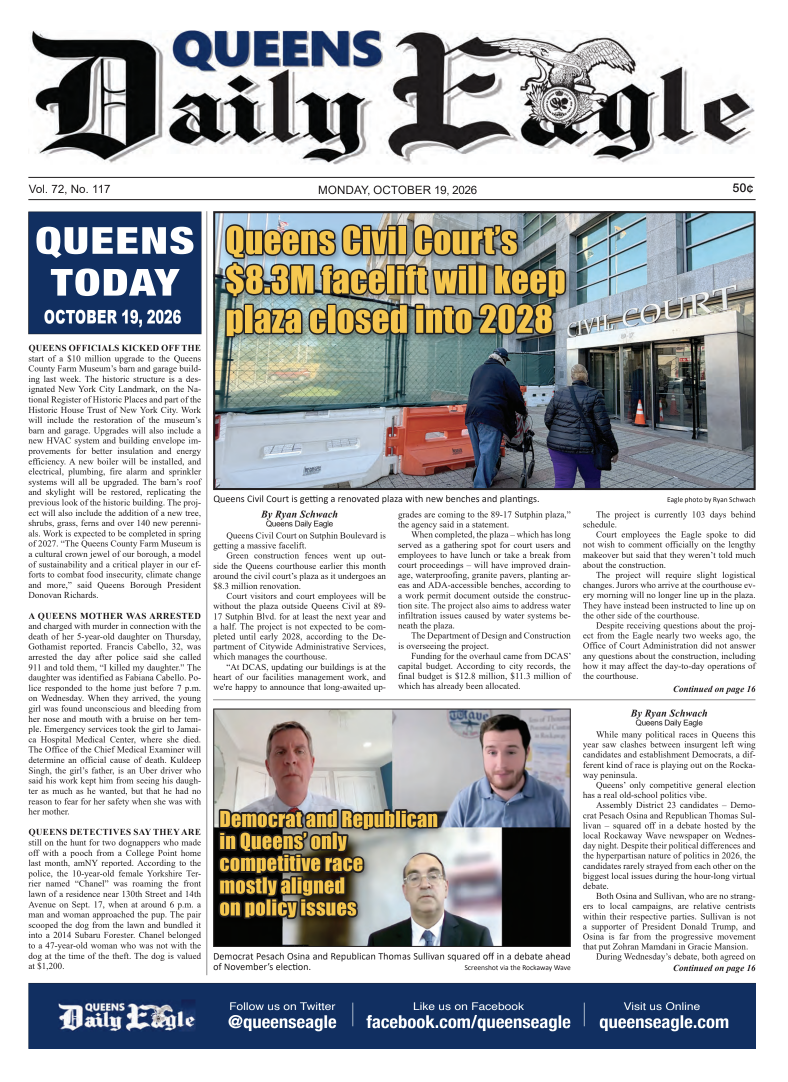
Councils slams city over overcrowding at youth detention centers
/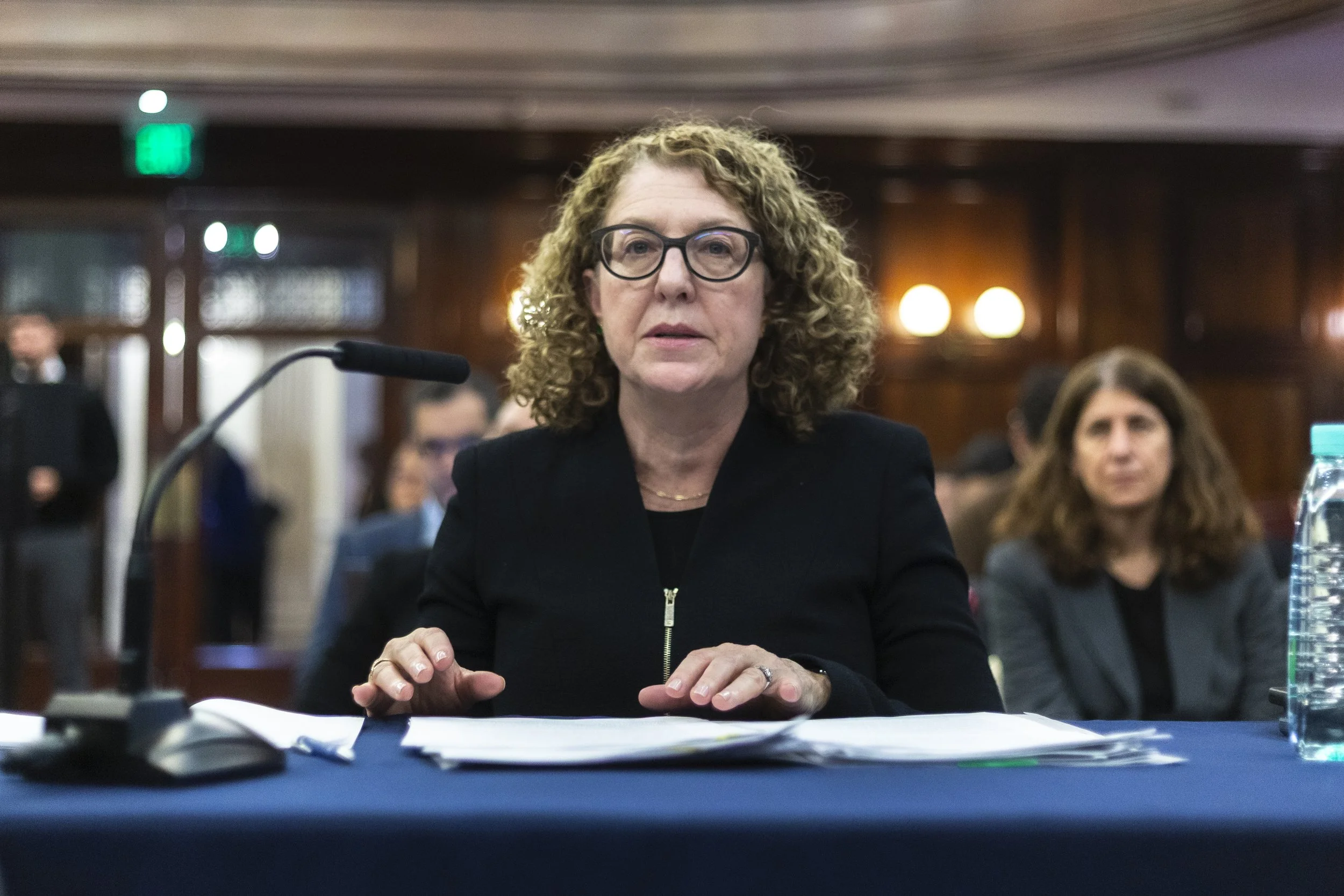
Deputy Commissioner Nancy Ginsburg for the Division of Youth and Family Justice Administration for Children’s Services answered City Council questions on Monday.Photo by Emil Cohen/NYC Council Media Unit
By Noah Powelson
Leadership for the city’s two juvenile detention centers faced heavy scrutiny by the City Council during an oversight hearing on Monday after recent reports found that children under their supervision were without bedrooms and missing classes.
The City Council Committees on Children and Youth and Education held a joint oversight hearing on Monday, demanding answers from the city’s Administration for Children’s Services about what the agency is doing to meet the educational needs for youth charged with a crime. While ACS provided some reported data indicating improvement, the effectiveness of ACS to get juveniles in their care to the classroom still remains in question.
Chief among the concerns of the committees were how often youth missed class and how often they were unable to sleep in a bedroom at either the Crossroads Juvenile Center in Brooklyn and Horizon Juvenile Center in The Bronx.
Nancy Ginsburg, deputy commissioner for the Division of Youth and Family Justice at the ACS, said that as of this current school year going back until September, 17 percent of school days saw at least some students under ACS care miss school.
Last summer saw a particularly higher uptick in detained youth, according to ACS, resulting in dozens of children having to sleep in rooms other than bedrooms. While ACS indicated the situation has improved in recent months, there are still at least 10 teens having to sleep in repurposed classrooms while at one of the juvenile detention facilities.
“We have more young people than we have bedroom capacity in these facilities,” Ginsburg said. “Safety is our most important priority in the facilities, and there are young people who cannot safely be integrated into a residential hall because of community conflict or a conflict that has occurred on the facilities.”
Regardless, Ginsburg said that the current number of youths who sleep in classrooms is much lower than indicated by outside reports, which claim as many as 100 children were put in repurposed classrooms at night.
Ginsburg said that as of the week of Nov. 10 to the 16, there were 11 people sleeping in classrooms instead of bedrooms, seven of which were of non-compulsory age. The week before, there were 16.
But when the committee asked for the number of times classrooms were repurposed as sleeping areas, how often classes had been disrupted because classrooms were repurposed or how many youths in their supervision were enrolled at the time, ACS said they did not track that data.
“Enrollment is complicated in detention because the numbers are constantly changing,” Ginsburg said. “Young people come into detention, and they leave detention based on their court case.”
Ginsburg said they also do not track the number of instruction days that were disrupted because of lockdowns, but that was because it is extremely rare for a situation to be severe enough to warrant a lockdown of an entire facility.
For the chair of the Committee on Children and Youth, Councilmember Althea Stevens, the lack of data made it frustrating to determine the reality of the situation compared to the anecdotal evidence making the headlines.
“I just like to make sure we have that basis, because to not have the data means that you just don't want to share,” Stevens said. “And to me, that's not really acceptable…Those numbers are important for us to know so that we can keep track, to be able to monitor it.”
ACS came under fire this past year after a series of reports from the Legal Aid Society and the city’s comptroller’s office had indicated absenteeism was significant among all ages at ACS facilities.
A 2025 comptroller report stated both facilities exhibited chronic absenteeism levels across all educational programs and ages, ranging from 13-73 percent days absent. ACS said on Monday the data was not reflective of the current situation, because it examines the period of 2018 to 2023 during the COVID-19 pandemic when the Department of Correction was administering one of the centers.
In a statement released before the City Council meeting on Monday, LAS said that the current juvenile detention system disproportionately impacts students of color and those with physical or mental disabilities.
According to LAS, out of the 824 youth who were enrolled at Passages Academy in the 2024-
2025 school year, 61.4 percent had a documented disability.
“Youth in New York City’s juvenile detention and placement facilities, many of whom are disproportionately Black and brown, living in poverty, and overwhelmingly students with disabilities, are being systematically denied access to the education they are legally entitled to receive,” Melinda Andra, the attorney-in-charge of the Education Advocacy Project at The Legal Aid Society said in a statement. “The city is failing in its most basic obligation to provide these young people with not only consistent access to school, but appropriate special education services and meaningful transition supports when they return to their communities.”