
Judge tosses Queens-led City of Yes lawsuit
/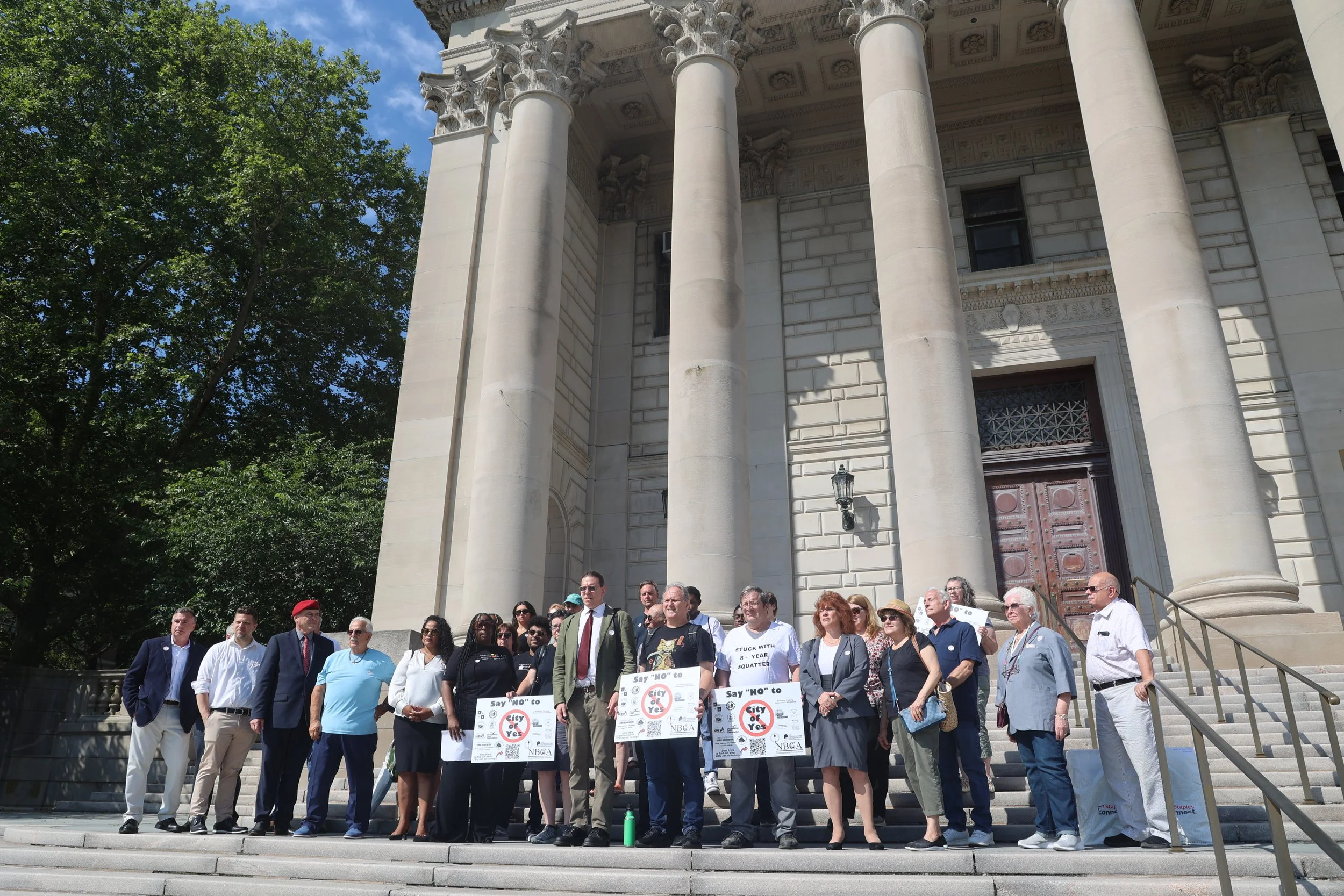
A judge tossed out a Queens-led lawsuit against the City of Yes on Wednesday. Eagle file photo by Ryan Schwach
By Ryan Schwach
A Staten Island judge threw out the Queens-resident led lawsuit against the city’s wide-reaching rezoning plan to address the housing crisis on Wednesday.
Staten Island Supreme Court Judge Lizette Colon tossed the suit against the Adams administration's City of Yes, arguing the city upheld the law when creating and pushing the major rezoning initiative.
The suit was led by community groups and elected officials from across the city, including several Queens civic groups and the borough’s three conservative City Council members.
The groups argued that the city, by way of the Department of City Planning, City Hall and the City Council, defied environmental law when it did not adequately review the potential environmental impact of the City of Yes.
Colon disagreed.
“It is not the place of the court to second-guess policy decisions, nor interject policy opinions,” Colon wrote in her 21-page ruling issued on Wednesday evening. “The court is merely here to confirm that respondents fulfilled their environmental review obligations under state and city law. To that extent, the court finds that the actions of respondent in creating the Final Environmental Impact Statement are not affected by an error of law and are not arbitrary, capricious or an abuse of discretion.”
While saying the court’s role was not to inject policy opinions, Colon stated in her ruling that the City of Yes for Housing Opportunity, the third prong of the wider COY initiative intended to rezone large portions of the city to encourage housing, “addresses an issue of significant concern within New York City, housing generation and preservation.”
“The balancing of the desire to create increased housing with the concerns of the stakeholders in various communities throughout New York City is a significant policy issue,” she said.
City Hall and housing advocates celebrated the ruling on Wednesday.
“Today’s ruling is another critical victory in the fight for affordable housing in New York City,” said City Hall spokesperson Daniel Marans. “This decision upholding ‘City of Yes’ in the face of a bogus challenge clears the way for New Yorkers to benefit from these long-overdue changes in the years ahead. In total, the Adams administration has planned, preserved, or created over 433,250 homes, because making housing more affordable for working New Yorkers has been our top priority. Efforts by NIMBY opponents to stop City of Yes in the courts have died.”
Andrew Fine, the chief of staff for housing advocacy group Open New York, said the ruling builds upon the passing of the election’s housing-focusing ballot propositions.
“This victory caps a landmark week for ending the housing shortage in New York City,” said Fine. “Last Tuesday, the electorate said overwhelmingly: there is no appetite for this kind of NIMBYism. Republican NIMBYs cannot and will not deny New Yorkers the affordable city we deserve.”
The anti-COY coalition, which included Queens Councilmembers Joann Ariola, Bob Holden and Vickie Paladino, as well as Queens Civic Congress President Warren Schreiber, claimed the rezoning would prove to be an apocalyptic scenario for the city’s suburban-esque communities, like those in parts of Eastern, Central and Southern Queens.
In their case against the city, which they brought in Staten Island in July, their lawyer Jack Lester argued that the city failed in its environmental review to list the ways it would address environmental issues should they arise.
“There is no mitigation,” Lester, a prominent lawyer who also represented New Jersey in its case against congestion pricing, said in court. “They fail to offer mitigation in any effect…there has to be some explanation as to why.”
The city’s lawyers argued that it “didn’t make sense,” for the city to lay out those measures because the broad, citywide nature of the rezoning plan makes it so the city doesn’t actually know specifically what the actual housing created under the plan will look like.
In the environmental impact study for the City of Yes, the city listed out several “potential adverse effects” to city life such as open space, school seats, transportation and shadows created by buildings.
In her ruling, Colon determined that was enough to stand up to muster.

The City of Yes, a wide-reaching initiative from the Adams administration meant to encourage housing construction, was held up by a Staten Island judge on Wednesday.
File photo via Mayoral Photography Unit
“Through the ULURP process, numerous entities and individuals, including many of the petitioners herein, voiced their opinions, with some even participating in the decision making in their capacities as councilmembers,” she said in her ruling. “To that extent, the ULURP process functioned as intended and created a voluminous and diverse record.”
Lester and Queens city planner Paul Graziano, one of the loudest opponents of COY and a key proponent of the lawsuit, disagreed with Colon’s read on the law in her decision.
“It is very interesting because the judge’s decision, it’s like she’s responding to a different lawsuit,” Graziano told the Eagle in a phone conversation.
Graziano said that he and Lester believe Colon misread the law when making her decision.
“The court excused the lack of mitigation of adverse environmental consequences by saying it was citywide,” Lester said. “This misconstrues the law in that there must be a reasoned elaboration of why no mitigation is provided. In other words some full articulated reasoning - which the city failed to provide.”
“Without mitigation, why have an environmental review?” he added.
The petitioners in the suit had filed the case in Staten Island, hoping for a more friendly reception in the conservative-leaning Richmond County courts.
Graziano and Lester said they intend to appeal, and that their view that Colon misread the law would make it “easy for us to overturn at the Appellate Division.”
“We can’t predict what any court will do, but we can hope that an accurate read of the law would lead to a reversal,” Lester said.
Ariola, the council’s minority leader who is a plaintiff in the lawsuit, criticized Colon’s ruling in a statement to the Eagle.
“I think this was a very poor decision by the judge,” she said. “That said, we are still weighing our options, and we are in discussions with our attorneys regarding the best path forward. City of Yes will destroy this city, and we will continue to fight against it in any way we can.”