Judge freezes city’s deal with Citi Field casino bidders amid USTA suit
/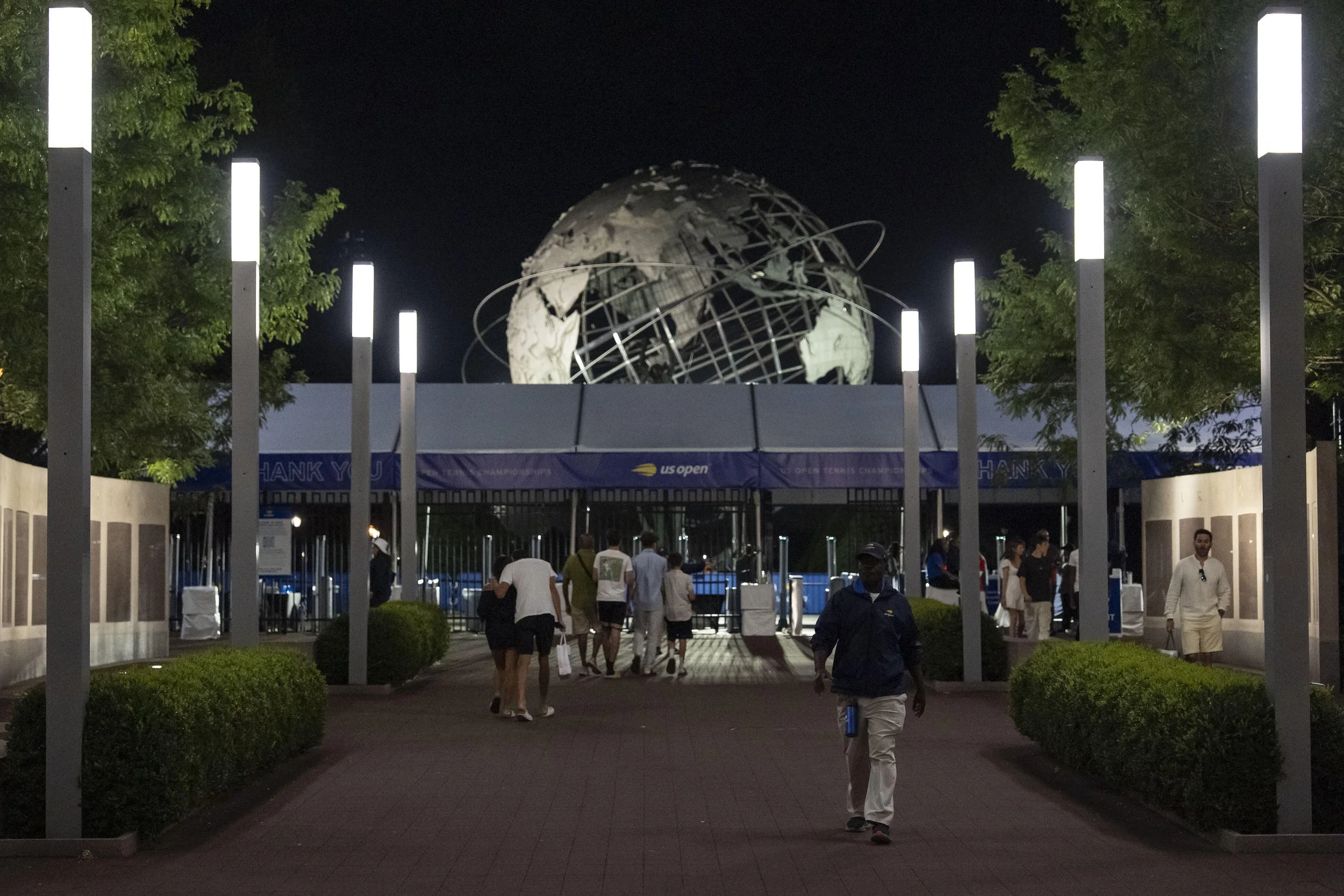
The United States Tennis Association sued the city this week, claiming it violated their lease agreement in an effort to help Steve Cohen win a casino license. AP file photo by Yuki Iwamura
By Jacob Kaye
A judge on Friday ordered the city to temporarily refrain from entering into a new agreement over use of Citi Field’s parking lot with Steve Cohen, potentially torpedoing the Mets owner’s bid to bring a casino to Queens.
Manhattan Supreme Court Justice Nancy Bannon granted the temporary restraining owner to the United States Tennis Association, which claimed in a lawsuit filed earlier this week that the Adams administration violated the terms of its lease agreement in order to help Cohen win his $8 billion bid to bring a casino to Citi Field’s parking lot – Cohen and his partners, Hard Rock, who together call themselves Queens Future, have dubbed the project Metropolitan Park.
The USTA, which owns and operates the tennis complex that every year hosts the U.S. Open in Flushing Meadows Corona Park, said that a “superiority clause” granting them first dibs during the U.S. Open on Citi Field’s lot, which is owned by the city and is also leased to the Mets, was violated earlier this year. More importantly, the USTA said the clause stands to be violated again as the city finalizes a new lease with Metropolitan Park, which is expected to be awarded one of three downstate casino licenses to be handed out by the state in the coming weeks.
Metropolitan Park was not named as a defendant in the lawsuit.
The suit was filed in State Supreme Court in Manhattan days before the city and Cohen were expected to sign off on the new agreement over the land, which the USTA had no hand in negotiating, according to the filing. The new agreement, which has not been shared publicly, was expected to be finalized on Monday before the judge ordered the city not to enter into an agreement “pertaining to Metropolitan Park unless and until the city establishes that such agreements comply with [the USTA’s] rights.”
In their June application to the state’s Gaming Commission, Metropolitan Park said that they would have a “negotiated binding agreement to control property no later than November 17, 2025 and a signed agreement before December 31, 2025.”
It’s unclear how or if the delay to the agreement may affect Metropolitan Park’s chances of getting a license.
Karl Rickett, a spokesperson for Metropolitan Park, said that they “disagree with the opinion and are reviewing our options.”
The USTA did not respond to request for comment.
In their lawsuit, the USTA, which has leased parts of Flushing Meadows Corona Park from the city for over four decades, said the “city never consulted the [USTA] while negotiating its lease agreement with Queens Future and has refused to acknowledge it must include the superiority clause in its agreements with Queens Future.”
“For more than a year and on repeated occasions, the [USTA] has cautioned the city that any agreement it reaches with Queens Future for the proposed development of Metropolitan Park must respect and comply with the [USTA’s] longstanding lease rights,” the lawsuit continued. “The city has ignored that cautionary reminder.”
According to the lawsuit, the USTA had asked the city a number of times over the past five months to share a copy of the draft agreement with them so that they could see if the superiority clause was included, but the city has “refused.”
“The threat of serious damage to the US Open and the [USTA] is now both real and potentially disastrous, caused by the City’s non-compliance with core lease provisions upon which the US Open’s success depends,” the suit reads.
The USTA said the city has already shown it’s unwilling to enforce the current superiority clause. A Billy Joel concert was scheduled earlier this year for Aug. 21, the last day of the first week of the U.S. Open. Although Joel cancelled the concert because of an illness, the city did little to prevent the alleged violation of the agreement.
A spokesperson for the city’s Law Department declined to comment and directed the Eagle to the mayor’s office.
A spokesperson for the mayor’s office said the city was “reviewing the lawsuit.”
The dispute largely centers around the tennis association’s use of the lot during the U.S. Open, the Grand Slam tennis tournament that drew over 1.1 million people to Queens earlier this year. The lease between the city and the tennis association, which was most recently amended in 2013, states that the city cannot allow any “use of any portion of the park for the conduct of an event which would materially, adversely affect the U.S. Open or which would prevent the use of parking spaces otherwise available for U.S. Open patrons in the Citi Field lots.”
But Metropolitan Park, the massive yet-to-be-approved casino and entertainment complex planned for the lot, threatens to throw the agreement into uncertainty.
Cohen and Hard Rock have proposed building the casino, a new hotel, parking garages, a convention center, a live music venue, a food hall and scattered green space on the 50-acre lot.
While the proposal was once one of nearly a dozen competing for one of the three coveted casino licenses, its opponents have nearly all been whittled away. Only three bidders remain in competition for the licenses, including Metropolitan Park and Resorts World New York City, the racino that has been operating in South Queens for a decade and that is now looking to expand to a full-scale casino.
Metropolitan Park asked a judge on Thursday if they could submit opposition filings to the USTA’s claims.
They also said that granting the USTA a temporary restraining order would “cause irreparable harm to Queens Future’s interests and strike a devastating blow to the economic development of Queens County, the State of New York, the Metropolitan Transit Authority, and the broader community of New York City.”
In their filing, Metropolitan Park threatened to counter-sue the USTA for “potentially causing billions of dollars in harm to Queens Future, not to mention the entire city and community.”
This isn’t the first time a dispute over the parking lot has threatened to kill Metropolitan Park.
Because the lot is technically designated as parkland, Cohen had to lobby the state legislature to pass a “parkland alienation” bill to allow them to build a casino on it. But local State Senator Jessica Ramos didn’t play ball, declining to introduce the bill after holding a series of town halls on the proposal.
For months, it was unclear how the project would proceed until State Senator John Liu, whose district includes a small part of the proposed project, introduced the bill on Cohen’s behalf.