
Council passes major LIC rezoning after having powers curtailed
/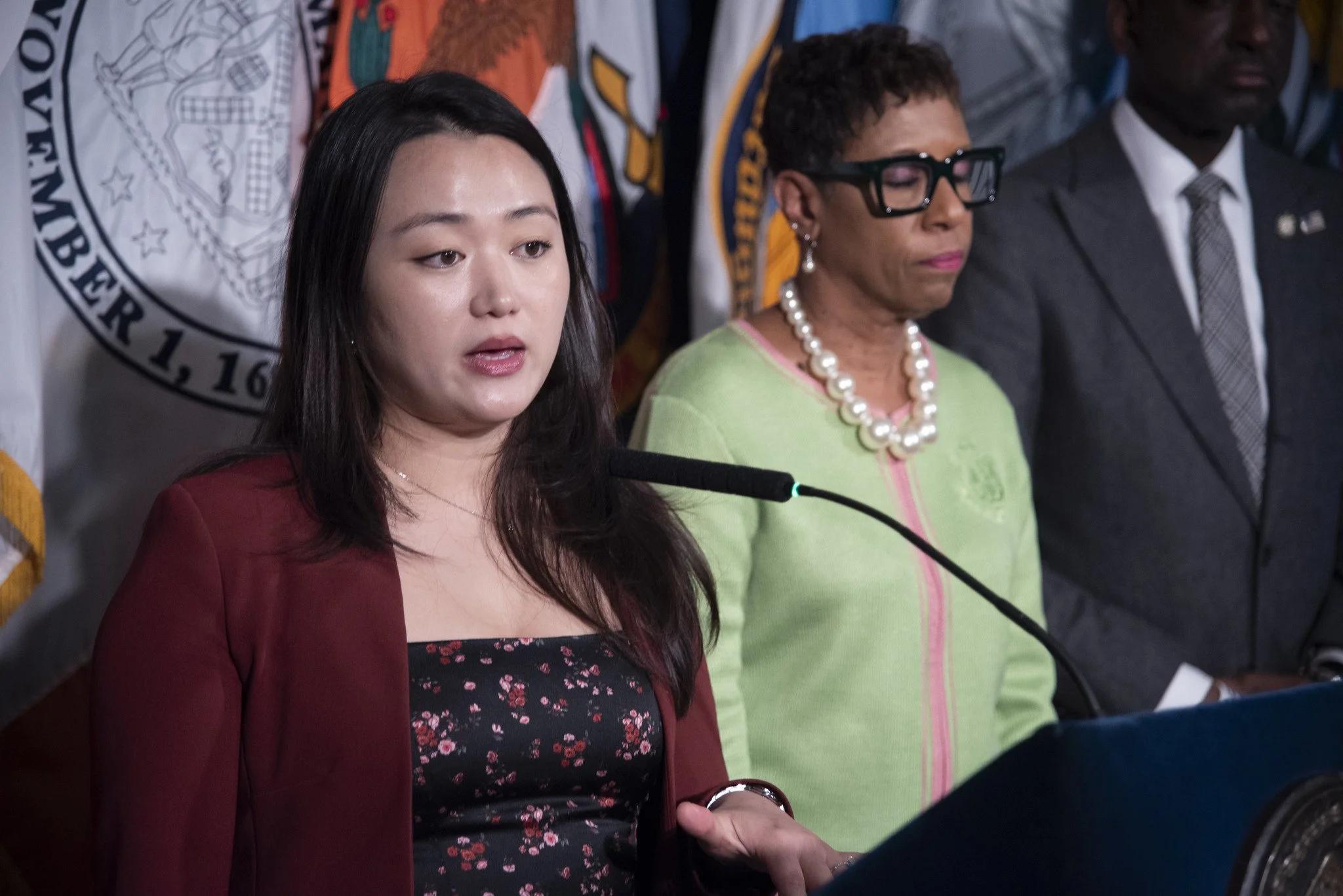
The City Council voted to approve the OneLIC rezoning on Wednesday, which was backed by City Councilmember Julie Won. John McCarten/NYC Council Media Unit
By Ryan Schwach
The city’s OneLIC neighborhood plan received unanimous final approval from the City Council on Wednesday in a vote that comes as the city at large turns pages on a mayoral administration and on how housing will be built in Queens and beyond.
With their unanimous approval of OneLIC, the Council cleared the way for the massive rezoning of 54-blocks of the Western Queens neighborhood with hopes of bringing around 15,000 new homes to LIC’s streets.
The vote, however, could be one of the last times the City Council gets final approval on a major land use proposal after New Yorkers voted to strip the Council of final authority over affordable housing zoning changes at the ballot box last week.
OneLIC’s approval is also one of the last major wins for Mayor Eric Adams, who has staked his legacy on building more housing in the city through major rezonings, including a similar one planned for Jamaica passed by the Council a couple of weeks ago.
The city claims the OneLIC plan will encourage the private construction of 14,700 new housing units, including approximately 4,350 affordable units, in Long Island City, one of the city’s fastest growing neighborhoods.
During 11th hour negotiations ahead of an October committee vote, local Councilmember Julie Won also secured $1.97 billion in investments for LIC and Astoria, as well as commitments on affordable housing, open space and a connected waterfront which Won had said were pivotal to her approval of the project.
The goal of OneLIC was to facilitate affordable development in a neighborhood that has, in recent decades, been bombarded with luxury developments that have priced many locals out.
“This project brings us one step closer to a connected and integrated Long Island City,” Won said. “Over the last three decades, the city has allowed for developers to dictate what is built in our neighborhood, bringing physical barriers and critical issues that have separated my neighborhood.”
OneLIC is one of several neighborhood rezonings in the city championed by Adams and his administration.
That includes the Downtown Jamaica Neighborhood Plan which was passed by the full Council last month, and the controversial City of Yes initiative.
Adams has routinely called his administration the “most pro-housing administration in city history.”
“When we came into office, we promised to turn the page on decades of half-measures and

The OneLIC rezoning plan will rezone 54 blocks of Long Island City to build nearly 15,000 units of housing. Rendering via DCP
deliver the housing New Yorkers need,” Adams said in a statement on Wednesday. “Four years later, we’ve done exactly that. With our five neighborhood plans and historic ‘City of Yes’ initiative all passed, we’ve laid the foundation for over 130,000 homes and changed the conversation around housing in our city. The OneLIC plan is not only the largest neighborhood rezoning in at least a quarter of a century, but a plan that will deliver the housing, jobs, and public space this vibrant neighborhood needs, while creating a more affordable city for working-class New Yorkers.”
While the Adams administration hammered through the housing plans, it will be up to his successor, Mayor-Elect Zohran Mamdani, to implement the plans.
Mamdani’s Assembly district overlaps with the area of Long Island City that will be rezoned under the plan. According to Won, he has been closely involved in the process of getting OneLIC to the finish line.
“The OneLIC Neighborhood Plan is a victory for Long Island City residents, delivering new affordable housing and bringing nearly $1 billion of new investments to the community that will go toward NYCHA, schools, open space and waterfront access,” Mamdani said in a statement on Wednesday.
Won said she was happy to have the mayor-elect’s support.
“I look forward to implementing this with the mayor-elect as he takes office,” she said.
“I believe that he will try his best to make sure community concerns are met for basic things that are quantifiable, like how Long Island City needs sewage and plumbing infrastructure investments, school investments, etc.,” the councilmember added in a voice message to the Eagle.
However, the Council’s approval of the OneLIC plan could be one of the last times the body has the ability to push through a major affordable housing rezoning.
On Election Day, New Yorkers voted overwhelmingly to approve three ballot proposals which will streamline the construction of more affordable housing citywide. The City Council was fiercely against the proposals because they strip the body of final authority on land use proposals like OneLIC.
“New Yorkers desperately need more housing that is affordable to them, but the solution isn't to take away communities' power to secure more affordability and essential public goods from development,” Speaker Adrienne Adams said Wednesday. “With the passage of the ballot proposals, the negotiating power that once belonged to the people has now been surrendered to a powerful few.”
Speaker Adams called Won’s efforts a “model setting example of how land use is done by this City Council.”
Housing advocates argued the ballot questions, specifically propositions 2, 3 and 4, will hasten housing construction and stop some councilmembers who oppose affordable housing in their districts from killing development.
Councilmembers like Won say the propositions will actually hinder their ability to fight for concessions and investments when approving developments.
“I’ll never be able to negotiate at this level ever again with the new proposals,” she told the Eagle. “They'll go around me.”
Andrew Fine, the chief of staff and policy director at Open New York, a pro-housing group that supported the proposals, said that “Long Island City is fortunate to have Councilmember Julie Won prioritizing thousands of homes that the community and the city need.”
“The OneLIC plan delivers urgently needed new homes and opens more of the Long Island City waterfront to everyone,” Fine added.
According to the mayor’s office, ballot proposals three and four will go into effect soon after the election results are certified in the coming days.
Propositions three and four respectively strip the Council’s final authority over “modest” rezoning proposals, and establish an Affordable Housing Appeals Board, consisting of the Council speaker, local borough president and mayor, who will together review Council actions that reject or change applications creating affordable housing.
Part of proposition two, which would require the Board of Standards and Appeals to approve publicly financed affordable housing projects, will also go into effect after the election’s certification.
The second part of prop two, which will fast track affordable housing applications in community districts that have produced the least affordable housing, will go into effect on Jan. 1, 2027, according to the mayor’s office.
Queens Borough President Donovan Richards, who was in favor of OneLIC and the ballot proposals, applauded the rezoning’s passing.
“Long Island City continues to grow faster than any other community in the country, but for years that growth has pushed out longtime residents and exacerbated our worsening inequality and housing crises,” he said in a statement. “The transformational OneLIC plan is how we begin to correct the errors of our past and ensure an equitable future for all Long Island City families, regardless of socioeconomic status.”
“OneLIC is the holistic way forward in order to keep this neighborhood both thriving and affordable for generations to come,” Richards added.