State greenlights controversial gas pipeline off Queens coast
/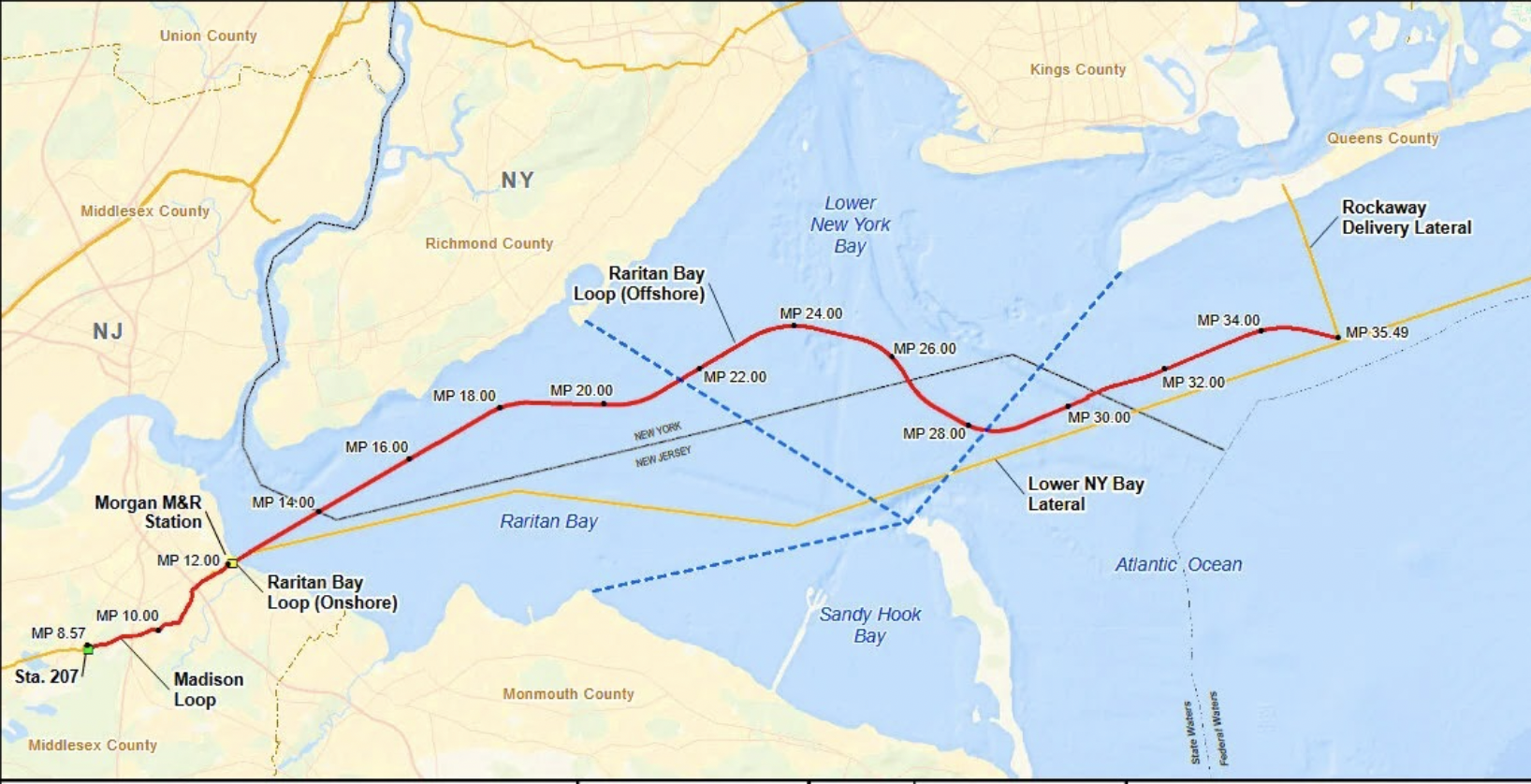
The Williams NESE Pipeline cleared state approval on Friday, much to the disappointment of local advocates and elected officials. Map via Williams Company, file
By Ryan Schwach
The controversial natural gas pipeline that will run just miles from Queens’ shores secured its final approval from the state on Friday.
The Williams Northeast Supply Enhancement, the proposed 23.5 mile underwater fracked gas pipeline, gained its last required approval from the state Department of Environmental Conservation last week, a move that received quick condemnation from critics.
It will be built less than 10 miles from Queens’ Rockaway peninsula, and will connect with Oklahoma-based energy company Williams Transco’s wider network of gas pipelines in the area.
The company says the pipeline would spur economic development, create jobs and lower energy bills, in line with the Trump administration’s support for similar projects.
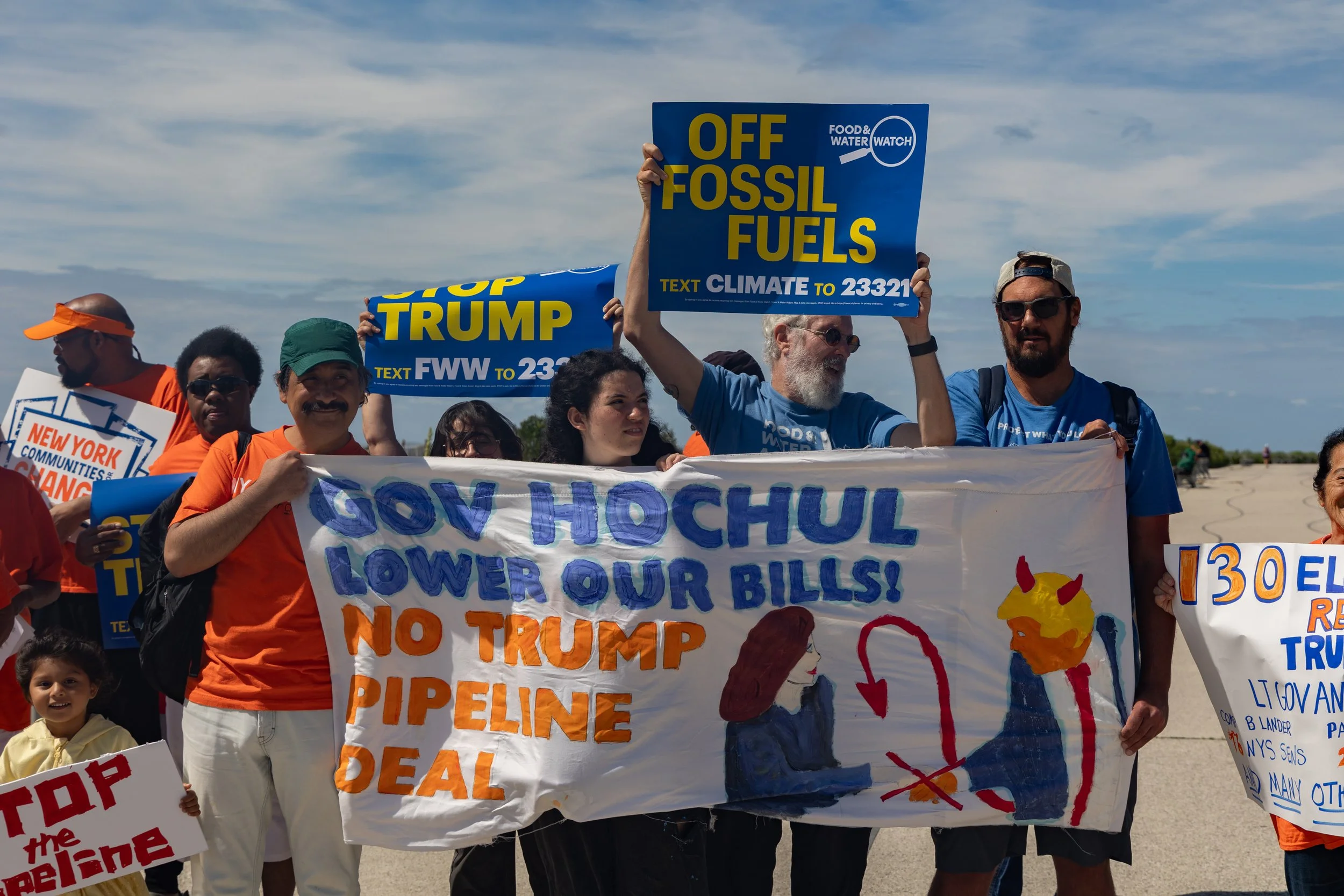
However, community members, elected officials and environmental advocates are criticizing the approval, and have long argued the pipeline – which has been rejected three prior times – could have a negative impact on the environment and marine life.
Environmentalists have warned that long before any gas is actually pumped into the 26-inch diameter pipe, just the construction work to get it in place could kick up harmful toxins into New York’s waters. In the worst case scenario, activists have warned about the catastrophic consequences should the pipe leak or explode.
They also argue that it won’t actually lower energy costs for New Yorkers, and say the $926.5 million cost of the pipeline’s construction will be passed onto locals through their energy bills.
“This pipeline breaks our law, will destroy our beaches and will raise our bills,” said Kim Fraczek from the Sane Energy Project.
Fraczek criticized Governor Kathy Hochul and the state for allegedly streamlining the pipeline’s final approval, kowtowing to the Trump administration, and doing so during the post-election malaise while many officials were glad-handing at the SOMOS conference in Puerto Rico.
“I find it very revealing that Governor Hochul decided to do this today,” said Fraczek. “She waited until every Democratic elected official was in Puerto Rico for SOMOS. They are all there today, and it's a Friday afternoon. I believe that this was intentionally hidden.”
The deadline for approval was Nov. 28.
Advocates argue that the project submitted by Williams in 2025 was the same plan DEC shot down three previous times – once in 2018, then again in 2019 and most recently in 2020 – for going against the state’s climate law and water quality concerns.
Fraczek said that there could be room to take the approval to court.
“We know that this is illegal,” said Fraczek.“If we take this to the courts, we will have another opportunity to win. Governor Hochul just broke our law.”
In a statement, the governor defended the approval.
“As Governor, a top priority is making sure the lights and heat stay on for all New Yorkers as we face potential energy shortages downstate as soon as next summer,” she said. “We need to govern in reality. We are facing a war against clean energy from Washington Republicans, including our New York delegation, which is why we have adopted an all-of-the-above approach that includes a continued commitment to renewables and nuclear power to ensure grid reliability and affordability.”
Governor Kathy Hochul and the state approved the Williams NESE Pipeline on Friday, angering many activist groups and local elected officials who opposed it. Eagle file photo by Ryan Schwach
“I have also been crystal clear that all proposed projects must be reviewed impartially by the required agencies to determine compliance with state and federal laws,” she added. “I am comfortable that in approving the permits, including a water quality certification, for the NESE application, the DEC did just that.”
While approving the Williams NESE Pipeline, DEC shot down the Constitution Pipeline, a similar project that was proposed for upstate.
“DEC used that same standard for the proposed Constitution pipeline project and found it did not meet the bar for completeness to advance and the application was subsequently withdrawn,” said Hochul.
In Puerto Rico, Hochul told City & State reporter Rebecca Lewis that President Donald Trump had nothing to do with DEC’s approval, and that he had mainly wanted the Constitution pipeline, which was rejected.
In a release, DEC announced the agency will require independent monitors to oversee the project’s compliance in an effort to minimize impacts to the environment by preventing contaminants from the ocean floor kicking up and harming wildlife.
The mitigation will cost Williams an additional $23.5 million, pending the completion of DEC’s full assessment.
However, none of that has assuaged advocates and officials, who worry about all the environmental and financial impacts of the pipeline’s construction and the pipeline itself.
"Today's decision by the DEC is a devastating failure to protect New Yorkers from a dangerous and wrongheaded proposal,” said Katherine Nadeau, deputy director of Environmental Advocates NY. “By approving the NESE fracked gas pipeline, the DEC is discarding its own previous findings – required by state law and bolstered by science -– that this project poses serious risks for our water, our marine life, and our health and safety.”
Local elected officials in the Rockaways and other parts of Queens are also condemning the approval, and rallies were held in the city outside Hochul’s Manhattan office and down in Puerto Rico during SOMOS.
“It's unfortunate, at a time where New York should be building more green energy sources and using renewable energy,” said Rockaway Assemblymember Khaleel Anderson, who was in Puerto Rico when the approval was made. “The community has said clearly that we didn't want this, and now it's being forced.”
Anderson’s fellow Rockaway elected, Republican Joann Ariola, also shared concerns.
"Energy costs are rising, so I am hopeful that Williams will actually stick to their promise about delivering reliable energy and lowering costs," she said. "That said, the concerns about the impact of this project on our waters are very real, and I will continue to monitor the situation, and will connect with the mandated third-party project monitors as soon as they are announced. We've worked so hard to make our waters cleaner in recent years, and we can't go backwards on that progress now."
A host of other pols, including Public Advocate Jumaane Williams and Lieutenant Governor Antonio Delgado, who is primarying the governor, also criticized the approval on Friday.
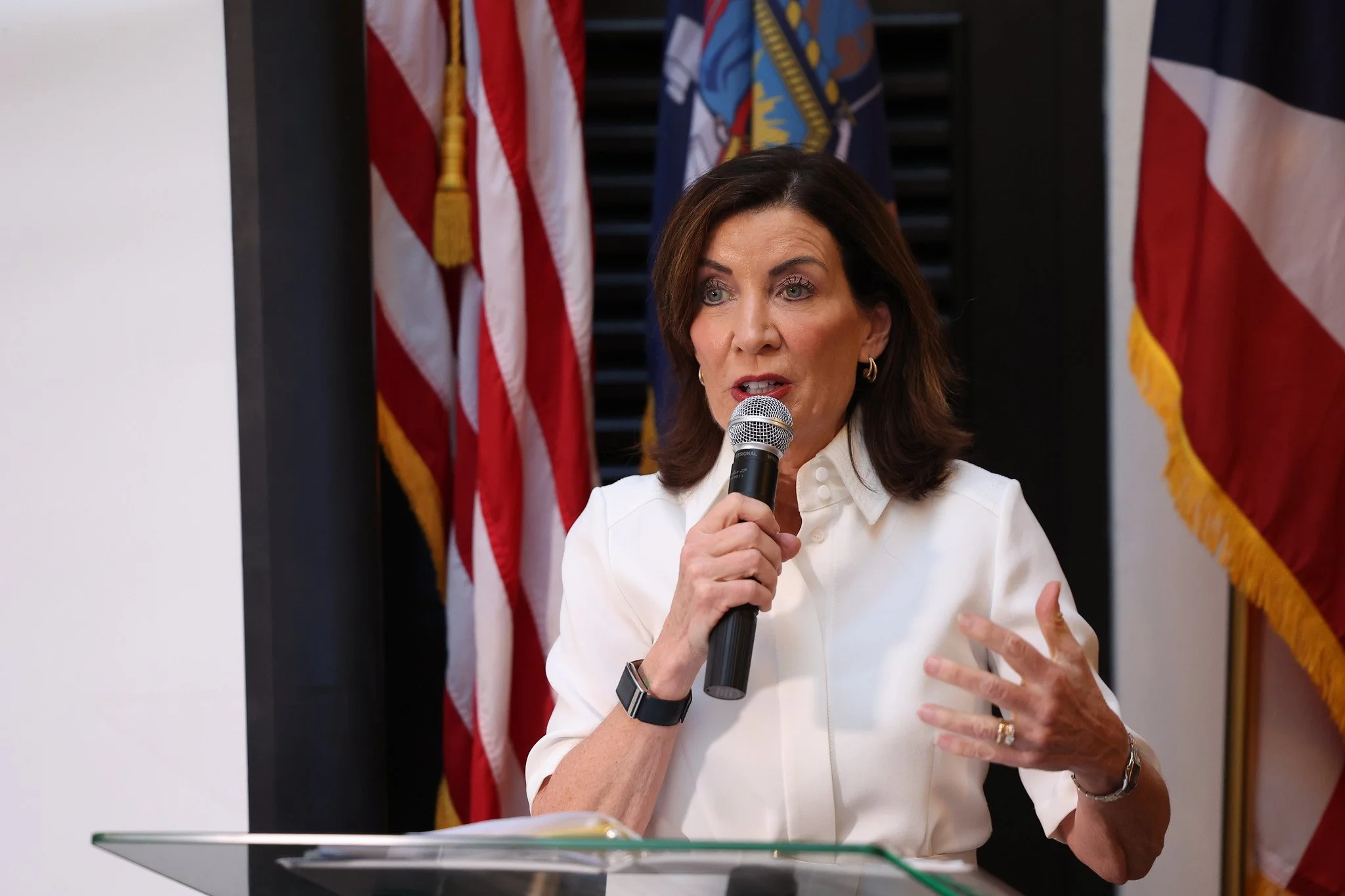
Governor Kathy Hochul and the state approved the Williams NESE Pipeline on Friday, angering many activist groups and local elected officials who opposed it. Kenneth Pérez/Captiva Digital Media
Assemblymember Claire Valdez, a close ally of Mayor-elect Zohran Mamdani, said it was "outrageous that Hochul allowed this to move forward.”
“This project will poison our waters, raise utility bills, and exacerbate the climate crisis,” she said on social media.
Mamdani has also made it clear he opposes the pipeline.
“I've opposed the construction of any natural gas pipelines, and continue to oppose them, and that includes the Williams NESE pipeline,” he said in a recent Instagram video. “I think right now, what we need desperately is the rapid investment in clean energy across the country.”
His office did not respond to requests for comment on Friday.
Environmental regulators in New Jersey also made a similar approval for the NESE Pipeline on Friday afternoon. Advocates earlier in the day had said New Jersey had been the last hope to kill the pipeline that didn’t require the courts.