Moya, Workers’ Rights Advocates Demand End to Tip Credit
/By David Brand
Workers’ rights advocates and labor unions joined Council Member Francisco Moya at City Hall Tuesday to demand an end to the “tip credit” system, which enables employers in various industries to pay less than minimum wage.
“The livelihoods of restaurant servers, car wash workers, nail salon employees or any tipped worker should not be dependent on tolerating sexual harassment and discrimination but our two-tiered minimum wage system incentivizes silently suffering these indignities,” Moya said. “It’s time for New York to join the seven other states that have eliminated the tipped credit and provide tipped workers with the stability that comes from being guaranteed a living wage.”
A tip credit is the amount of tips earned by an employee that the law allows his or her employer to count as a credit against the minimum wage requirements for that industry, according to the New York State Department of Labor.
The tip credit enables employers in certain industries to pay less than hourly minimum wage to their workers. Minimum wage is $13 per hour at companies that employ 11 or more workers.
Because of the tip credit, a “large employer” with 11 or more food service workers can pay employees $8.65 per hour because the state takes into account a $4.35 tip credit. “Small employers” with ten or fewer food service workers can pay $8 per hour. Minimum wage for small employers is $12.
The tip credit does not affect workers at fast food restaurants, who advocated for and achieved a higher minimum wage. Fast food workers currently earn at least $13.50 per hour until 2019, when their wage will increase to $15 per hour.
In addition to restaurant workers, the state tip laws include workers in various “miscellaneous industries,” including car wash attendants, hairdressers or aestheticians not employed by hotels, golf or tennis instructors, valet parking attendants and doorpersons.
Between April and June, the Department of Labor hosted seven hearings to engage residents and consider ending the tip credit.
Moya said he will introduce resolution at City Hall on Sept. 12 to demand that the Department of Labor end the tip credit.
Workers affected by the tip credit often do not earn enough in tips to justify their subminimum wage.
The tip system also disproportionately affects women, who are exposed to abuse and sexual harassment as a precondition for receiving a tip, said Susan Zimet, chair of the Women’s Equality Party.
“Too many women work in jobs that depend on tips, keeping them in poverty,” Zimet said. “Too many women are forced to deal with sexual harassment from their bosses and the customers they serve but are afraid to speak up for fear of losing their jobs. All workers deserve to get paid a living wage for the work they provide. All workers deserve to be in a safe environment where your wage is not dependent on a low cut neckline and a short hem skirt.”
Catherine Barnett, Director of Restaurant Opportunities Center of New York, said the tip system “fuels poverty, harassment, discrimination and wage theft.”
“Forcing restaurant, car wash and nail salon workers to rely almost entirely on tips to survive is simply wrong. Fortunately, there is a better way,” Barnett said. “New York must be a leader in the fight for One Fair Wage and join the seven states that have already phased out the tipped subminimum wage – resulting in gains for workers across the board.
Tips can be a big source of income for bartenders and servers at expensive restaurants who can earn hundreds of dollars a night from customers .
Thus, not all workers are on board with the call to end the tip credit.
For example, the organization Restaurant Workers of America describes itself as a “an employee advocacy organization dedicated to the preservation of tip income and to the well-being of employees in the full-service restaurant industry.”
The New York State Restaurant Association, a trade group representing the interests of restaurant owners, said the industry favors the tip credit because it shifts the wage burden from employers to customers.
“The tip credit is an economic tool. It was put in place to give restaurant owners a bit of a break when it came to labor costs, which helps them turn a profit,” NYSRA spokesperson Kevin Dugan told Metro New York.
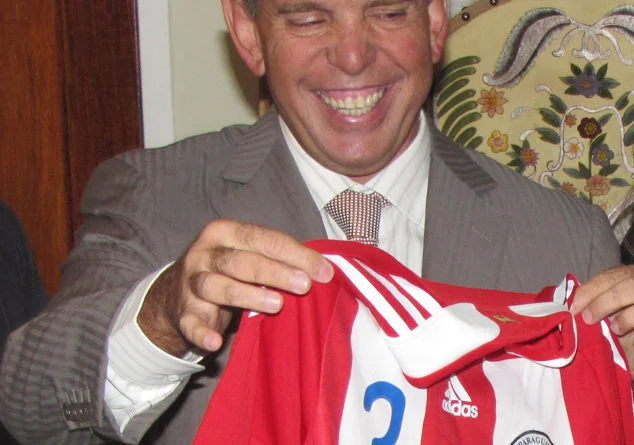
Assembly Member Ari Espinal (left), Council Member Francisco Moya (center) and car wash worker Ernesto Salazar called on the Department of Labor to end the tip credit. // Photo courtesy of Francisco Moya