Court to hear appeal of controversial Chanel Lewis murder conviction
/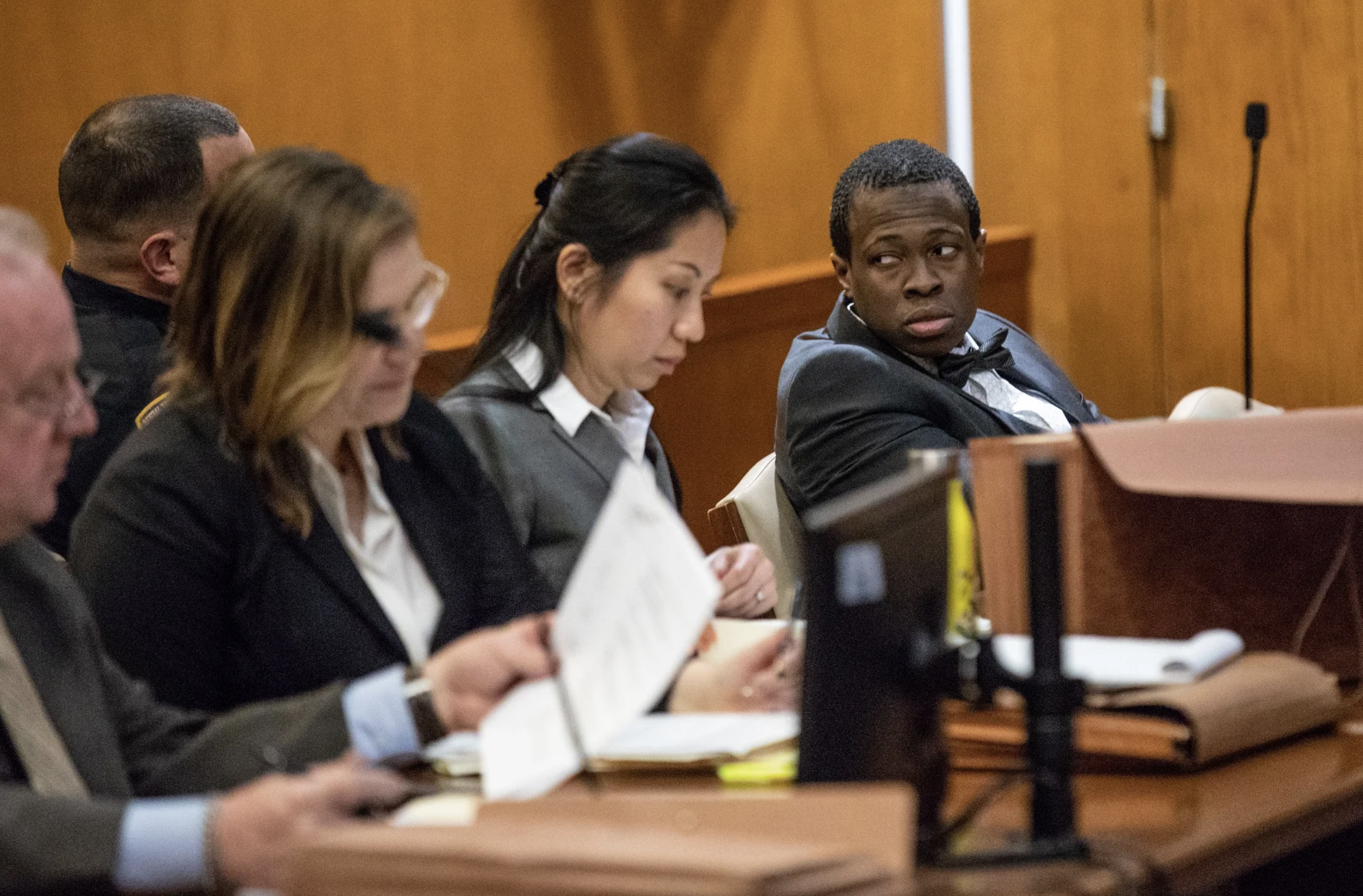
The Appellate Division, Second Department, granted a request from Chanel Lewis, the man convicted of killing jogger Karina Vetrano in Howard Beach in 2016, to appeal a ruling from a Queens judge, rejecting his motion to overturn his conviction. File photo by Uli Seit, pool
By Jacob Kaye
Nearly 10 years to the day after Karina Vetrano was found brutally murdered in a Howard Beach park, the man serving a life sentence for her killing was given a chance to challenge his conviction.
A panel of judges in the Appellate Division, Second Department last week said they would allow Chanel Lewis to appeal a recent decision from a Queens judge rejecting Lewis’ motion to overturn his controversial 2019 conviction.
The judges said Lewis’ claim that the NYPD used a “racial dragnet” to collect DNA from hundreds of Black men before arresting Lewis deserved to be reviewed by a court in their decision, which was issued on Friday.
The decision to allow Lewis’ appeal to move forward comes around five months after Queens Supreme Court Justice Michael Aloise rejected the racial dragnet argument in February, ruling that the issue should have been raised as part of Lewis’ direct appeal of his conviction.
The appellate judges also ruled on Friday to allow Lewis’ attorney, Ronald Kuby, to consolidate the racial dragnet challenge with Lewis’ main appeal, which is expected to be filed in the coming months.
“The Appellate Division actually thought a good deal more of our motion than Judge Aloise did,” Kuby told the Eagle on Monday. “We're pleased that some judge who is not Michael Aloise will be hearing the racial dragnet issue.”
In response to the granted appeal, a spokesperson for the Queens District Attorney’s office said the “decision provides a means for the defendant to get full review of his claims.”
In February, Queens District Attorney Melinda Katz celebrated Aloise’s ruling, saying in a statement to the Queens Chronicle that “the evidence of Chanel Lewis’ guilt was proven beyond a reasonable doubt at trial, and as such, the court dismissed the motion to vacate the judgment.”
“We continue to be prepared to litigate any challenges related to this conviction,” she added.
With the appeal granted, the details of Vetrano’s murder and Lewis’ subsequent conviction, which both alarmed Queens residents, will return to public consciousness. Vetrano’s killing, an act of cruel and seemingly random violence, was among the most high-profile murders in the five boroughs over the past decade. And Lewis’ prosecution, which remains under scrutiny, raised age-old questions about racial profiling, coerced confessions and questionable DNA evidence.
Vetrano’s body was found in Spring Creek Park in Howard Beach on Aug. 2, 2016. She had gone out for a run by herself around 5 p.m., and was attacked, sexually abused and strangled to death.
Vetrano’s murder set off a massive search for her killer, which ended around six months later, when the NYPD arrested Lewis at his mother’s home in East New York.
Prosecutors claimed that Lewis had gotten into an argument with his family, left his home and entered Spring Creek Park, where police had spotted him previously, in a rage. He then murdered Vetrano, according to the Queens DA’s office.
After being questioned by police for hours, Lewis confessed to the killing. He later claimed that his confession was coerced – he told Aloise he was innocent after being sentenced to life in prison without the possibility of parole.
Lewis’ first trial ended in a mistrial after a 12-person jury failed to reach a verdict in the case.
He was found guilty of murder during the second trial, though a juror later came forward and claimed that other jurors had violated orders not to discuss the case before they began deliberating. Despite the claim, the conviction was upheld.
In the years since, Lewis attorneys and criminal justice advocates have questioned the work of the NYPD and the case’s prosecutor, Brad Leventhal, who left the DA’s office two years after Lewis’ trial after being accused by a judge of deliberately concealing evidence in a 1996 murder case that led to the wrongful conviction of three men.
Kuby raised the issue of the racial dragnet in 2023, when he first filed the motion to overturn the conviction.
The prominent criminal defense attorney argued that the NYPD improperly targeted Lewis after receiving a DNA phenotyping report from Parabon Nanolabs that suggested the DNA collected from Vetrano’s body belonged to a man of “African descent.”
The existence of the report was first detailed in an anonymous letter sent to the Legal Aid Society and the New York Daily News by a whistleblower who purported to be a member of the NYPD.
In addition to the existence of the Parabon Nanolabs report, which was not presented at Lewis’ trial, the letter claimed that the NYPD originally believed Vetrano’s killer was a white male. It also claimed that after receiving the Parabon Nanolabs report, police officers took DNA swabs from more than 360 Black men in Brooklyn and Queens before arresting Lewis.
However, at trial, NYPD Lt. John Russo testified that Lewis’ arrest came after he remembered encountering the East New York resident in Queens several times before Vetrano’s murder.
“We believe that this is not true, and we have alleged in court papers that that explanation was cooked up to explain the original, unlawful DNA profile and dragnet,” Kuby said.