State’s ban on ICE agreements goes into effect
/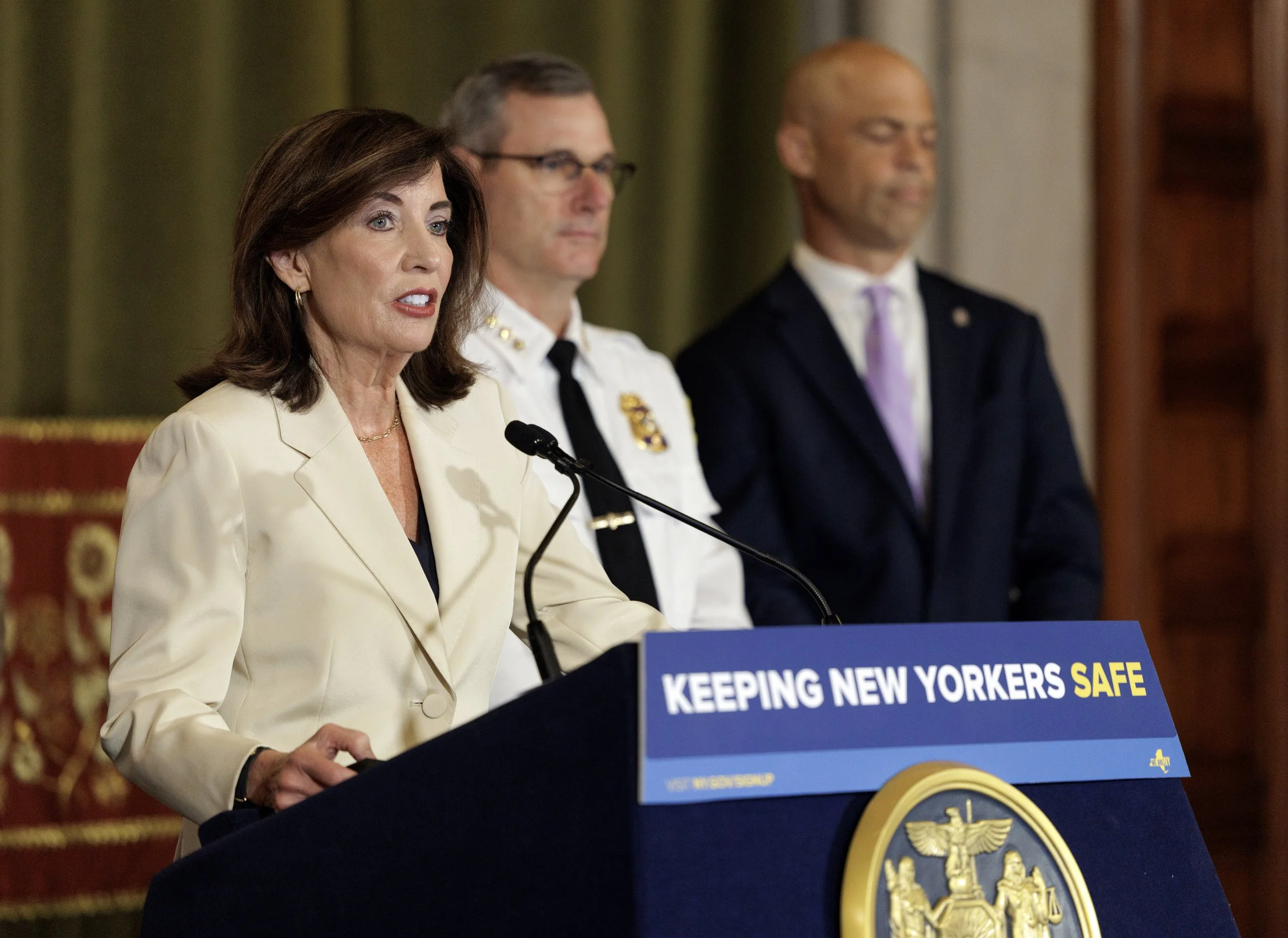
Governor Kathy Hochul announced the ban on formal agreements between ICE agents and local law enforcement went into effect on Tuesday. Photo by Mike Groll/Office of Governor Kathy Hochul
By Noah Powelson
Federal agents can no longer use New York police or jails to help detain immigrants after two new laws banning local municipalities from cooperating with federal immigration agents went into effect.
Two new laws were activated on Tuesday that banned police and correction departments from entering into formal agreements – referred to as 287(g) agreements – that allowed Immigration and Customs Enforcement to use state resources and facilities when carrying out immigration enforcement.
Local law enforcement agencies and jail facilities can no longer enter into these agreements and cannot provide resources to ICE that help them pursue and detain individuals for their immigration status.
The new laws do not prohibit local local police officers from cooperating with ICE agents during criminal investigations.
Both bans were included in the state’s executive budget passed earlier this year.
Governor Kathy Hochul said the ban was meant to keep police resources focused on local crimes and not to chase “inane deportation quotas.”
“We will not sit idly by while ICE commits atrocities on our streets,” Hochul said. “We will not allow local cops to be diverted as ICE agents to conduct civil immigration. To keep crime down, as we have been doing, we need local police focusing on thwarting local crimes.”
When asked what ICE’s involvement would be for non-citizens facing criminal felony charges, Hochul said they would be handed over to federal immigration agents for deportation only after they are found guilty of a crime and finish serving out their sentence.
“The process in New York is going to play out,” Hochul said. “I want them gone when they are done serving their time. And those who think you should ship them out immediately, where is the justice for the victims?...Our police will do their jobs”
Another law also went into effect which specifically limits cooperation between ICE and state correctional facilities.
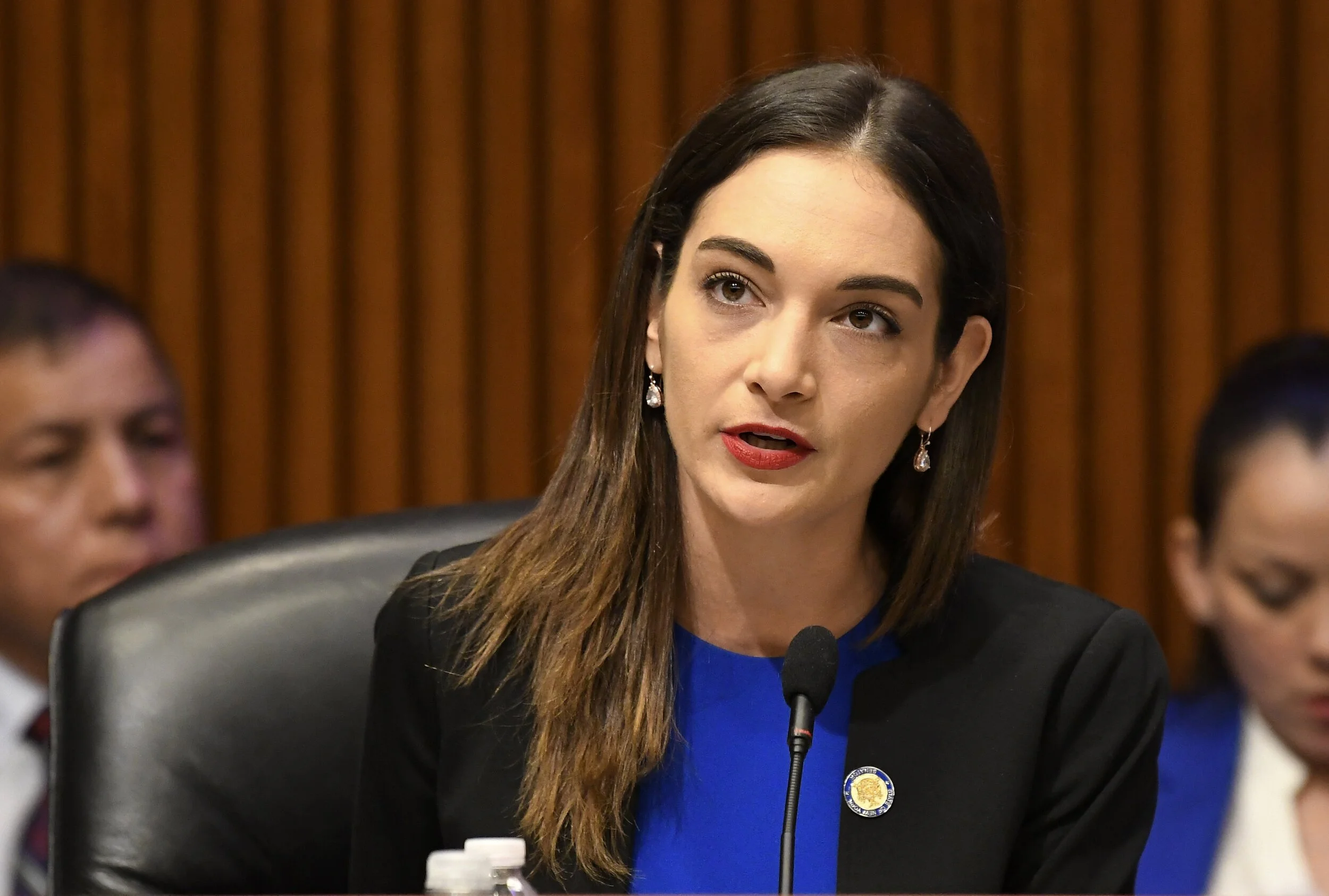
State Senator Julia Salazar’s bill that bans state facilities from holding ICE detainees went into effect on Tuesday. AP Photo/Hans Pennink
Queens State Senator Julia Salazar, who was the primary sponsor of the original bill that banned agreements between ICE and local jails, said the ban was an important first step. But, she called on the state to take further action by preventing ICE from entering into informal agreements with all state agencies.
“There are several local jails in our state that shamefully jail New Yorkers for ICE, directly supporting the federal administration’s efforts to violently round up our neighbors, separate families from their communities, and ship people off, often with little to no due process,” Salazar said in a statement. “While the State has now banned formal agreements with ICE, it has not yet banned informal collusion between State and local law enforcement and ICE.”
ICE previously detained around 3,200 people at the Nassau County Correctional Center in East Meadow from February 2025 to March 10, 2026, according to Salazar’s office.
On Aug. 7, Salazar and other state elected officials carried out a surprise inspection of the Nassau County jail to see if the facility had begun removing ICE detainees ahead of the ban. Salazar’s office said four ICE detainees were discharged from the facility before they had arrived, but no others were found during the inspection.
The laws also required already established 287(g) agreements to end.
New York Attorney General Letitia James had previously informed the 12 local law enforcement agencies in the state that still maintained these agreements they needed to end them by Tuesday.
Of those 12, two had not yet given the AG a response, according to the governor.
“We expect all law enforcement agencies in New York to uphold New York’s laws,” James said in a statement. “Through the Office of Immigrant Trust, my office will continue to work with law enforcement professionals across the state to ensure they understand their obligations, and we are prepared to enforce the law if those responsibilities are not upheld.”
The ban on 287(g) agreements comes after over a year of federal immigration crackdowns across the country sparked rage and protests from immigrant advocates and elected officials alike. According to the agency’s data, ICE agents have arrested more than 43,000 people nationwide in June, averaging more than 1,500 arrests a day.
ICE sightings have become especially more common in Queens, the most diverse borough in the country with high concentrations of immigrant communities.
In a lawsuit filed last April by the Legal Aid Society and the New York Civil Liberties Union, ICE was accused of violating New Yorkers’ constitutional rights by conducting warrantless immigration arrests made without probable cause. The lawsuit also claimed ICE had established checkpoints in Corona, Jackson Heights and Flushing, where they would wait in unmarked cars near commercial thoroughfares to arrest passing pedestrians.
At a rally held in Corona Plaza on Aug. 11, Queens elected officials warned residents of increasing ICE agents sightings throughout New York City and the World’s Borough in particular, and told residents to make emergency plans if they or a family member is detained by ICE.
Murad Awawdeh, the president and CEO of the New York Immigration Coalition, said during the rally that the past year has brought out a surge of New Yorkers from immigrant communities seeking resources and legal representation.
On Tuesday, Awawdeh said the ban on 287(g) agreements was a “critical victory” that also serves as a warning to local government and law enforcement who have yet to end their agreements with ICE.
“The termination of 287(g) agreements is a critical victory for immigrant New Yorkers and for public safety across the state,” Awawdeh said in a statement. “As ICE continues to ramp up its enforcement tactics and spread fear among immigrant New Yorkers, ending these agreements sends a powerful message that New York will not allow its local police to be used as an extension of Trump’s mass deportation agenda.”
Following the announcement on Tuesday, 15 sheriff’s departments in the state filed a lawsuit against the new state ban. Hochul and James called the suit a “frivolous waste of taxpayer dollars.”