NYPD units continued unconstitutional stops in 2025, federal monitor finds
/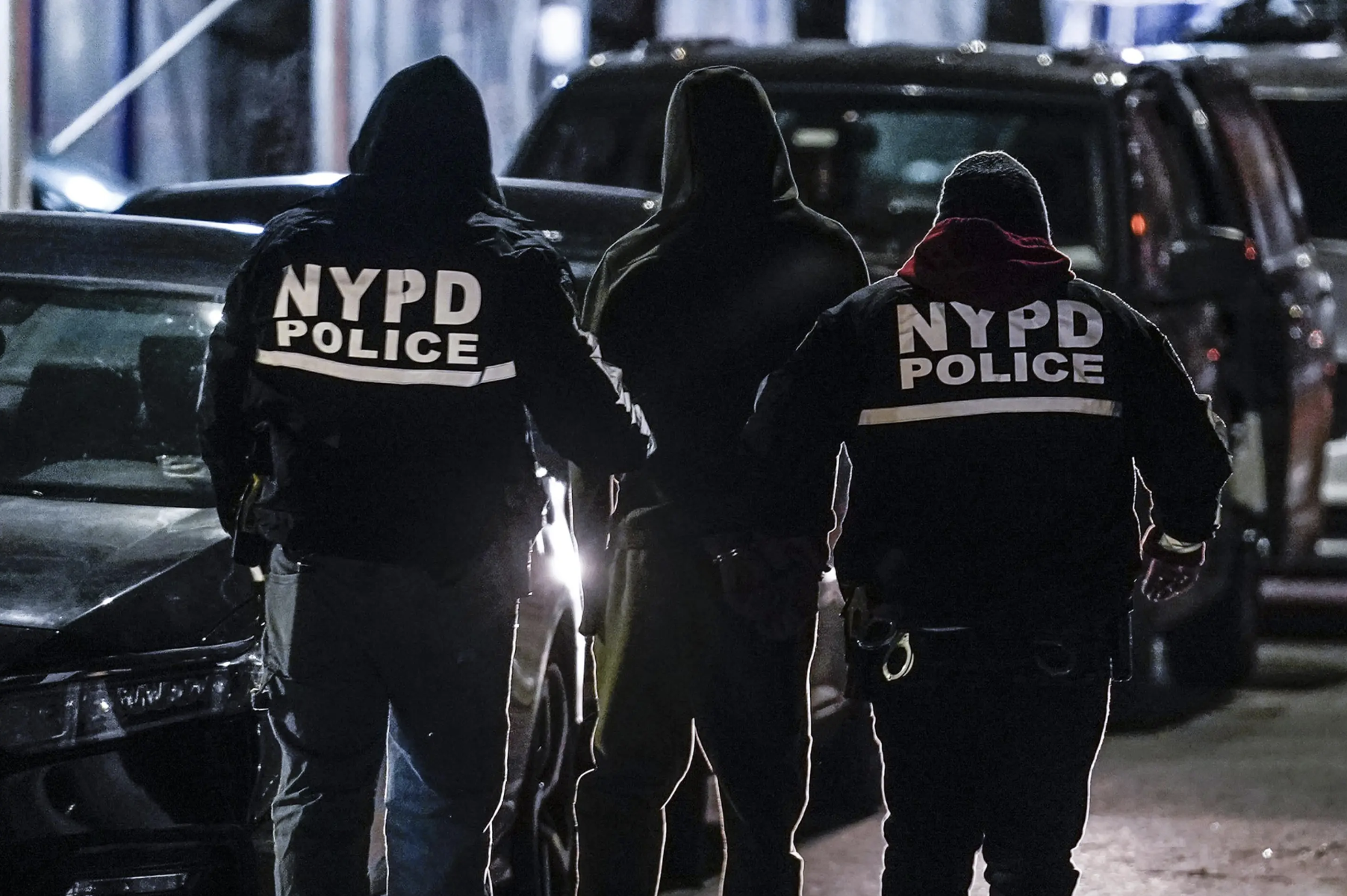
The NYPD’s independent monitor found the city’s specialized patrol units regularly committed illegal stops, frisks and searches throughout 2025. AP file photo by Seth Wenig
By Noah Powelson
The NYPD’s specialized patrol units continued to make unconstitutional stop-and-frisks last year, failing to meet nearly every compliance requirement set by a court-appointed federal monitor, according to a new report.
The NYPD’s independent monitor said on Monday that the NYPD’s specialized patrol units – the Neighborhood Safety Teams, Community Response Teams and Public Safety Teams – regularly committed illegal stop, frisk and searches throughout 2025. All three specialized patrol teams failed to meet compliance requirements the monitor set, underperforming regular patrol police officers in every category while disproportionately stopping Black and Hispanic New Yorkers.
In 2025, Independent Monitor Mylan Denerstein set compliance requirements for all specialized patrol teams to meet. By the third quarter of 2025, 85 percent of all stops, frisks and arrests made by the patrol groups had to be legal. By the end of 2025, stops needed to reach 90 percent compliance.
According to the report, NST, CRT and PST initially met the monitor’s 85 percent requirement by the end of Sept. 2025, but that quickly dropped off as the three teams increasingly conducted intrusive stops.
By the end of 2025, only 83 percent of all stops made by the teams were legal. Additionally, only 69 percent of all frisks made were legally compliant, as were only 62 percent of all searches, the monitor found.
These specialized patrol teams were also found to be significantly less compliant than regular patrol officers, who the report said achieved compliance rates of 94 percent for stops, 83 percent for frisks, and 79 percent for searches.
Around 91 percent of the persons stopped, frisked, and searched by NST, PST, and CRT officers were Black or Hispanic, according to the report.
The report also found the NYPD failed to audit stops conducted by the citywide CRT dating back to March 2023. The problem was made worse in September 2025, when the borough-based units were consolidated into a citywide command not part of the routine Quality Assurance Section audits.
The NYPD resumed auditing CRT in March 2026, according to the report.
In response to the findings, the monitor set new compliance benchmarks for 2026, requiring the specialized units to hit at least a 90 percent compliance rate by the end of the third quarter, and maintain that compliance rate for the remainder of the year.
“The Department is well aware of the compliance issues it faces,” the report read. “These compliance benchmarks have long been known to the Department, as have the problems contributing to the NYPD’s failures. It is time for the Department to take ownership of its issues and solve them.”
“This is achievable,” the final line of the report read.
A spokesperson for the NYPD said they are reviewing the report.
“The NYPD has gone from over 680,000 reported stops in 2011 to less than 30,000 in 2025,” the spokesperson said in a statement. “There is still more work to be done, and the NYPD continues those efforts in collaboration with the Federal Monitor and her team. We thank the Monitor for her report and look forward to reviewing it.”
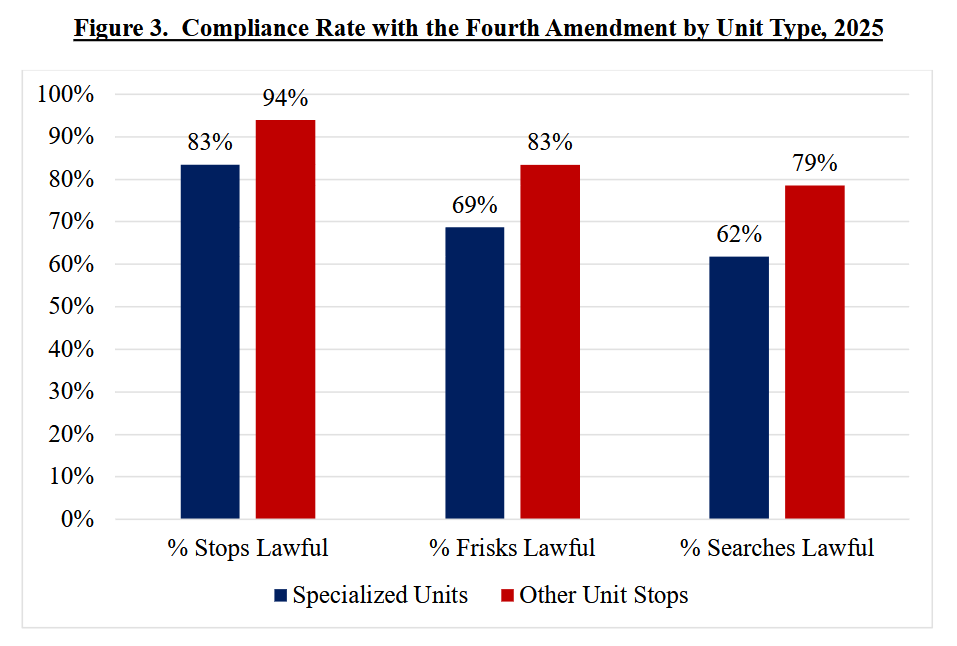
The monitor’s report found the NYPD’s specialized patrol units made illegal stops, frisks and searches at a higher rate than standard patrol officers. Screenshot via NYPD independent monitor report
The NST, PST, and CRT were initially formed in 2022 under the Adams administration and were deployed to high-crime areas of the city with a focus on seizing illegal guns. The CRT was initially formed to address quality-of-life issues around traffic or illegal marijuana sales, but eventually transitioned to similar work as the NST and PST, according to the monitor’s report.
All three teams were expected to be proactive with their enforcement, patrolling in unmarked cars, dressing in plainclothes and pursuing suspects based on their own observations instead of 911 calls.
The PST was disbanded in Nov. 2025, but many officers were moved to the still active NST and CRT.
The effectiveness of these proactive patrol groups has been questioned by police reform advocates since they were first formed, and data from the monitor’s report highlights how their patrol practices risk violating constitutional rights without producing results.
These specialized patrol groups regularly stopped pedestrians based on simple observations, such as a suspect appearing nervous around police officers or if a “L-shaped object resembling a gun” was noticed bulging out of a suspect’s clothes.
But according to the report, officers were much more prone to commit illegal stops, frisks and searches when they relied on their own observations rather than acting in response to a 911 call or a witness.
In 2025, only 80 percent of stops, 64 percent of frisks and 55 percent of searches self-initiated by officers were made legally.
By contrast, 86 percent of stops, 88 percent of frisks and 82 percent of searches initiated by a 911 call or witness were made legally.
The report also showed that officers who conducted lawful stops were about two and a half times more likely to make an arrest than when stops were made illegally. Lawful frisks and searches similarly lead to higher arrest rates.
Karina Tefft, a staff attorney in the special litigation unit at The Legal Aid Society, said the report showed the longstanding problems with stop-and-frisk policing, and called on Mayor Zohran Mamdani to end the practice.
“This report confirms what the people we serve have experienced for years: despite repeated warnings, court oversight, and promises of reform, the NYPD’s specialized units continue to violate the constitutional rights of New Yorkers of color at an alarming rate,” Tefft said. “The NYPD’s specialized units continue to illegally stop, frisk, and invasively search New Yorkers at unacceptable rates substantially higher than those of regular patrol officers.”
“New Yorkers deserve a police department that respects the Constitution, and the Mamdani Administration must take immediate action to end unconstitutional policing by the NYPD’s specialized enforcement units,” Tefft added.
Sam Raskin, a spokesperson for Mamdani, said the mayor’s office was reviewing the report.
“The Mamdani administration believes that constitutional policing, justice and public safety must go hand in hand,” Raskin said in a statement. “Every New Yorker deserves to be treated fairly and lawfully by members of the NYPD. We are reviewing the report closely and will continue working to ensure the Police Department keeps New Yorkers safe while upholding their constitutional rights.”
While stop-and-frisks have largely stopped being used since its height in 2011, when officers made a record 685,724 stops, the practice saw a general increase under the Adams administration.
In the final year of Mayor Bill de Blasio’s term in 2021, NYPD officers conducted just under 9,000 stops.
When Adams was elected into office, NYPD officers made more than 15,000 stops in both 2022 and 2023.