Mayor, Council settle housing voucher lawsuit and pass $125 billion budget
/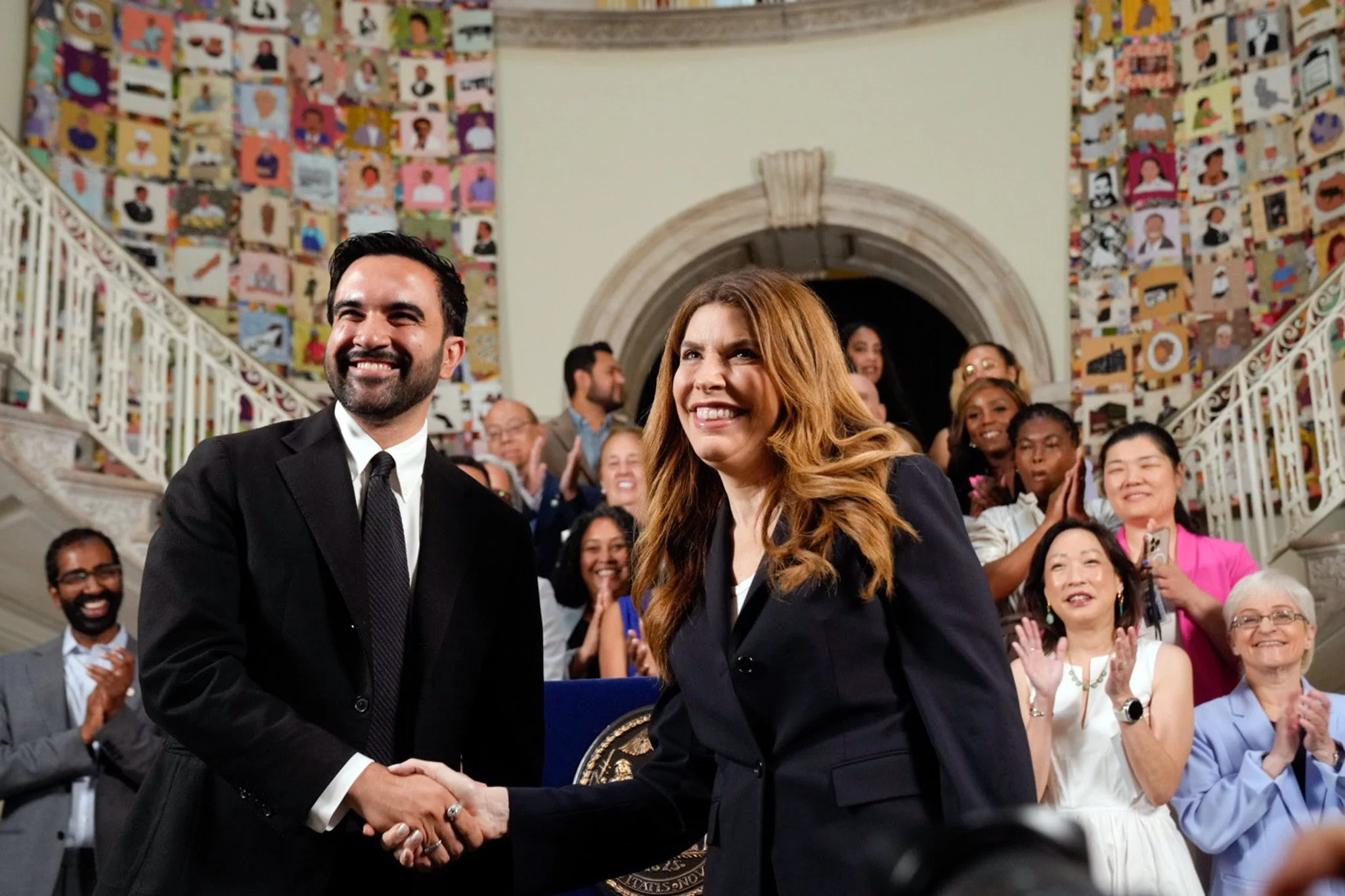
Mayor Zohran Mamdani and City Council Speaker Julie Menin shake on a $125 billion city budget. Photo by Ed Reed/Mayoral Photography Office
By Ryan Schwach
The end of a prolonged legal battle between the mayor’s office and the City Council over an expensive housing voucher program known as CityFHEPS was baked into the city’s colossal $125 billion budget, which was passed by the Council late Tuesday.
Mayor Zohran Mamdani and the City Council, led by Speaker Julie Menin, agreed to expand the program to the tune of $175 million in the budget while also putting an end to the multi-year litigation that began under former Mayor Eric Adams and former Speaker Adrienne Adams.
CityFHEPS, which provides housing vouchers for New Yorkers living in the city’s shelter system, had been the last major sticking point in budget negotiations. The Mamdani administration was initially reluctant to fund an expansion of the program previously passed by the Council, despite the mayor’s support for it on the campaign trail last year.
The Council passed legislation in 2023 that expanded the program, but the Adams administration refused to implement the law arguing it was too costly to New Yorkers. The disagreement sparked the lawsuit.
“Since I became speaker in January, we have fought very hard to work on a settlement, because our position was there is no need to keep this endless, costly litigation,” said Menin just after the handshake budget deal with Mamdani. “We should enter a responsible settlement that protects vulnerable New Yorkers and at the same time contains the costs of CityFHEPs, which we know has ballooned extremely high.”
The Mamdani administration initially continued the lawsuit over CityFHEPS despite Mamdani’s assurances during the campaign that he was in favor of the expansion.
“We have not only been negotiating the amount of money that we're going to be investing into a new rental assistance program, but also how to bring to an end what we inherited from the prior administration in the lawsuit with the City Council,” the mayor said. “We are resolving that lawsuit with a commitment not only to the intent of the legislation, but also the fiscal responsibility that for far too long has been absent in what City Hall has been doing in years past.”
“We know that the number one crisis New Yorkers are facing is the cost of living, and we have to address that crisis in a comprehensive manner,” he added.
The Legal Aid Society, which represented the Council in the legal case, also celebrated the settlement and increased funding for CityFHEPS.
“Today’s settlement is a major victory for New Yorkers in shelters and those facing eviction and homelessness, bringing an end to years of unnecessary litigation and clearing the way for more families to access life-saving rental assistance,” said Robert Desir, staff attorney with the Civil Law Reform Unit at Legal Aid. “More New Yorkers will now be able to access the support they need before losing their homes, reaffirming what we’ve long known: investing in rental assistance is both the humane choice and the fiscally responsible one.”
No new cops
Another sticking point in this year’s budget negotiations revolved around the NYPD’s headcount.
The Mamdani administration had flirted with increasing the number of cops, but received pushback from allies on the left. Ultimately, the budget does not include any increase.
“Commissioner [Jessica] Tish and I were able to identify ways to keep the NYPD headcount at the originally authorized 35,000 while also meeting all of our crime-fighting needs and implementing the new programs that were announced earlier this year,” Mamdani said.
His progressive allies, including Queens Councilmember Tiffany Cabán, were pleased with the move.
“Every dollar we spend on policing and incarceration means money we can’t spend on housing, mental health care, substance use treatment and economic stability,” said the Western Queens lawmaker.
However, Menin said she disagreed with the decision to not add anymore cops to the NYPD’s ranks, and conservative lawmakers criticized the mayor following the budget announcement.
“It is unacceptable that the Mamdani administration chose not to increase NYPD headcount,” said Queens Councilmember Phil Wong. “The 104th, 110th, and 112th Precincts are already woefully understaffed, yet the staffing needs of our local police precincts are being left unaddressed. Our residents need more cops, faster response times, and real enforcement against the crime and quality-of-life issues affecting our neighborhoods. The Administration must make public safety a real priority and give our local precincts the staffing and resources they need to do their jobs.”
Fair Fares
The massive city budget also included a “historic” investment in the Fair Fares program to help lower the cost of transportation for New Yorkers.
The budget increases the baseline for the program by $54 million, and expands eligibility to New Yorkers making up to 200 percent of the federal poverty level.
“This is the largest expansion of fair fares in council history,” said Menin. “That means for nearly 1.3 million working New Yorkers, we are making public transit more affordable. These are New Yorkers who rely on subways, buses and paratransit to get to work in the morning, to make it to school on time, to access all kinds of opportunities, and for whom this expansion shrinks a significant expense.”
The expansion of Fair Fares is not the full promise of “fast and free” buses that Mamdani ran on – the only one of his three main campaign proposals he has yet to address in his brief mayoralty – but he said it is a step in the right direction.
“We do this because we want to ensure that in the nation's most expensive city there is no one that is priced out of exploring their own city and traveling, whether it be for work, whether it be to visit family, or whether it just be for fun,” Mamdani said. “We can believe and fight for all of these things at the same time.”