State lawmakers fail to advance bills that would grow NY’s Supreme Court
/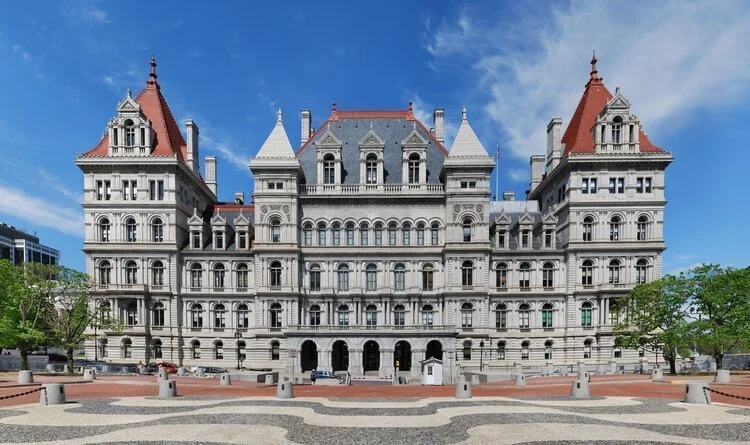
Lawmakers failed to vote the Uncap Justice Act out of committee by the end of the legislative session, leaving the future of the bill to expand the Supreme Court in question. File photo by Matt H. Wade/Wikimedia Commons
By Noah Powelson
A popular bill that promised to give New York the means to appoint more desperately needed trial court justices failed to make it out of the legislature last week, leaving its future, as well as the prospect of increasing the number of justices in the state, uncertain.
As the state legislature adjourned their session on Thursday, the Uncap Justice Act – which would have removed the population limit that determines the number of Supreme Court justices in each judicial district – died in committee. The popular bill had garnered the support of the governor and the chief judge, but fell flat after receiving growing pushback from judicial organizations that argued the bill would have politicized the judiciary.
Likewise, a bill introduced by Queens State Senator Leroy Comrie and Bronx Assemblymember Jeffrey Dinowitz which wouldn’t have eliminated the population cap but lowered it, also failed to pass the legislature.
Under the New York State constitution, each judicial district is allocated one Supreme Court judicial seat for every 50,000 residents living there, a limit that advocates for years have said is outdated and prevents districts with high case volumes from getting enough justices to meet the demand.
The only way to change the population limit is through a constitutional amendment, a much longer and more difficult task than passing a normal bill.
Bills proposing a constitutional amendment needed to pass both chambers of the legislature for two sessions in a row before being placed on voters’ ballots during a general election.
The Uncap Justice Act, which proposes removing the population cap entirely and giving the state legislature the power to create new judicial seats, was passed by both the Assembly and Senate in 2024, and appeared primed to enter the 2026 general ballot. But after lawmakers failed to pass it in either 2025 or 2026, the Uncap Justice Act is back to square one.
The bill has also lost one of its main sponsors, and will soon lose another one.
Uncap Justice’s Senate sponsor, Brad Hoylman-Sigal, left the legislature at the beginning of the year after being elected Manhattan borough president. The bill’s Assembly sponsor, Manhattan Assemblymember Alex Bores, is currently running for Congress in New York’s 12th District, and is not on the ballot for the Assembly next year.
With the bill’s sponsors in both chambers not returning to the state legislature next year, the Uncap Justice Act will need to find new elected officials to push it forward in the 2027/2028 legislative session.
The bill has a wide array of co-sponsors, and has received the endorsements of Governor Kathy Hochul, Chief Judge Rowan Wilson, Chief Administrative Judge Joseph Zayas, Attorney General Letitia James, the New York City Bar Association and others.
“The UCS has been clear in its support of the Uncap Justice Act, a much‑needed constitutional amendment that would remove the population‑based cap on State Supreme Court Justices and help alleviate the buildup of large caseloads, especially in NYC,” Al Baker, a spokesperson for the Unified Court System, said in a statement. “We remain committed to working with our partners, stakeholders, and representatives in Albany to advance thoughtful legislation that will help us achieve these important goals.”
The New York City Bar Association had campaigned for the Uncap Justice Act up until the end of the legislative session, and said it still views the bill as the best way to address the state’s need for Supreme Court justices.
"The City Bar continues to strongly support the Uncap Justice Act, a key structural reform needed to remove the constitutional cap that prevents New York from adding the Supreme Court Justices it urgently needs," the NYCBA told the Eagle in a statement.
The chances of the Uncap Justice Act returning are still high, sources said, but it will be entering a much more contentious session as several prominent judicial groups made it clear they see an alternate legislative solution.
Four prominent judicial organizations publicly denounced the Uncap Justice Act in a joint statement, saying the bill would politicize the process of creating new judicial seats and risk areas with the greatest need receiving disproportionately fewer Supreme Court justices.
The Association of Justices of the Supreme Court of the State of New York, the Supreme Justices Association of the city of New York, the Judicial Friends Association and the Latino Judges Association said that a population limit ensures that districts with the most people will get the most Supreme Court seats. By removing that cap, the judges argue, the legislature would gain tremendous influence over deciding judicial seats
“The even distribution of justices within the population ensures the citizenry’s constitutional and voter protections, safeguards the independence of our judiciary, and promotes racial and gender diversity among the justices,” the organizations said. “As such, the apportionment population requirement helps protect our judiciary from short term ‘political fixes’ and political influence.”
The Comrie/Dinowitz bill introduced in 2025 offered an alternative solution to Uncap Justice that supporters say will address the state’s need for Supreme Court justices. The Comrie/Dinowitz bill would lower the population limit to 30,000 per judicial seat, as opposed to completely removing it.
The Comrie/Dinowitz bill also failed to make it out of committee this session, but has quickly gained a strong cohort of supporters that say it will create hundreds of judicial seats for the districts that need them the most.
The bill is co-sponsored by the chair of the Senate Judiciary Committee, Senator Luis Sepúlveda. But when asked if he supported one of the bills over the other, Sepúlveda wouldn’t say.
"I would not characterize my position as a preference at this time,” Sepúlveda said in a statement. “I am actively reviewing Senator Comrie's proposal, the Uncap Justice Act, and other related measures. As chair of the Judiciary Committee, I believe it is important to carefully evaluate the potential impact of each proposal and determine what is in the best interest of New York's judiciary and the communities it serves."
Both the Uncap Justice Act and the Comrie/Dinowitz bills would amend New York’s constitution, and in the best-case scenario, the earliest either bill could become law is in 2029.
Speaking to the Eagle on Wednesday, Dinowitz said he believes his bill is the best way forward, but he would still support any measure that would increase the number of Supreme Court judges. Dinowitz himself is also a co-sponsor on the Uncap Justice Act, though he said he prefers lowering the population limit over removing it.
“I think one thing most of us agree on is that we need more judges. So, the question is, what's the best way to go about doing that?” Dinowitz told the Eagle. “There might be other ways of trying to address the fact that we need more judges, and that I feel very strongly about. So, I think we should do something.”
“My bill guarantees that every district will be treated fairly at every corner of the state,” Dinowitz added.
But until a real path forward is found, the state will have to continue to rely on acting Supreme Court justices to address an overwhelming case backlog.
ASCJs are lower court judges promoted to the higher court to help courts address their case load. While the designation is supposed to only last a year, many ASCJs end up serving in the role indefinitely.
Judicial leaders, bar associations and judges themselves say utilizing ASCJs are a necessary work around to ensure New York’s courts have adequate judges on the bench to address case backlog.
According to a 2025 report from the government watchdog groups Scrutinize and Reinvent Albany, 97 percent of judges remain in ASCJ status without interruption.
According to data provided by the Office of Court Administration, the Unified Court System currently employs 304 Supreme Court justices across the whole state, and 257 ASCJs.
Update: This story was updated at 12:41 p.m. on Tuesday, June 9, 2026, with a statement from the Unified Court System.