
How NY’s judicial conduct commission's work led to the arrest of a Brooklyn judge
/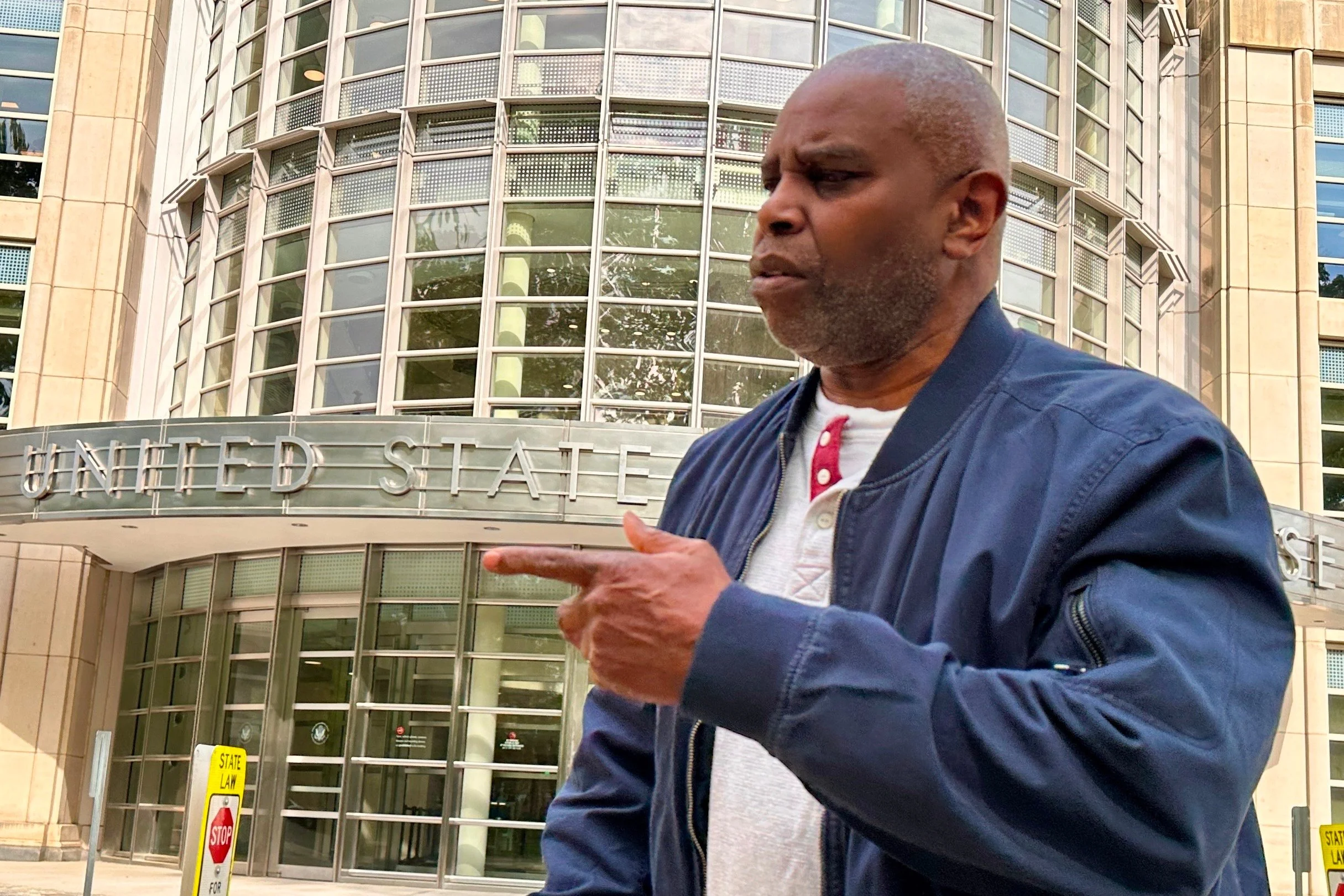
Former Brooklyn judge Edward King was in the middle of an ethics probe when he resigned from the bench, but the information found led to his eventual arrest. AP Photo/Michael R. Sisak
By Noah Powelson
Before the FBI arrested former Brooklyn Judge Edward King for allegedly defrauding real estate investors of millions of dollars, a different watchdog had already begun to uncover the details of King’s alleged scheme.
Months before King faced federal charges, the New York Commission on Judicial Conduct received a complaint about the Brooklyn judge and began investigating the claims that later became the basis for a federal indictment.
The commission receives thousands of complaints about judges across the state every year, and the overwhelming majority are dismissed without further inquiry. But the one about King was different, and the severity of the accusation alone required at least some follow up.
From that initial complaint, the commission launched an inquiry, gathering the basic facts and conducting some interviews. It soon became clear there was more to the story, and the commission launched a full-scale investigation in December 2025.
Then King resigned from the bench in the middle of the commission’s probe in January 2026, ending their ability to further investigate, as per state law.
But rather than drop the case entirely, the commission passed what they had gathered to prosecutors, and the FBI arrested King months later.
The former judge and his alleged partner in the scheme, real estate investor Sam Sprei, now each face up to 20 years in prison.
Prosecutors said Sprie and King used the judge’s position to lure victims into their fictitious investment opportunities. But rather than invest the money, Sprei and King would keep it for themselves and refuse to reimburse victims when they asked for their money back, according to the charges.
Joseph Belluck, the chair of the CJC, said King’s case was an example of how the commission’s work can protect the integrity of the courts.
"It's a very unfortunate situation, but from our end, the process worked the way it is intended to," Belluck recently told the Eagle.
The CJC was first created in 1975, and is the only state agency that has the power to discipline judges or have them removed from the bench for misconduct. Last year, 15 judges agreed to resign after the commission launched an investigation into complaints against them.
And the commission keeps getting busier. Every year for the past five years, the commission has seen a record-breaking number of complaints against judges come in. According to the commission’s 2026 annual report, they received 1,504 complaints against judges in 2020. That number has grown every year since. In 2025, the commission received 3,363 complaints.
Despite the increase, the number of complaints that actually lead to preliminary inquiries or full investigations remained proportionately slim. In 2025, only 582 of the over 3,000 complaints had enough merit to warrant a preliminary inquiry, and only 141 of those triggered a full-blown investigation.
Most complaints made to the commission have little to do with a judge’s conduct. The vast majority come from civil litigants or criminal defendants who were unsatisfied with a judge’s decision. However, the commission doesn’t make rulings on the validity of a judge’s decisions, that power is solely in the hands of the appellate.
Belluck said he believes the recent increase in complaints has less to do with the quality of judges and more to do with an increasingly polarized political climate. Public trust in the judiciary is at a historic low, with recent polls showing that judges are increasingly viewed as politically motivated.
Even Chief Judge Rowan Wilson, the state’s top judge, was recently subject to an ethics complaint filed by Republican lawmakers for his vocal support of the Second Look Act, a sentencing reform bill pushed by progressive lawmakers.
Social media has likewise played a major role in the number of complaints received by the commission, Belluck said. Sometimes a case or a judge’s decision gets a lot of attention on social media, prompting a large number of people to file complaints. Other times, a judge’s own posts or interactions on social media are the source of the complaint. Judges have had to be regularly reminded and trained on proper online conduct.
As chair of the commission, Belluck said the most common question he gets from judges is how they can stay out of the commission’s crosshairs. Belluck has an easy answer – avoid social media.
"A fair amount of the complaints we get is because of social media use," Belluck said. “Use and availability of social media has driven some of the increase."
Belluck, who was appointed to the commission in 2008, said the complaints they receive are often a direct reflection of the current political climate or societal moment. When the Me Too movement took off and media coverage focused on stories of sexual misconduct, for example, Belluck said the the commission saw an increase of sexual harassment complaints.
Most recently, as immigration crackdowns have taken center stage in American politics, the commission has received increased complaints around racial discrimination.
"It's just a reflection of the political climate we're in and things are very polarized now,” Belluck said. “We're sort of a mirror of what's going on.”
And that puts the commission in a unique position, Belluck said, as they are the only entity with the power to remove a judge for misconduct or criminal action.
Belluck said that when it comes to the impact King’s case will have on the court system, he hopes it encourages a much more thorough vetting process for judicial candidates.
As for the CJC, Belluck said that King's case also reaffirmed the power the commission has in deterring bad actors operating in the court. More than anything, Belluck said, he hopes the case increases the commission’s visibility so that the public knows where to report judicial misconduct.
"We play a major role in addressing judges who behave badly," Belluck said. “Hopefully [King’s case] makes the public aware that if they have information, they should report it to us and let us investigate it.”