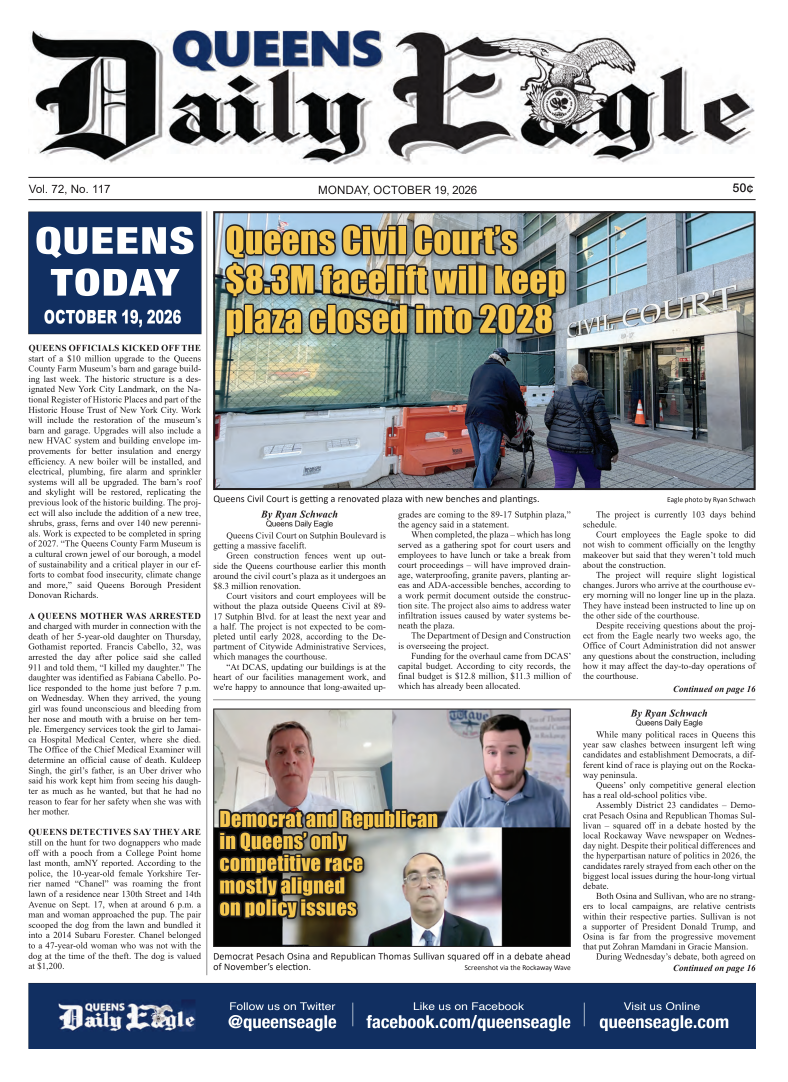
Complaints against NY judges hit all-time high for fifth year in a row
/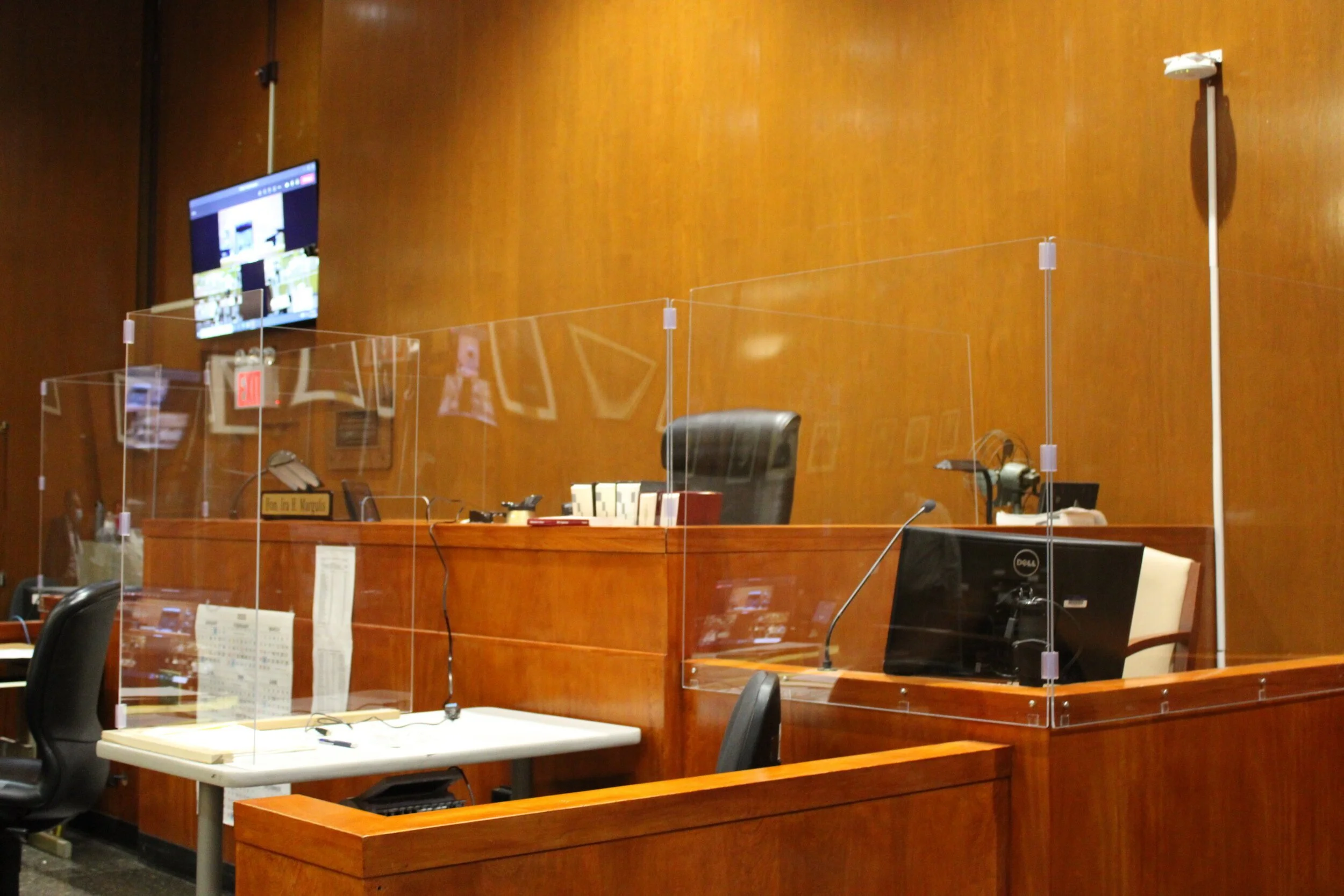
State judges received a record number of complaints again in 2025, along with a record number of preliminary inquiries. Eagle file Photo by David Brand
By Noah Powelson
Complaints made against New York judges reached an all-time high for the fifth year in a row, according to the commission charged with investigating judicial conduct.
According to New York’s Commission on Judicial Conduct’s annual report released this week, 3,363 new complaints were made against state judges in 2025, beating the previous year’s record by 10 new complaints. Last year also saw a record number of preliminary inquiries started as a result of those complaints, though most did not lead to deeper investigations.
The increase in workload highlighted in the report comes as the commission is looking to the governor and legislature to keep its $9.3 million budget flat in the coming fiscal year.
While not as significant an increase compared to previous recent years, 2025 marks the fifth year in a row of record breaking complaints New York judges received, a number that’s doubled in the last five years.
Most complaints were dismissed outright, usually because they were about a complainant’s dissatisfaction with a case’s resolution and not due to a judge’s conduct. However, enough complaints in 2025 warranted further look for the commission to again break new records.
Around 580 preliminary inquiries were made in 2025 in response to judicial complaints, the most the commission has ever begun in a single year. The number broke 2023’s record of 570 inquiries. Preliminary inquiries, according to the commission, include initial interviews of involved attorneys, court file analysis and reviews of trial transcripts to determine if a proper investigation into the complaint is warranted.
Of the 582 inquiries made in 2025, 141 resulted in an investigation. An additional 189 investigations were still pending from 2024 as well, resulting in 330 total investigations.
Around 100 of those investigations resulted in the complaint being dismissed, either because the commission determined the complaint was without merit or because the involved judge was no longer on sitting the bench for extraneous reasons.
Around 30 complaints involving 20 different judges resulted in the judges’ resignation, and 43 complaints involving 23 different judges resulted in formal charges being authorized.
The remaining 154 investigations were still pending as of Dec. 31, 2025.
Investigations do not involve a review of the judicial rulings or decisions – the commission has no authority over the courts. Commission investigations, and any actions taken, are focused solely on the judge’s conduct and any alleged conflict of interests or prejudice.
One of the judges who resigned following a commission investigation last year was Richard T. Snyder, a justice of the Petersburgh Town Court, Rensselaer County. Snyder was accused of attempting to evade jury duty in 2024, claiming he could not be impartial because he believed all litigants who came before him were guilty.
When Snyder appeared before the commission on the matter, he repeatedly said that all litigants who appeared before him “did something wrong.”
“I know they’re guilty because they did something wrong. That’s how they got a ticket,” Snyder said. “That’s the reason why they got the ticket to appear in court, because they did something wrong.”
Snyder agreed to resign from the bench, and affirmed he would not seek another judicial office in the future.
Other judges did not resign, but were publicly disciplined for misconduct.
One such judge was Donald Hull of the Antwerp Town Court in Jefferson County, who oversaw a summary proceeding for an eviction case on Oct.18, 2022. According to court documents, Hull allowed his co-judge, Lucas J. Whitmore, to sit near the bench in the area of the witness box, talk with the tenant-respondents about the case, and appeared to give rulings and instructions to Hull.
Hull ruled in favor of the landlord in the case and ordered the tenants to vacate the apartment within 30 days. During his instructions to the tenants about housing options, Hull said, “[The Department of Social Services] won’t put you on the streets. It’s illegal for them to do that. They have to put you up. If they can put Mexicans up in the Taj Mahal—”
The tenants, who were both of Mexican heritage, objected to Hull’s comments and called them racist. Hull and Whitmore responded he was referring to hotels in New York City.
“Mexicans right now who are flowing out of the border and they’re going right from the border to hotels,” Hull said according to court documents.
Hull, who was not an attorney before becoming a judge, had been on the bench for 46 years and was never disciplined before. The commission found that Hull’s remarks and allowing another judge to interject during the proceedings were improper, giving the impression Hull’s judicial decisions were being influenced by another as well as his own personal bias.
As such, Hull was publicly disciplined and censured. His co-judge Whitmore was similarly admonished.
According to the commission, they have publicly disciplined 994 judges in the nearly 50 years they have operated, including 363 who were either removed from office or publicly resigned.
The Commission on Judicial Conduct was formed in 1978, and is responsible for fielding complaints from litigants, attorneys, judges and others who claim that a member of the judiciary violated the law or a state rule on judicial ethics or conduct.
The commission is comprised of 11 members who each serve four-year terms. Four members are appointed by the governor, three by the chief judge and one each by the speaker of the Assembly, the minority leader of the Assembly, the Senate majority leader and the Senate minority leader.
In previous reports, the commission has requested and seen regular increases in funding for the last two decades, reaching a record high of $9.3 million in Fiscal Year 2025. In the most recent report, the commission elected to request a “flat” budget, saying they followed Governor Kathy Hochul’s request of state agencies to refrain from asking for further funding for fiscal year 2026-27.
“Public confidence in the independence, integrity, impartiality and high standards of the judiciary, and in an independent disciplinary system that helps keep judges accountable for their conduct, is essential to the rule of law,” the report read. “The members of the New York State Commission on Judicial Conduct are confident that the Commission’s work contributes to those ideals, to a heightened awareness of the appropriate standards of ethics incumbent on all judges, and to the fair and proper administration of justice.”