Residents push back on Far Rockaway development in flood zone
/
A developer plans to build a 118-unit apartment building at 14-10 Beach Channel Dr., an area prone to flooding. The local community board opposed the project coming up for a vote before the City Council this month. Photo by Stella Roos
By Stella Roos
At the far end of Far Rockaway, along the edge of Jamaica Bay, many of the neighborhood’s historic clapboard houses are boarded up. A concrete crushing facility nearby blows dust clouds into the air. Sidewalks are regularly submerged during high tides.
When a developer came to the city with a rezoning application last year for a seven-story apartment building at 14-10 Beach Channel Dr., a few blocks from the bay, local residents had some reservations, mostly because the lot is in a Hurricane Evacuation Zone 1.
“The road around there can become like a river,” said Felicia Johnson, district manager of Queens Community Board 14, which includes Far Rockaway. “I’m concerned.”
The developer, Sam Zirkiev, bought the plot of land that includes a car dealership, a school bus depot and a small church for $1.24 million in 2021. He wants to construct a brick-clad building with 118 units, most of which would be market-rate one-bedrooms. The proposal has been denounced at every community board meeting since it was first presented in September. The City Council is expected to vote on the plan in the coming weeks, according to city documents. The project will come before the Council’s zoning subcommittee on Tuesday.
Dolores Orr, chair of the local community board, pointed out that developers are not required to inform new tenants that they are moving into a Hurricane Evacuation Zone 1.
“People are moving to areas that could result in them getting injured, or killed, and they don’t even know it,” she said. “I think it’s criminal.”
Orr also said she was concerned about the development’s proximity to an open-air construction debris recycling plant down the road, which the community board chair said was overlooked by a consultant who conducted an environmental review for the developer.
Versions of the conflict on Beach Channel Drive are playing out across New York City, as the government‘s drive to build housing runs up against economic and environmental realities. Just in Far Rockaway, an area highly vulnerable to natural disasters, over 7,000 new homes are in the works. The development has been supported by the city, in line with former Mayor Eric Adams’ “City of Yes” zoning reform.
The local community board has passed a non-binding moratorium on new construction in the area, arguing the city is not providing the necessary expansion of transit, schools and hospitals, resiliency infrastructure, or even – over a decade after Hurricane Sandy – an evacuation plan.
The developer has promised that the building would include retail space for a fresh food store in the neighborhood, which is a federally designated food desert. But John Cori, head of the Housing and Land Use Committee on the community board, said there was plenty of new commercial space in the area already, most of it standing empty.
“We’ve heard this all before,” he said.
Through his lawyer, Zirkiev declined to comment.
The community board’s opinion on rezoning applications is advisory, but developers will soon only have to go through the motions of seeking local support.
Queens Borough President Donovan Richards greenlit the development in November, making final approval all but assured.
The project has also gotten the ambivalent support of those already at the address.
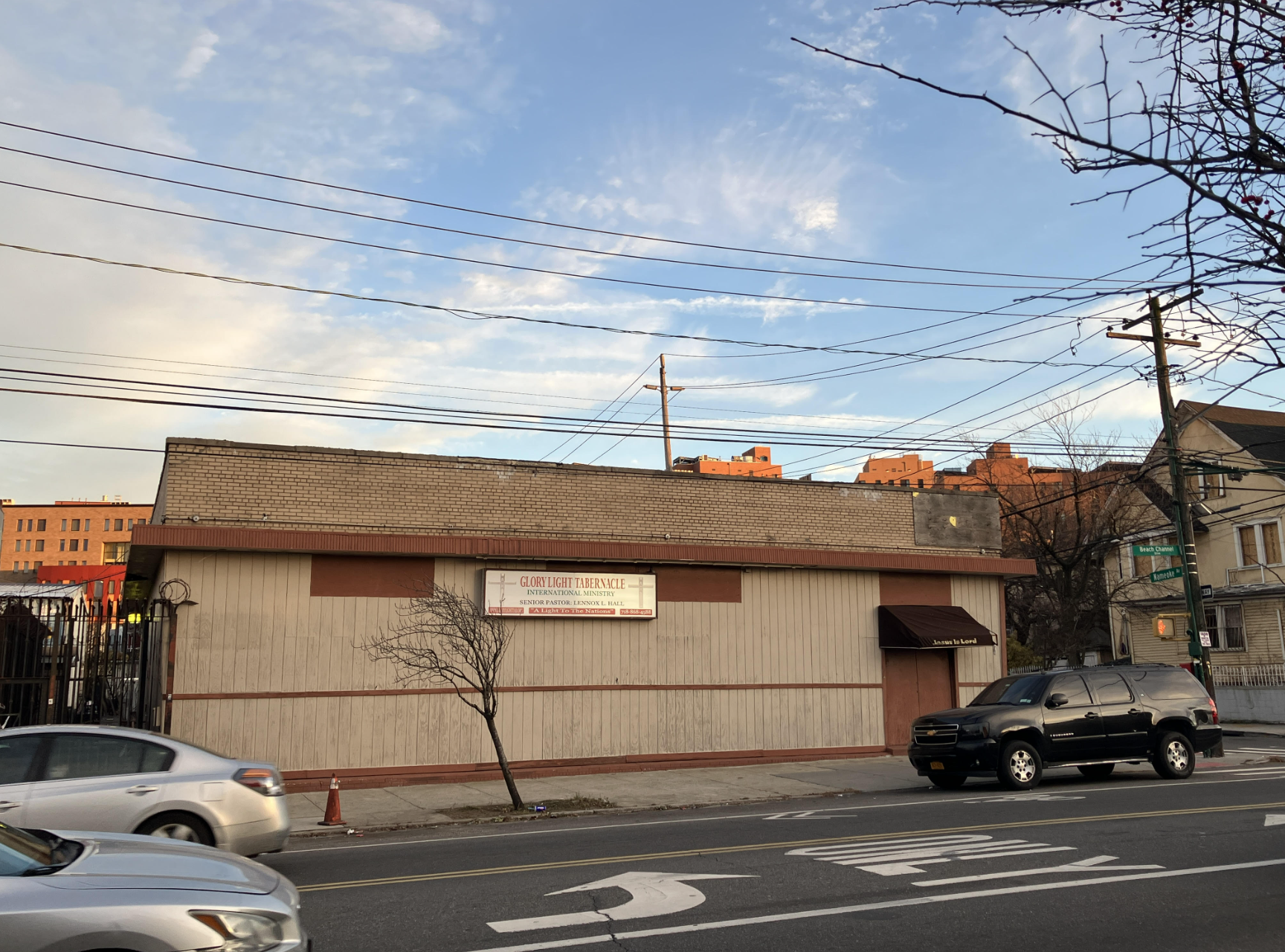
The Glory Light Tabernacle Episcopal Church organizes Sunday services in a worn, one-story building that abuts the school bus depot. They have been promised a larger, dedicated space in the new development.
Pastor Dellon Hall, the son of the bishop at the church, said that the project has divided his parishioners. Some have raised concerns about the proposal, including the lack of larger, affordable apartments, while others believe it will be an improvement overall.
“Far Rockaway has been overlooked for many years,” said Hall. “Clearly it’s not ideal, but probably it’s the best we can hope to get.”