Queens candidates hit streets as busy ballot petition season begins
/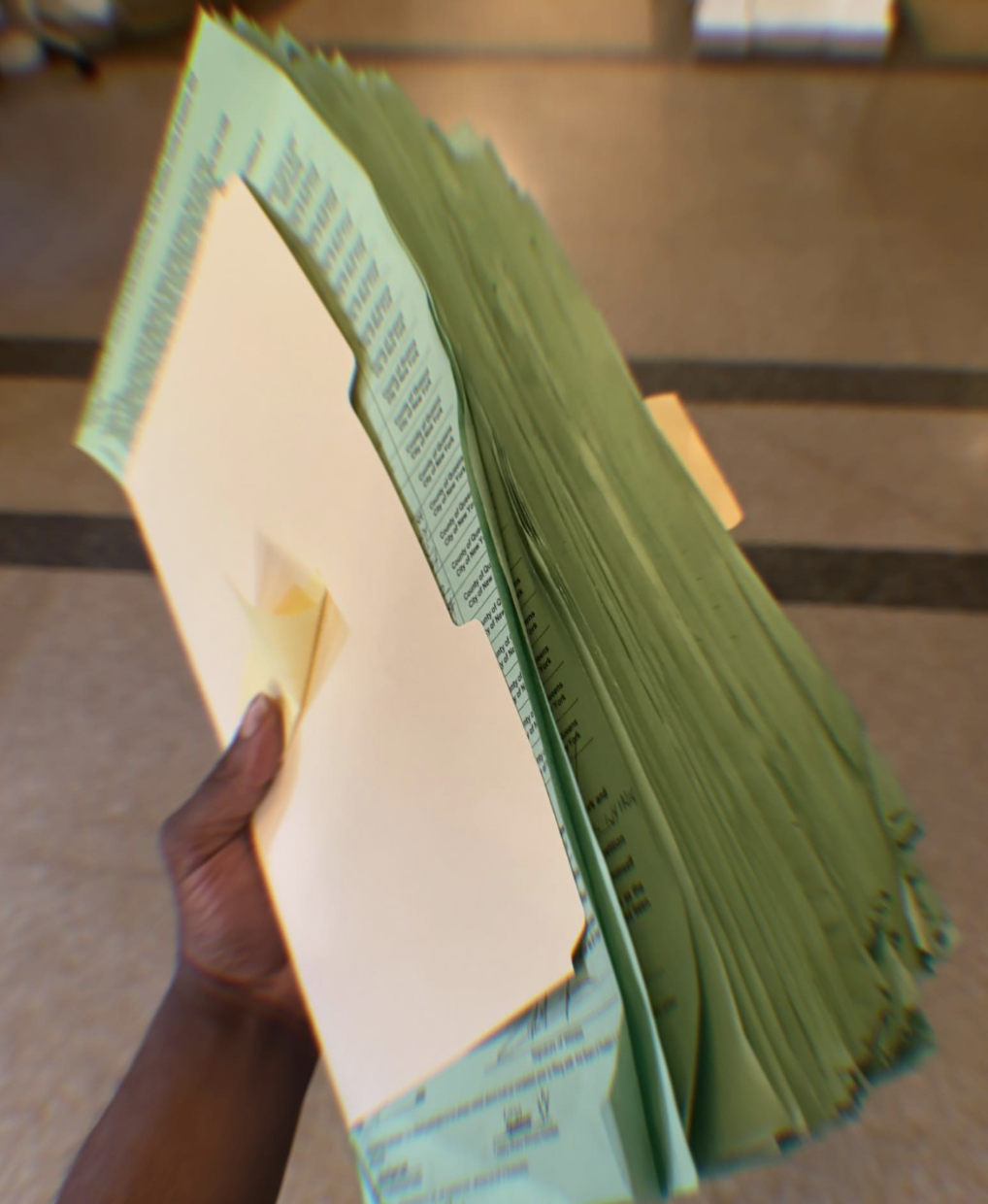
Queen candidates started to gather petitions ahead of a busy primary season this week. File photo via Ty Hankerson
By Ryan Schwach
Across Queens, from the surf shops of Rockaway, to the taco trucks of Corona, to the quiet suburban sidewalks of Beechhurst, people are asking voters to sign a green piece of paper.
Tuesday marked the beginning of petitioning season for Queens political candidates hoping to get their names on the ballot. Compared to years prior, this year might be one of the busiest.
The process, an arduous one that some argue is outdated, is the first major event in the political calendar as the borough heads toward what will likely be a crowded primary day in June.
There are an unusually large number of open seats and a smattering of contested races throughout the World’s Borough. A handful of impending retirements from longtime elected officials has resulted in a game of musical chairs, with several candidates abandoning their current seat to run for higher office, while creating new open races in the process.
As of Thursday afternoon, there were candidates vying for victory in nine Democratic primaries in the State Assembly and one Republican primary, and five Senate Democratic primaries.
In 2024, there were only six Democratic primaries and one Republican primary boroughwide – and only a single open seat. In 2022, also a midterm year, there were only three open elections between the Assembly and the Senate in Queens.
The shifting electoral landscape has enticed dozens of candidates, all of whom hit the streets this week to get enough signatures from voters so that their names may appear on the ballot in the coming months.
One function of the petitioning process is to whittle down crowded electoral fields. Candidates throughout Queens are hoping they do not fall victim to the onerous – and legally stressful – process.
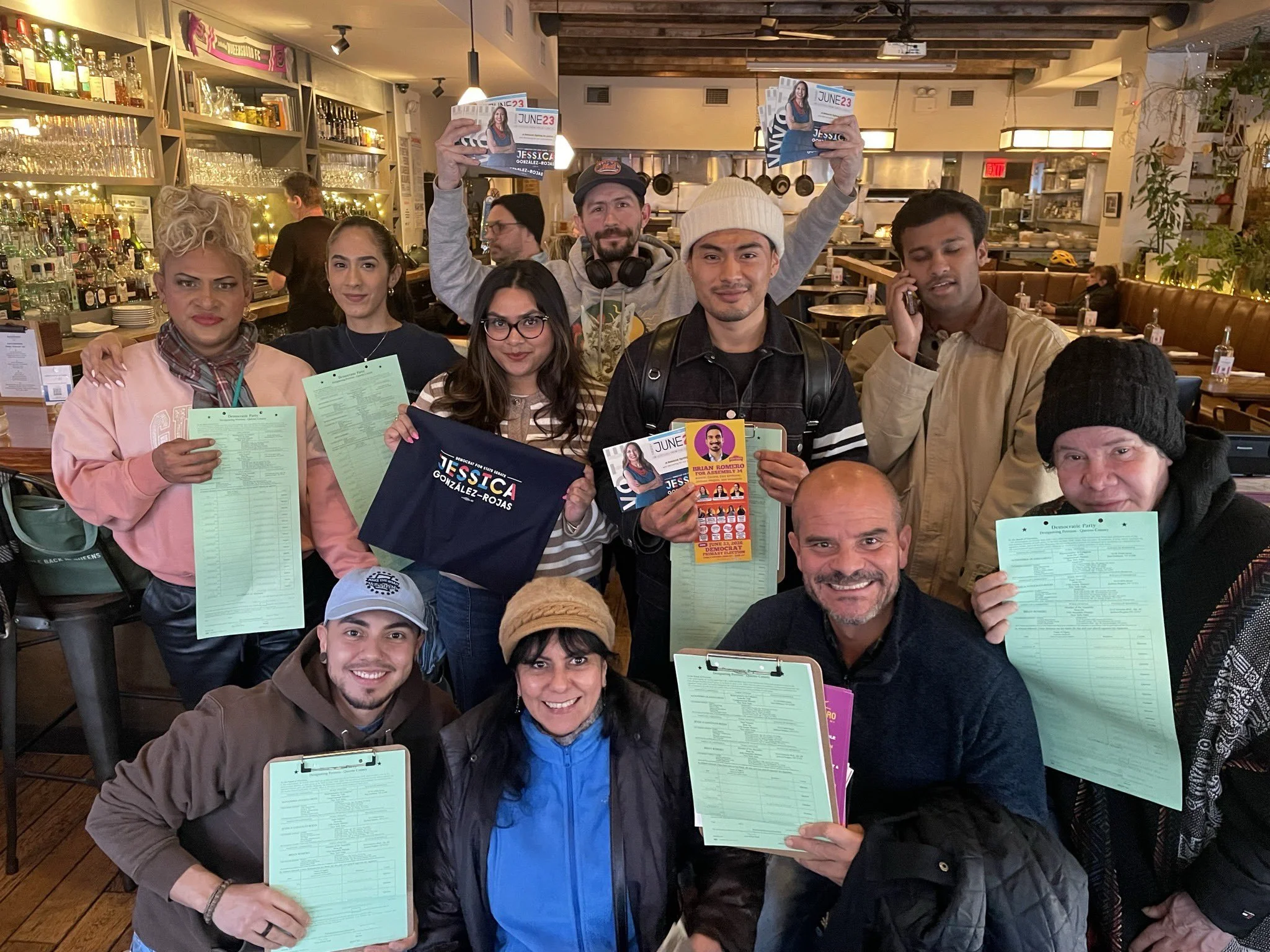
Volunteers are out gathering petitions for various Queens political candidates, including Brian Romero and Jessica Gonzalez-Rojas. Photo via Romero Campaign/X
Candidates with deep pockets, an inspired group of volunteers or the support of their local party organization should pass the test with flying colors, collecting three to four times as many signatures as the law requires. Candidates without such support will likely struggle to hit the signature threshold.
What’s left after the collection process is a group of candidates that will likely appear on the ballot come election day – as long as they survive the legal challenges to their petitions that most candidates encounter.
“It is a necessary and tedious task,” longtime election lawyer Jerry Goldfeder told the Eagle last year.
In New York State, candidates need to gather petitions from five percent of the active enrolled voters of the political party they are running in.
For Assembly candidates, that’s 500 signatures. State Senate candidates need 1,000 signatures and congressional candidates need 1,250.
All candidates have until April 2 to get the signatures.
Most candidates use the petitioning process as an opening salvo to tout support from their district and to introduce themselves to voters who have yet to meet them.
“I love petitioning, it's my favorite part of the campaign season because it’s that first moment of connecting with voters,” said Pia Rahman, a Democrat running for State Assembly District 37. “That interaction brings me the most joy and reminds me why I’m running here in Queens. There’s something powerful about seeing the progress in real time – the signatures are quantitative data you can actually watch grow.”
There are tricks to getting signatures, Rahman said. Last year, while she was working for Brad Lander’s mayoral campaign, she would ask prospective signers, “Are you ready for a new mayor?”
“It always made voters chuckle and stop to talk,” she said. “Now, with just the first few days underway and me on the ballot, I’m thinking about what my new pickup line will be.”
Rahman, a first-time candidate, is running for the seat being vacated by Assemblymember Claire Valdez, who is running to replace Nydia Velázquez in Congress. Velázquez was one of four elected officials in Queens to announce their retirement ahead of the start of petitioning.
Rahman is running against Samantha Kattan, also a first-time candidate who has the support of the Democratic Socialists of America and Valdez.
Kattan is hoping to benefit from the surging DSA movement, which touted a strong ground game during the mayoral election last year. Kattan, a DSA member, will have the benefit of using the organization as a petitioning tool.
“The DSA support is incredibly helpful,” Kattan said. “It’s both the large and active volunteer base, and the logistical support the organization can offer from having so many members with field experience.”
Along with Kattan, the DSA is backing Valdez in New York’s 7th Congressional District, Aber Kawas, who is running for retiring State Senator Michael Gianaris’ seat, and David Orkin, who is challenging Assemblymember Jenifer Rajukumar.
Kawas is running against Assemblymember Steven Raga for the Senate after initially launching a bid for the State Assembly, where she was running against longtime staffer and DSA member Brian Romero.
In the past several weeks, Romero’s race has changed drastically. After Kawas left the race, another opponent, Andreas Migias, dropped out and endorsed him. While he still has an opponent in Rosa Sanchez, an ally of district leader Hiram Monserrate, Romero’s petitioning season has suddenly become a lot less competitive.
“I’m energized,” Romero told the Eagle when asked about the petitioning process so far. “You’ll see us everywhere from the Jackson Heights greenmarket to our local gay bar in Astoria.”
In other parts of the borough, where DSA and Working Families Party progressivism isn’t as strong, candidates are running with the backing of the Queens County Democratic Party.
Among them is Pesach Osina, another longtime political staffer who is vying to succeed Assemblymember Pheffer Amato in her Rockaway-centric district. Pheffer Amato also announced her retirement last year.
Osina said on top of the usual door-to-door petitioning, his people are trekking into subway stops to pick up signatures from voters on the go.
“It's going absolutely amazing,” he said. “Great response across the board.”
Osina and his Democratic opponent, attorney Mike Scala, have run in the Rockaways before.
“It's giving us an opportunity to speak with voters face-to-face and the feedback has been incredible,” Scala said. “They're just as tired as we are of machine politics.”
Whoever wins the primary is poised to face off against Republican Tom Sullivan, who is making his third attempt at the Assembly with the backing of the Queens County Republican Party. Sullivan’s own petition process has been going swimmingly, he said.
“We have already collected the required signatures for the Conservative Party line but will strive for 140 percent,” he said.
There is also a packed race to succeed Assemblymember Vivian Cook, who is also retiring, in Southeast Queens. There are currently seven candidates filed for the seat, the most of any race in Queens.
The Queens County Democratic Party has backed Nathaniel Hezekiah, a staffer for Congressman and Party Chairman Greg Meeks. The party support has led to quick petitioning results for the candidate.
“We are off to a great start,” said Tyquana Rivers, a spokesperson for Hezekiah’s campaign. “We hit the ground running on Tuesday, and already secured the minimum to be on the ballot.”
Also running to succeed Cook is Latoya LeGrand, Tunisia Morrison, LaToya Benjamin, Queen Johnson, Paul Nichols and Mohammad Molla.
Morrison was a staffer for Assemblymember Alicia Hyndman, and LeGrand is a former Cook-staffer who ran for the City Council last year. She has the support of the WFP.
LeGrand also told the Eagle her campaign has already pulled in the mandated number of signatures.
“We’re still going and listening to the concerns of our people in our community,” she said.
But even if candidates reel in enough signatures, a new battle likely will await them. Their signatures are likely to be challenged by their opponents in a process that might bring them before a Queens judge, where they’ll have to defend their green sheets.
The challenge process will kick off in mid-April, and will end when the Board of Elections officially certifies the ballots later in the month.