Indigent legal services face $120 million ‘funding sweep’ from governor
/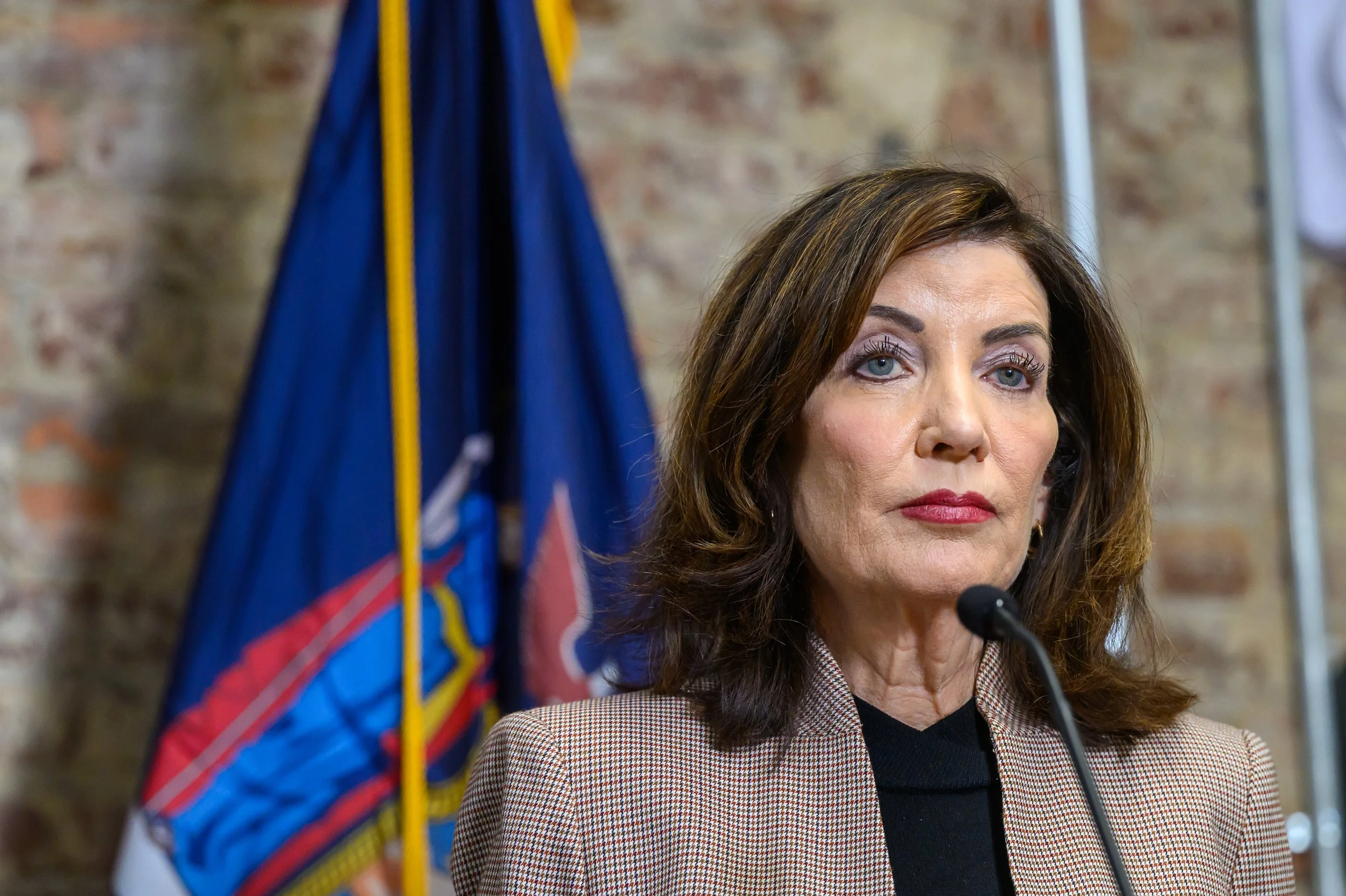
Governor Kathy Hochul’s proposed 2027 executive budget includes diverting $234 million away from the Indigent Legal Services Fund, moving $120 million in the General Fund. Photo by Susan Watts/Office of Governor Kathy Hochul
By Noah Powelson
The director of New York’s Office of Indigent Legal Services called on the state legislature to prevent the governor from taking over $120 million in funding from the office, and warned the funding sweep could have a dire impact on low-income New Yorkers’ ability to access free legal services.
At a joint legislative public hearing on the governor’s proposed 2027 executive budget, ILS Director Patricia Warth said that $234 million is set to be transferred out of the Indigent Legal Services Fund under the current executive budget. Around $114 million of that transfer will, to Warth’s understanding, be used consistent with the fund’s purpose by partially reimbursing counties for increased assigned counsel rates.
But the remaining $120 million, Warth said, is being transferred into the state’s General Fund with no explanation given for its potential use.
“The work we are doing is vitally important and the ILS Fund is fully needed to continue to support this work,” Warth said. “The ILS Fund cannot be used as a tool to balance the General Fund, doing so would jeopardize our work. But worse, it would send a message to counties that the state is not committed to public defense.”
When asked by State Senator Shelley Mayer, who sits on the Senate Judiciary Committee, if the governor’s office had spoken to ILS about the funding sweep, Warth said they only knew about the money used to reimburse assigned counsel rates and had no idea about the additional $120 million.
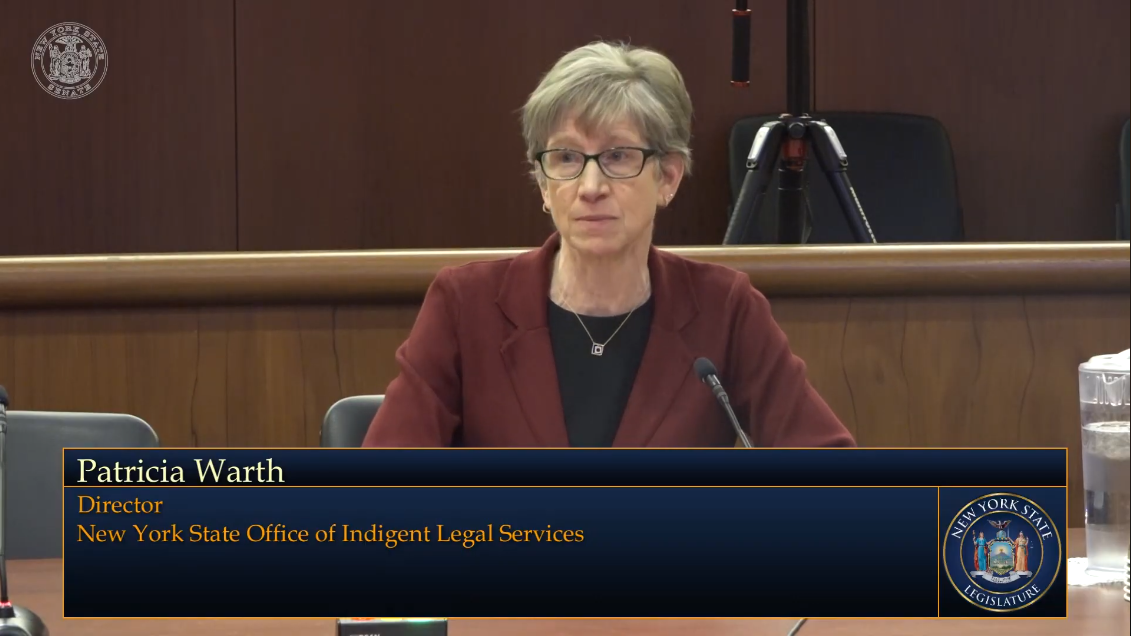
New York’s Office of Indigent Legal Services Director Patricia Warth asks the state legislature to prevent an executive funding sweep from the Indigent Legal Services Fund. Screenshot taken from NYS Senate
Warth called on elected officials to work with Governor Kathy Hochul to lower the proposed funding sweep to $114 million, and said that current sweep amount would risk crippling ILS across the state as legal services needs continue to rise.
“The long-term impact is very worrisome to me,” Warth said. “As we’re working more, and the programs that we’re helping to develop in the counties and New York City become more entrenched, the expenditures are starting to outpace the revenues.”
“The fund is fully needed for what we’re doing,” Warth added.
The immediate impact on ILS if the funding sweep takes place, Warth said, will be the loss of trust in the state’s ability to support public defender services. All ILS programs and contracts are cost reimbursed, meaning counties have to spend on ILS programs and then make a request to the office to get paid back.
If the ILS Fund shrinks, Warth said, that could make counties unsure if they would get their reimbursements and therefore make them hesitant to spend money on ILS programs.
“Everything we do is built on trust,” Warth said. “Trust that they will be reimbursed. And I think continuing to have authorization to sweep funds from the ILS Fund undermines the trust that the counties have in the state's commitment to improving quality public defense.”
The ILS Fund was established in 2003 as a special fund devoted to assisting counties and New York City with improving public defense services. The ILS Fund currently supports all of ILS programs, and receives funding through the state budget and through a portion of administrative fees issued by the Office of Court Administration.
This isn’t the first time the governor has attempted to take funds meant for legal services in order to balance the budget. Hochul also issued a similar mass funding sweep of the ILS Fund in her 2025 executive budget.
In 2024, Hochul also drew the outrage of New York’s legal community after attempting to sweep $55 million from the Interest on Lawyer Account, a public legal fund that provides grant funding to legal nonprofits who represent low-income and indigent New Yorkers in their civil cases.
After massive public outcry from the legal community, including the New York State Bar Association and the Legal Aid Society, Hochul issued a 30-day amendment to the budget that reversed the sweep.
While the funding sweep is smaller this time around, Hochul may still face pushback from legal advocates, especially as civil legal services have become a priority for the legal community.
At a recent separate joint legislative hearing on the governor’s proposed budget, Chief Administrative Judge Joseph Zayas said part of the court’s massive $3.2 billion budget ask is to further invest in civil legal services programs. The budget request includes $25 million for grants to civil legal services organizations who represent New Yorkers who face issues affecting “essentials of life,” such as housing and immigration.
Several legislators expressed reservations during the meeting about the governor’s proposed funding sweep, including Brooklyn Assembly Member Jo Anne Simon, who sits on the Assembly Judiciary Committee as well as chairs the Mental Health Committee.
“I am similarly concerned about the governor’s sweep in funds,” Simon said.
Assemblymember Chris Burdick, who chairs the Assembly Subcommittee on Employment Opportunities for People with Disabilities, likewise said he felt that the $120 million should stay within ILS.
“Thank you for your testimony and for your work, and especially for highlighting the executive’s proposal of sweeping $120 million,” Burdick told Warth. “I certainly concur that those funds really should be applied for the purposes they were intended under the state finance law.”
When Burdick asked Warth if funding sweeps had happened to ILS before, which she said they had. When asked if the past negotiations had ever successfully prevented a funding sweep, Warth said they had not.
“We want it to end this year,” Warth said. “I’m focusing on it this year, because it is a priority.”
In response to Warth’s testimony, the governor’s office said Hochul has invested more than $640 for aid to defense, indigent legal services, and assigned counsel services in the FY 2027 Executive Budget.
“The sweep authorization remains unchanged from the Enacted FY 2026 and FY 2025 Budgets,” Tim Ruffinen, spokesperson for the Division of Budget, said in a statement. “This transfer of funds would occur to provide General Fund support, including to support and offset defense costs.”