Queens DA sues to shut down state prosecutorial watchdog
/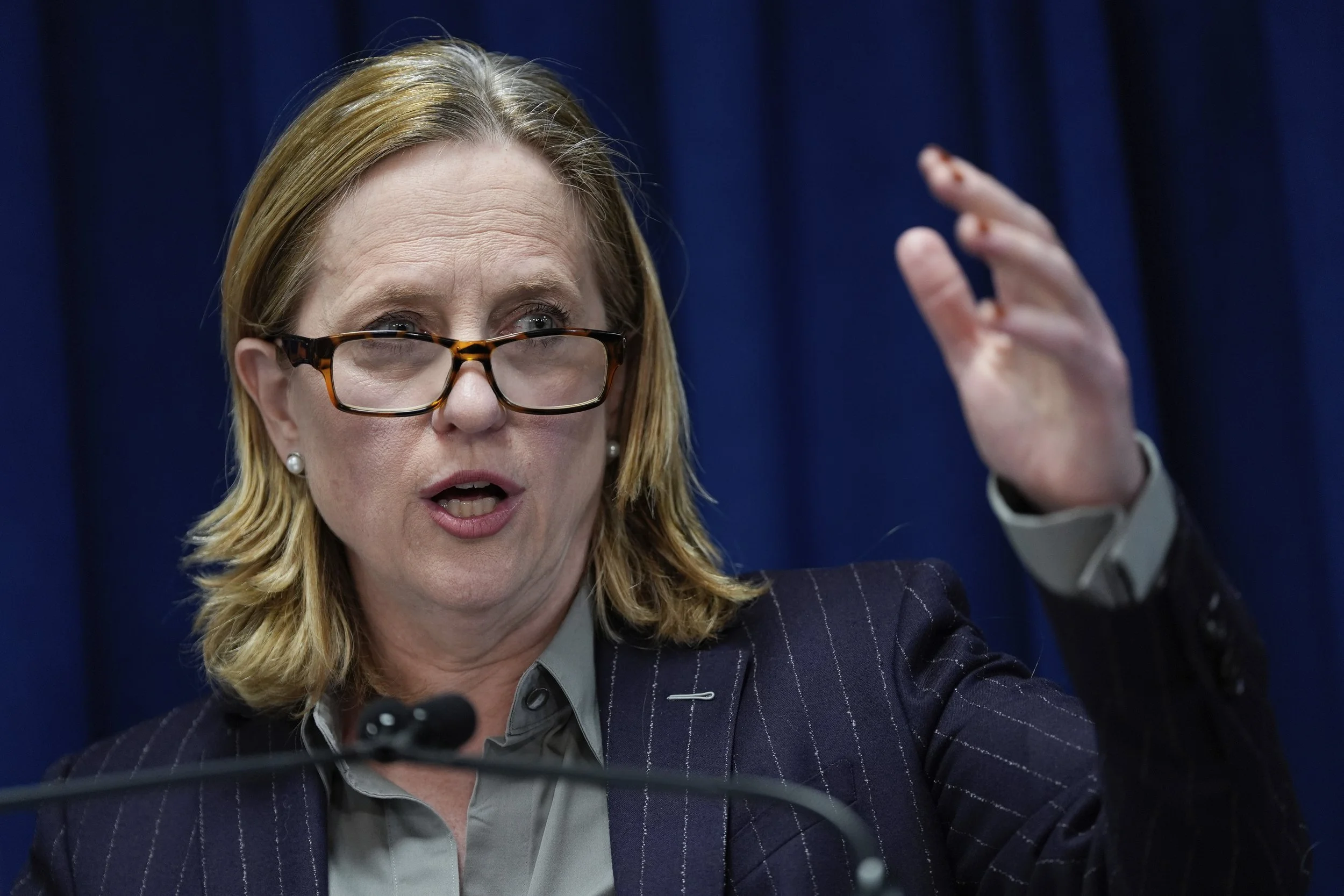
Queens District Attorney Melinda Katz’s office sued to shut down the New York State Commission on Prosecutorial Conduct earlier this month. AP file photo by Julia Demaree Nikhinson
By Jacob Kaye
The Queens district attorney is trying to shut down a recently created state watchdog tasked with investigating prosecutorial misconduct, arguing that the commission has no legal authority to scrutinize prosecutors’ work – including in one of Queens’ most notorious wrongful conviction cases.
Queens District Attorney Melinda Katz’s office filed a lawsuit against the New York State Commission on Prosecutorial Conduct earlier this month, claiming that the commission, which has faced a successful challenge to its constitutionality in the past, does not have the legal authority to investigate prosecutors’ work.
The lawsuit was filed on Nov. 6 but initially sealed from public view. It was unsealed on Monday before again being put under seal on Monday afternoon, after the publication of this story.
The DA’s office brought the lawsuit after the commission issued several subpoenas seeking records related to former Queens prosecutors accused of wrongdoing in a major wrongful conviction case, in which three men spent a combined 72 years behind bars for two brutal murders they did not commit.
The lawsuit is the latest attempt to put an end to the nascent commission, which is the only state body tasked solely with investigating prosecutors’ conduct.
The commission has only recently begun to dive into the hundreds of complaints made against prosecutors throughout the state, including at least two dozen made against former prosecutors in Queens.
Though the commission was created by state lawmakers in 2018, its jurisdiction was immediately challenged, and a judge in 2020 ruled it was unconstitutional. Lawmakers in Albany reformed the law and relaunched the commission in 2021, but it sat unstaffed for years, unable to look into or rule on any of the complaints it had received. After the required number of commissioners were appointed several years later, the CPC began its work. Last year, it made its first and only ruling to date – the censure of former Monroe County District Attorney Sandra Doorley, who used her title as the Western New York county’s top cop to try to get out of a speeding ticket.
But the commission appears to have amped up its work in recent months.
Over the summer, the commission sent three subpoena requests to Katz’s office, demanding case files related to the wrongful convictions of George Bell, Rohan Bolt and Gary Johnson, three Queens men who together spent nearly three quarters of a century behind bars for a 1996 double murder they did not commit.
Prosecutors in the case were accused of hiding evidence that suggested that other suspects were behind the crime.
The commission also sought the records of two other cases related to the Bell, Bolt and Johnson investigation, including a 2019 wrongful conviction that first unveiled evidence that the three Queens men were not behind the double murder.
The Queens DA’s lawsuit challenges the commission’s authority in several ways. It claims that the 2021 law creating the commission only allows it to investigate prosecutors who are still on the job, not former prosecutors like the ones who worked on the Queens wrongful conviction case mentioned in the suit. The lawsuit also claims that the commission does not have the authority to force the DA to unseal the case files, which were made private after the wrongful conviction findings.
But most importantly, the DA’s suit claims the commission itself is unconstitutional, because it “intrudes upon the constitutionally protected exclusive jurisdiction of the Appellate Division over matters of attorney discipline.”
A similar argument has swayed a judge before.
In response to a lawsuit brought by the District Attorneys Association of New York, an Albany judge ruled in 2020 that the CPC was unconstitutional because it violated the jurisdiction of the Appellate Division, New York’s middle level court that previously was the only body investigating allegations of misconduct against prosecutors and attorneys.
Acting Albany Supreme Court Justice David Weinstein said in his ruling that the original law creating the commission would have created a “parallel body, which would have the same power to determine whether there have been violations of the Rules of Professional Responsibility, and to impose censure for such violations.”
The Queens DA’s lawsuit makes similar claims, arguing that the CPC steps on the Appellate Division’s toes and that it creates the risk of “parallel disciplinary proceedings for the exact same conduct, with contradictory results.”
“The possibility of such repugnancy undermines the Appellate Division's authority and the legitimacy of the attorney disciplinary process,” the new lawsuit reads.
The DA’s office, which is represented by law firm Greenberg Traurig in the case, asked a judge to temporarily block the commission from accessing the case files, quash the subpoenas and find the law creating the commission unconstitutional.
Through an attorney, the CPC declined to comment on the lawsuit. The commission had yet to file a response in court to the DA’s claims by time of publication.
But in an Oct. 15 letter to the DA’s attorneys, the commission disputed many of the claims Katz’s office would go on to make in its lawsuit.
Ross Firsenbaum, an attorney with WilmerHale who is representing the commission in the case, said in the letter that the CPC had full authority to investigate prosecutors regardless of whether they were still employed.
“The legislature created the CPC to identify, remedy, and deter prosecutorial misconduct – a need that does not end when a prosecutor leaves office,” Firsenbaum said in the letter, which came in response to a request from the DA’s office that the commission retract the subpoenas.
“The CPC disagrees and declines to withdraw the subpoenas because it has jurisdiction to review and investigate the conduct of former prosecutors,” Firsenbaum added.
Brendan Brosh, a spokesperson for the Queens DA’s office, declined to comment on the lawsuit and referred the Eagle to the state law that requires “that all proceedings of the Commission on Prosecutorial Conduct are confidential until at least there is a conclusion.”
Major wrongful conviction case continues to have impact
The DA’s case largely centers around records related to a significant wrongful conviction case its own Conviction Integrity Unit first championed.
Katz, who is up for reelection next year, created the CIU shortly after taking office in 2020.
The Christmas-time murders prompted a citywide manhunt for the killers, ordered by then-Mayor Rudy Giuliani. Amid the pressure campaign, police arrested the three young men, even though they bore no resemblance to the suspects beyond the fact that they were also Black.
Bell, Bolt and Johnson were sentenced to virtual life sentences – in Bell’s case, then-District Attorney Richard Brown sought the death penalty.
It wasn’t until the CIU began investigating decades later that a major flaw in the police and prosecutorial work on the case was revealed.
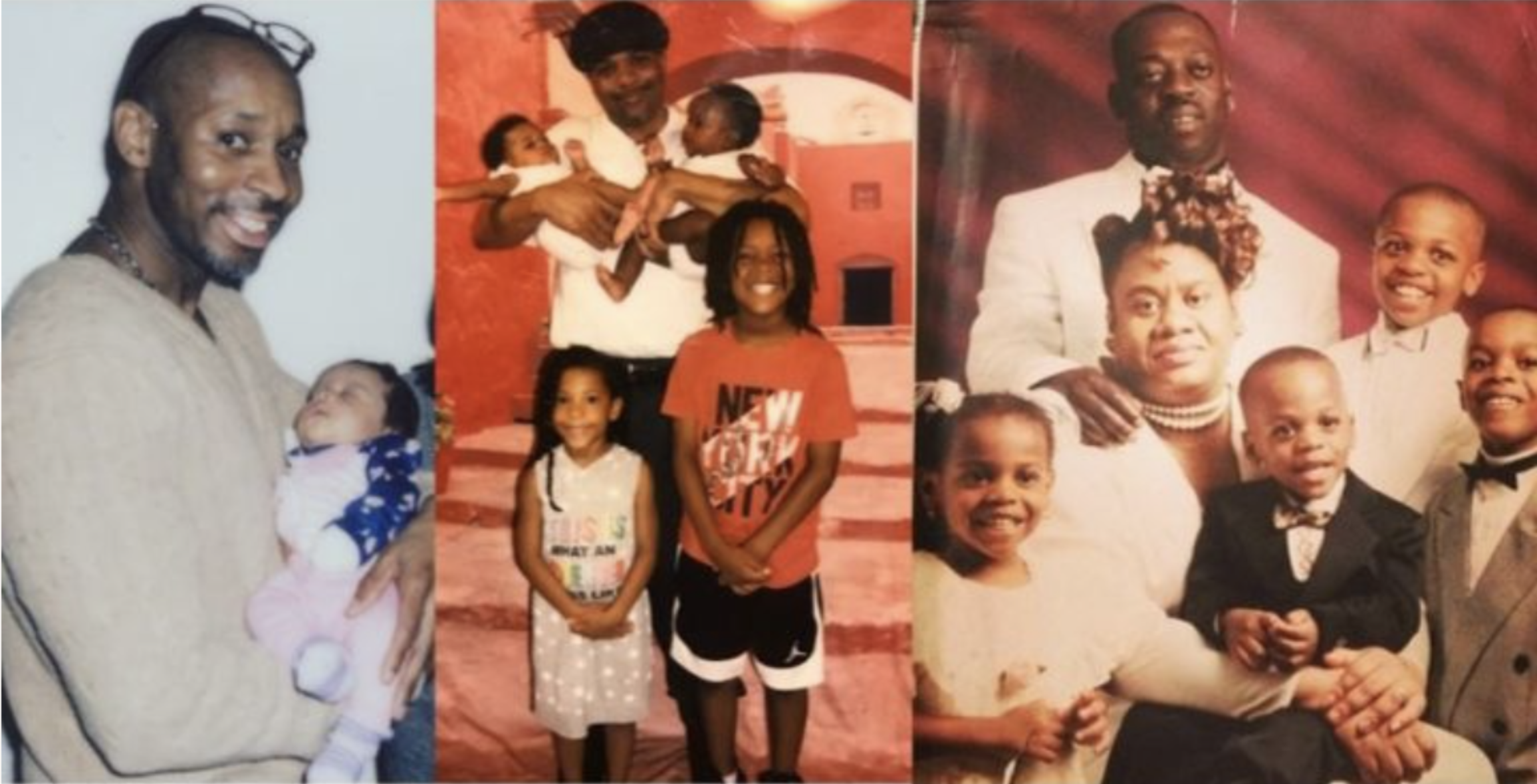
From left, George Bell, Gary Johnson and Rohan Bolt. The trio’s wrongful conviction case is at the center of the Queens district attorney’s lawsuit against the New York State Commission on Prosecutorial Conduct. File photo via GoFundMe
An NYPD officer’s written interview with a member of the local “Speedstick” gang suggested that members of the gang were actually behind the botched robbery of the check cashing store. The note had been buried by prosecutors and never turned over to Bell, Bolt or Johnson’s attorneys.
Though the CIU’s investigation found no wrongdoing by the prosecutors, Brad Leventhal and Charles Testagrossa, the Queens judge overseeing the case, felt differently.
Then-Queens Supreme Court, Criminal Term Administrative Judge Joseph Zayas, who now serves as second-highest ranking judge in the New York State court system, admonished the former assistant district attorneys from the bench, saying that they “deliberately withheld from the defense credible information about third-party guilt that is evidence that others may have committed these crimes.”
“The stakes could not have been higher and the duty of care by the prosecution should have been correspondingly heightened,” Zayas said in 2021. “The opposite occurred in this case.”
Leventhal, who was working as the head of the Queens DA’s Homicide Bureau at the time, resigned from his post and also stepped down from his role as an adjunct professor at St. John’s University Law School after Zayas’ ruling. Testagrossa resigned as the Nassau County district attorney’s chief of investigations less than a week after the convictions were overturned.
All three of the wrongfully convicted men went on to win major settlements from the city for the years they wrongly spent behind bars.
Bell received $17.5 million from the city in 2023, which amounted to the largest settlement payout for a wrongful conviction in New York City history at the time. Johnson and Bolt were both awarded around $15 million a year later.
But in the years since the DA’s office first filed its motion to vacate Bell, Bolt and Johnson’s convictions, it has continued to deny that its prosecutors behaved improperly.
Nonetheless, Zayas’ ruling about Leventhal and Testagrossa’s conduct in the case was the subject of an Appellate Division grievance committee complaint made by a group of law professors and the nonprofit group Civil Rights Corp, who together formed an organization known as Accountability NY.
After a multi-year investigation, the Grievance Committee for the Tenth Judicial District said in a July 14 ruling that there was “insufficient evidence” to prove that Leventhal and Testagrossa violated “the rules and laws governing attorney conduct” in the case, and dismissed the complaint.
The CPC’s subpoenas seeking records related to the Bell, Bolt and Johnson case were sent to the district attorney’s office less than a week later.
Longtime opposition from DAs
The CPC has seen pushback from prosecutors since its inception.
District attorneys across the state and the state’s attorney general initially opposed the 2018 law creating the commission, claiming that the bill had “serious constitutional flaws and create[d] significant policy problems.” Then-Governor Andrew Cuomo took some of their concerns into consideration and altered the bill before signing it into law and creating the commission.
But the changes didn’t stop the District Attorneys Association of New York from successfully suing over the commission's existence.
Lawmakers went back to the drawing board and recreated the commission in 2021. The new law established the 11-member commission and changed a number of the commission’s powers, authorizing the CPC only to investigate, develop a factual record and make recommendations about prosecutorial misconduct, leaving formal attorney discipline to the Appellate Division.
The District Attorneys Association of New York – which was led, at the time, by Doorley, the former Monroe County District Attorney who remains the only person ever publicly censured by the commission – continued its opposition to the commission, which was slowly established over the next several years. Governor Kathy Hochul didn’t appoint her members to the commission until 2023 and agency operations didn’t begin in earnest until 2024.
In the last two years, the commission has received 479 complaints of prosecutorial misconduct and created preliminary reports for around 140 of those cases, according to the commission’s first-ever annual report released earlier this year. It’s launched 18 investigations.
Like the work of the Appellate Division’s grievance committees, the CPC’s work is largely confidential. It does not comment on the existence of specific investigations unless there has been a concrete finding.
While prosecutors have fought the existence of the commission, criminal justice advocates have celebrated it, even if they have also criticized it for not moving at a faster clip.
Steve Zeidman, a law professor at the CUNY School of Law who is also a member of Accountability NY, told the Eagle on Monday that the CPC is designed to serve as an alternative to the state’s “ineffective” grievance committee.
‘[The Appellate Division’s grievance committee has] turned a blind eye to clear evidence of prosecutorial misconduct,” Zeidman said.
The law professor also blasted Katz’s office for suing over the commission's existence, calling it “ironic.”
“It seems to me that what prosecutors expect of defendants is accountability and remorse, taking responsibility for their actions, and ultimately that's what all these subpoenas are about – trying to figure out exactly what happened, who did what, and have those people and their office be held accountable for the harm that they caused,” he said.
“Instead, what we have is the district attorney's office doing quite the opposite,” he added. “Refusing to acknowledge that there was any wrongdoing and seeking to bury it.”
Additional reporting by Lily Elwood.
Update: This story was updated to reflect that the Queens district attorney’s lawsuit against the Commission on Prosecutorial Conduct was put under seal after the publication of this story.