Queens DA urges parole board to reject release of man behind notorious NYPD killing
/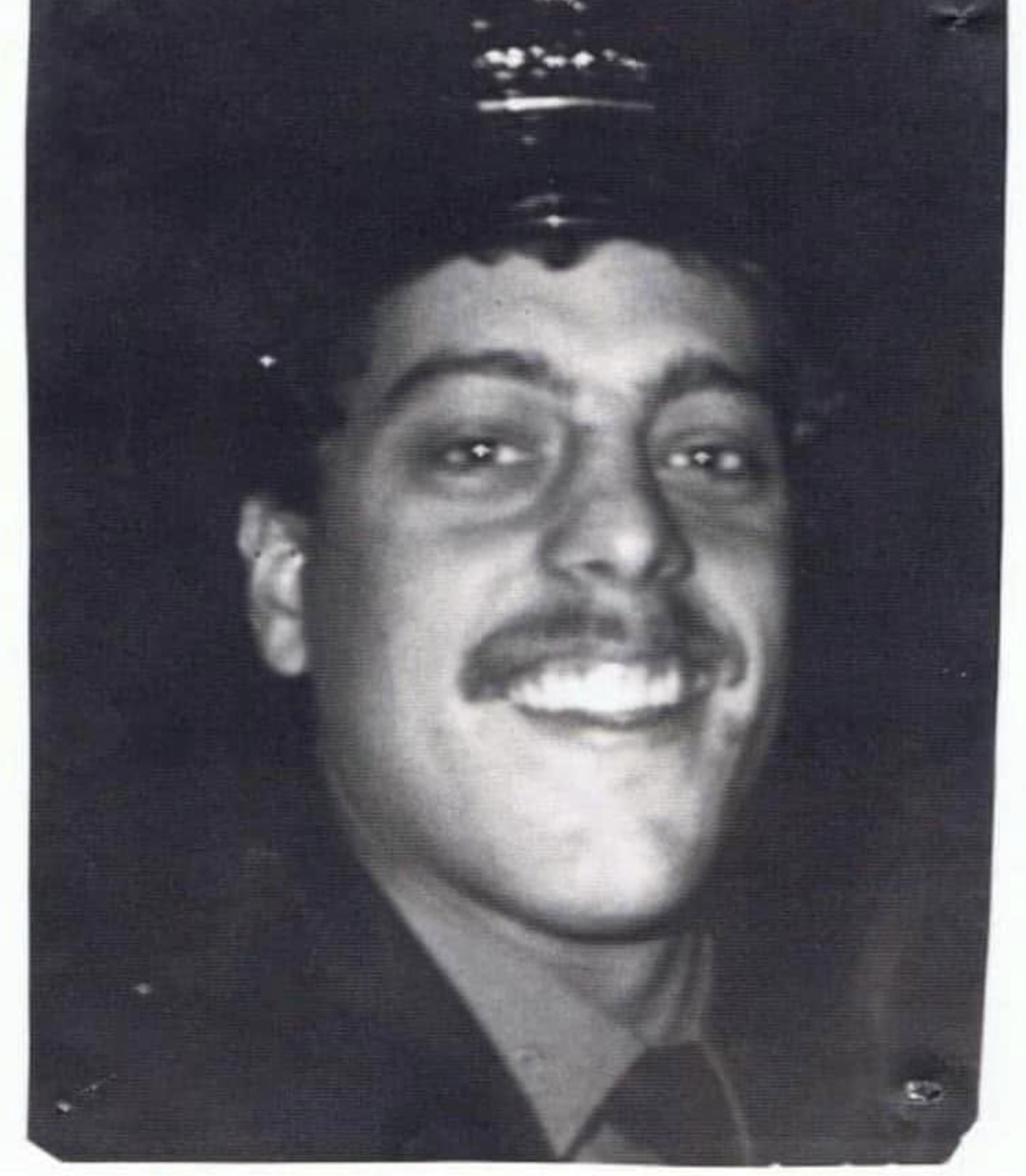
The Queens District Attorney is urging the parole board to reject David McClary’s bid for parole. McClary was convicted of killing NYPD officer Edward Byrne, pictured here, in South Jamaica in 1988. Photo via In Memory of Police Officer Edward R. Byrne/Facebook
By Jacob Kaye
The Queens District Attorney asked a parole board last week not to release the Queens man convicted of the 1988 murder of rookie NYPD officer Edward Byrne, whose killing sparked outrage nationwide and kickstarted a police crackdown on the violent crack gangs that dominated the city.
In a letter to the state’s parole board shared with the media this week, Queens District Attorney Melinda Katz urged the board to deny parole to David McClary, one of four men ordered by Queens drug kingpin Howard “Pappy” Mason to kill the young police officer.
Katz said McClary shouldn’t be released because he had taken too long to admit to his role in Byrne’s murder, one of the most notorious killings of an NYPD officer in the city’s history, and because he had yet to fully explain why he pulled the trigger and shot Byrne in the head five times as he sat in his police car in South Jamaica.
The letter marks the second time Katz has asked the board to keep McClary, who has served 38 years of his 25 years to life sentence, behind bars. McClary, who became eligible for parole in 2012, has been denied release by the parole board eight times.
“Nearly six years have passed since I wrote my initial letter in opposition to David McClary’s release and my position has not wavered,” Katz said in a statement. “This execution was nothing short of an act of domestic terrorism designed to challenge the long established and universally accepted laws of civilized society.”
“McClary and his accomplices killed an on-duty police officer in an attempt to disrupt the safety of our city on the most fundamental level,” she added. “He should remain behind bars where he belongs.”
While Katz has urged the parole board to reject McClary’s bid for release, the Queens man’s family, criminal justice advocates and a former commissioner on the parole board have called on the board to allow him to leave prison. McClary and his supporters have said he has reformed himself over the nearly four decades he’s been in prison and that he shouldn’t be seen only for the violent murder he committed when he was 22 years old.
“David has not only transformed his own thinking and behavior, but he has also helped many younger people make the same transformation throughout the decades,” Jose Saldana, the director of the Release Aging People in Prison Campaign, said in a statement to the Eagle. “He meets every criterion for release to parole supervision, including a clear record of rehabilitation, the lowest possible risk of reoffending according to the board’s own assessment, and a robust release plan.”
“Keeping him in prison may serve an insatiable appetite for vengeance, but it would not advance justice – and certainly not public safety,” he added.
Byrne was guarding the home of a Queens man whose house had been firebombed twice with Molotov cocktails after he had called the police to report two alleged drug dealers standing on the corner of Inwood Street and 107th Avenue, where he lived.
Byrne was alone in his squad car when four men drove up in a car next to him. One of the men, Todd Scott, got out and tapped on the passenger side window.
With Byrne distracted, McClary fired five shots at the officer’s head, killing him instantly.
The murder made national headlines and found its way to the White House, where then-President George H. W. Bush kept Byrne’s police shield on his desk in the Oval Office “as a reminder of one man's sacrifice against the forces of lawlessness,” Katz said in her letter to the parole board.
McClary was put on trial separately from his three accomplices, because the four men had given conflicting statements about who pulled the trigger and killed Byrne. Prosecutors similarly gave little clarity about who the gunman was, at times saying McClary had been the only one to fire at Byrne while other times saying he had “acted in concert” with the others, according to the New York Times.
McClary was convicted in June 1989 amid “bursts of applause” from the hundreds of officers gathered in the courtroom, according to reporting by the New York Times.
After being sentenced to 25 years to life in prison, McClary was placed in solitary confinement, where he remained for four years. He later sued the state over the lengthy amount of time in solitary and was awarded $660,000 by a federal jury.
According to McClary’s family, the Queens man participated in a number of programs while in prison, received his GED and now leads classes on financial literacy, accountability and community repair.
“My involvement in [Byrne’s] death sickens me to my core,” McClary said in a video posted to social media in May. “I often can’t sleep at night thinking about the devastation my actions have caused to both his family and my own.”
Appearing before the parole board in July 2025, McClary admitted, for the first time, that he was the one who fired the gun that killed Byrne.
In its decision, the board said that it commended McClary for “finally admitting your guilt” but added that the statement did “not mitigate the fact that by lying about your role in this crime for well over three decades, you denied [Byrne’s] family, friends, colleagues and the community at large full closure for what actually took place that fateful night and the roles you all played.”
“It is shocking to think still, to this day, that you were more than willing to take the life of a human being, not only a police officer, but anyone in the community that you were told to, for purely selfish reasons,” the decision continued. “You opened fire and shot him multiple times without provocation and with pure intention.”
McClary’s next parole board hearing will be held the week of Oct. 19.