Retired Queens firefighter returns to rescue work after devastating earthquake in Colombia
/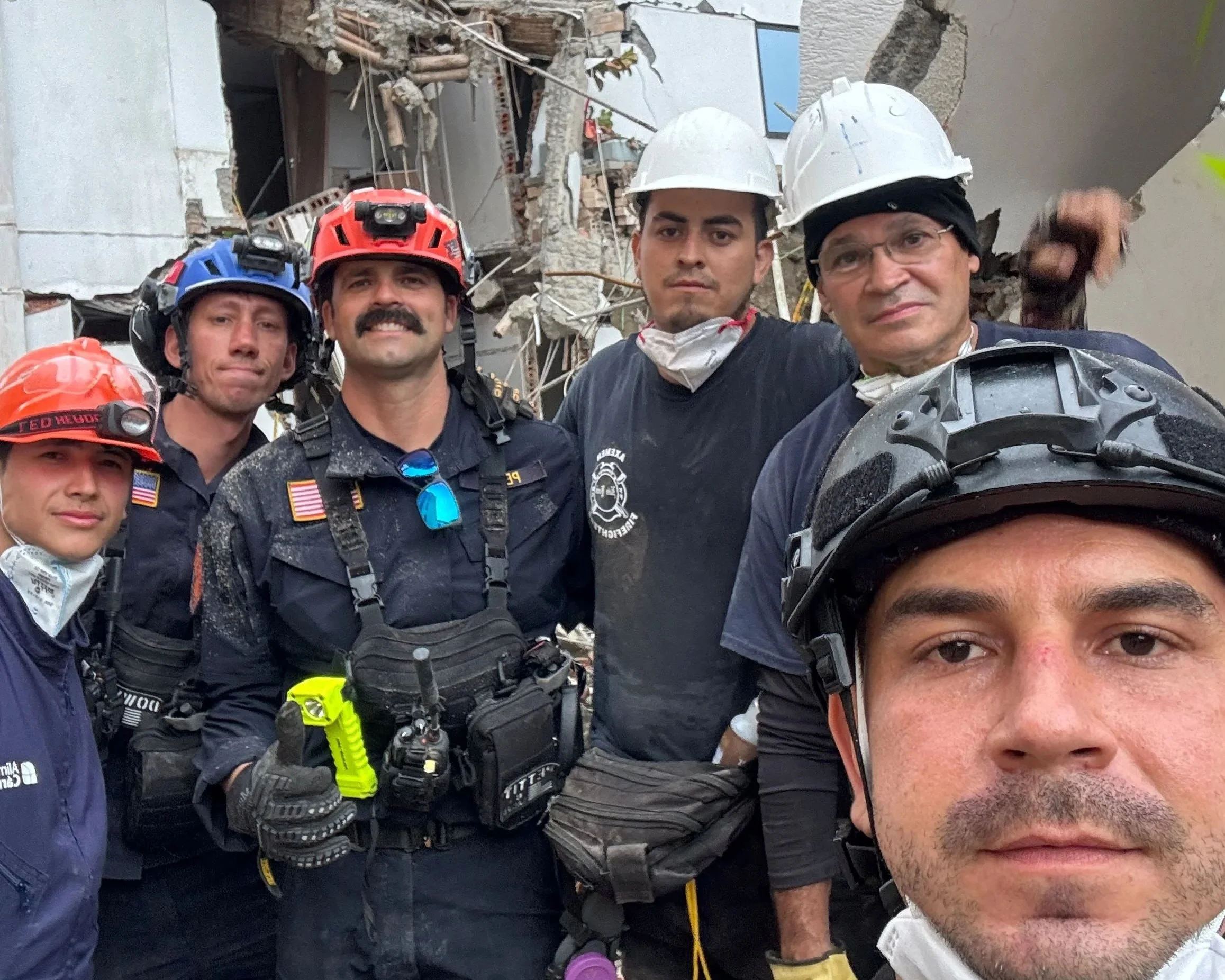
Members of the Rescue 4 Tunnel Rats, including its creator, retired Queens FDNY Lieutenant Jorge Luis Torres, second from right, and volunteer Juan Jiménez, front. Photo courtesy of Juan Jiménez
By Christopher Alvarez
Looking up from the shaking stairs, retired Queens firefighter Jorge Luis Torres saw his wife, stepdaughter and sister-in-law all frozen.
Behind them, through the gym’s glass window, dust rose quickly from crumbling buildings.
By the end of the 96-second, magnitude 7.4 earthquake in Colombia, Torres was convinced the eight-story building he was in with his family was going to collapse.
Torres, a former lieutenant in the FDNY’s Rescue 4 unit in Woodside, was in Cali, Colombia’s third-largest city and the city hit hardest by the devastating earthquake that killed hundreds on Aug. 10. Of the 290 people who died in the earthquake, 154 were in Cali.
With his family afraid to move, Torres’ firefighter instincts kicked in.
“I had to run back and push them to get them out of the building because we thought the building was going to collapse,” Torres recently told the Eagle. “It was traumatizing to see that.”
Torres not only survived the earthquake, but also decided to stick around Colombia for more than two weeks and lead a rescue team – which was dubbed the Rescue 4 Tunnel Rats – to help recover bodies and potentially bring hope to the city most devastated by the disaster. In all, the crew found the remains of 10 of the more than 70 people reported missing in Cali. They also rescued five others who were alive but trapped in rubble.
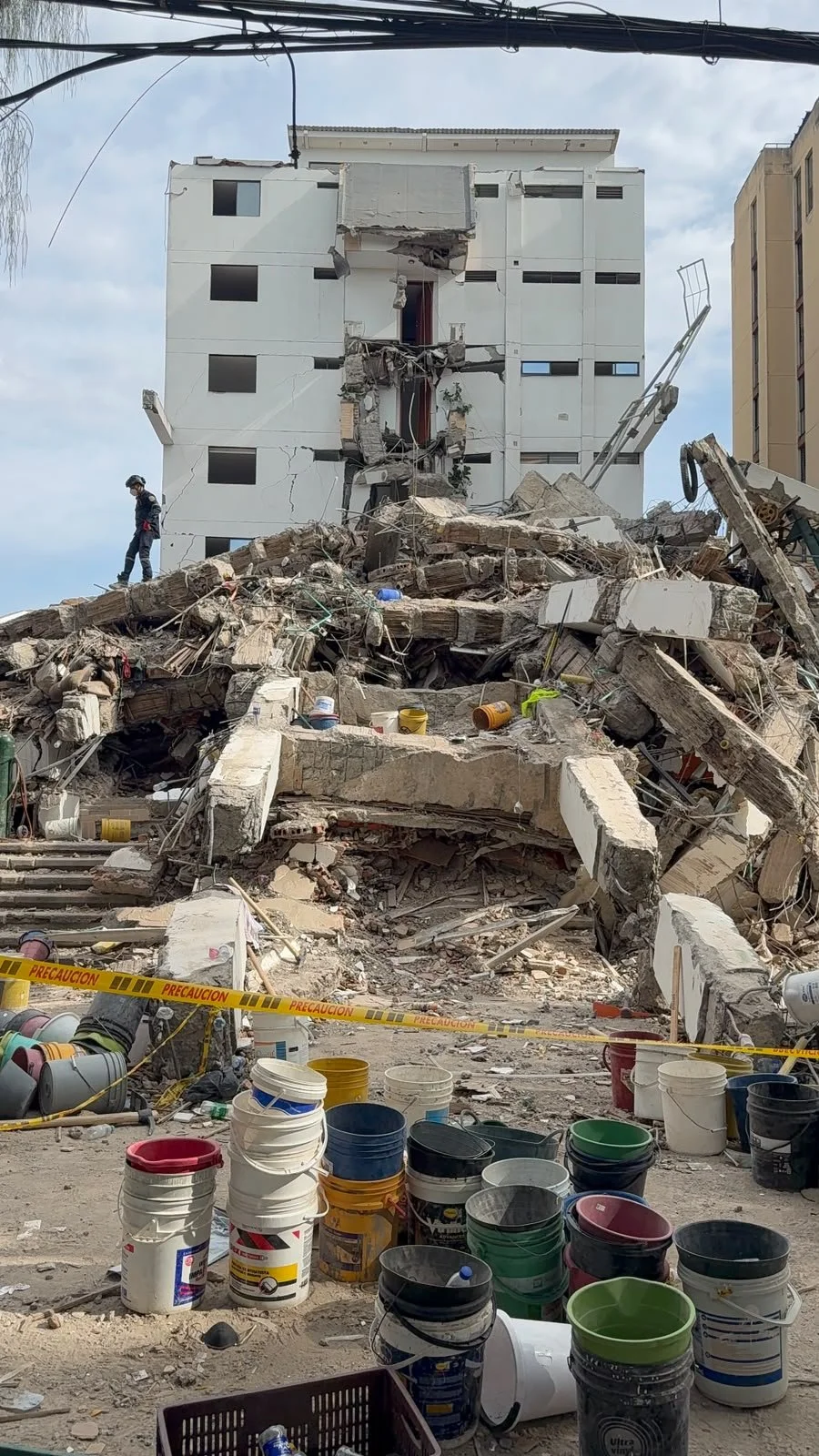
The destruction of the Ana Pilar condominium building. Photo courtesy of Luis Eduardo Losada
Torres saw the need for someone with his experience to step in and help with the rescue efforts. Not only had he spent 29 years in the FDNY, but he had also been part of the effort to find those killed during the 9/11 terror attack.
Shortly after the tremors, Torres made his way to the crumbled Ana Pilar condominium building, one of 11 Cali buildings destroyed by the quake. More than 700 buildings collapsed across Colombia during the disaster.
He didn’t have much beyond some hand tools and a search camera that his godson had given him.
“I was able to use that to try to look into some holes,” Torres said.
While making his way through the rubble, Torres, 64, recruited Cali firefighter Luis Eduardo Losada and rescue volunteer Juan Jiménez to join the team and begin the search-and-rescue efforts.
As a volunteer, Jiménez had no experience assisting in natural disasters. But he still found an important role to play – he comforted victims, coordinated with Cali government aid workers and moved debris to rescue people who had been trapped.
“When you see something of this magnitude, something inside of you changes that is far from your natural self,” Jiménez told the Eagle. “It wasn’t fear, but in the beginning it was hard to process. After a few hours of sleep, I felt the urge that help was needed and I had to do my part.”
For firefighters Losada and Torres, day two at Ana Pilar was an emotional challenge. That day, they found the bodies of a child, and the child’s mother and grandmother.
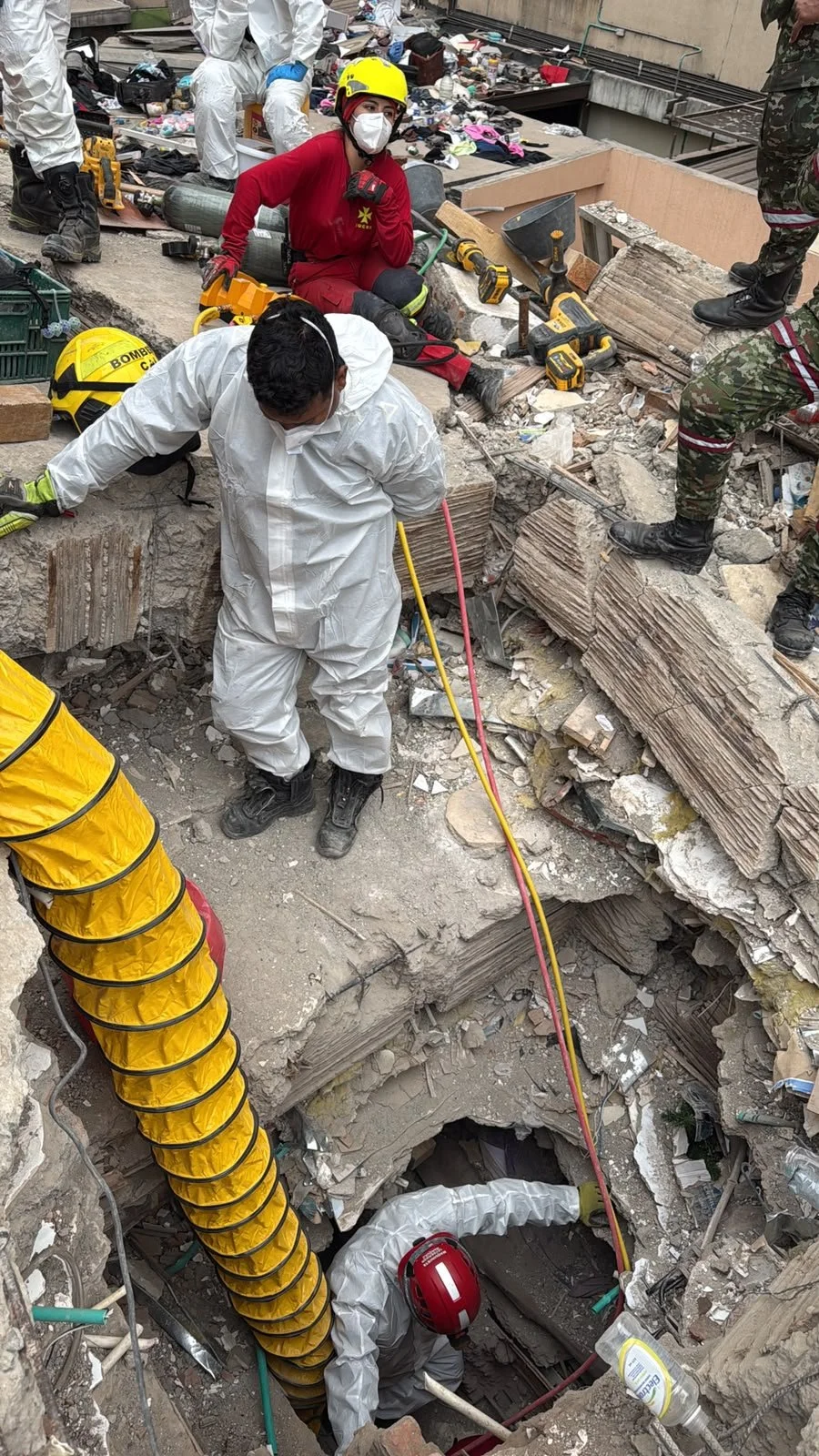
Luis Eduardo Losada enters a hole at the site of the destroyed Ana Pilar condominium building. Photo courtesy of Luis Eduardo Losada
“The first day was tough, but the second was even harder,” Losada, who has an 11-year-old son who he’d call each morning before getting to work, said. “It was a feeling that really, deeply affected me.”
Day two was also the day that reminded Torres of his work at Ground Zero.
“ We were calling out to see if we can hear anybody. We yelled out, ‘Is anyone there? Please say something’ and we heard a woman scream, her last breath, ‘Help.’ So we heard it, [but] we never got to her,” he said. “Until today, I have a problem with that because you train all the time to try to do something. Now, a person's there, but you just don't know how deep they're in this pile.”
Eventually, the Rescue 4 Tunnel Rats grew to an 18-man team.
“The primary objective was always to help and to hold onto the hope and faith that someone was still alive,” Losada, who has worked as a firefighter for two decades, said. “We had several indications that this was the case, but unfortunately, given the passage of time and the sheer volume of debris, by the time we reached the individuals, they had, of course, already passed away.”
Watching Jiménez, Losada and the rest of his team work to restore hope “was like art,” Torres told the Eagle.
They were dubbed the “Tunnel Rats” after U.S. soldiers who would venture into tunnels during the Vietnam War and fight Viet Cong soldiers in hand-to-hand combat.
“ These guys are like tunnel rats because they were going into holes without even checking, or going, ‘Oh, you be careful,’" Torres said.
As the rescue efforts wound down, Torres brought his crew to the Big Apple and Jackson Heights, a neighborhood that is home to roughly 135,000 Colombians.
“The initial purpose was to knock on doors, getting the chance to learn more and to see how we can return to Colombia and what more we can do for the community at large – through training and by advising people on what to do in the event of any emergency, not just the kind we experienced,” Losada said about his visit. "Hopefully, people will listen to us a bit more now and understand the importance of knowing how to handle situations that inevitably arise during an emergency.”
While in New York, the Tunnel Rats visited FDNY Engine 292/Rescue 4 on Queens Boulevard, where they did some visual training. Then, Torres took them to the Fire Academy on Randall's Island called “The Rock,” where they met with probationary firefighters and received special operations and camera search training, while also sitting in on some small lectures.
“They visited a lot of firehouses and saw all the equipment they have, so they can do some comparison to what they have and give them an idea of how far they can go if they have the right resources,” Torres said.
Beyond the trip, Jiménez said that he felt Torres had given the group “a lesson in humility and humanity.”
“I didn't know that I could contribute and here I was eager to learn, eager to help, and make my own small contribution to our community,” Jiménez said. “Coming here, sharing experiences, walking through the doors opened to us, and seeing things firsthand, marks the start of a long journey toward gaining knowledge that could be incredibly valuable for our families and our communities.”
While the Tunnel Rats may no longer be operating the way they were in the weeks after the earthquake, the group’s work has continued.
“We’re in the process of finding ways to keep helping because they still need it,” Losada said. “Emergency response isn't over, it’s ongoing, yet many people overlook that.”
“This is a call not just to rescuers, firefighters, and emergency personnel, but to the community as well,” he added. “There is still so much left to do.”