Queens SNAP enrollment falls by 25,000 as officials warn of more cuts
/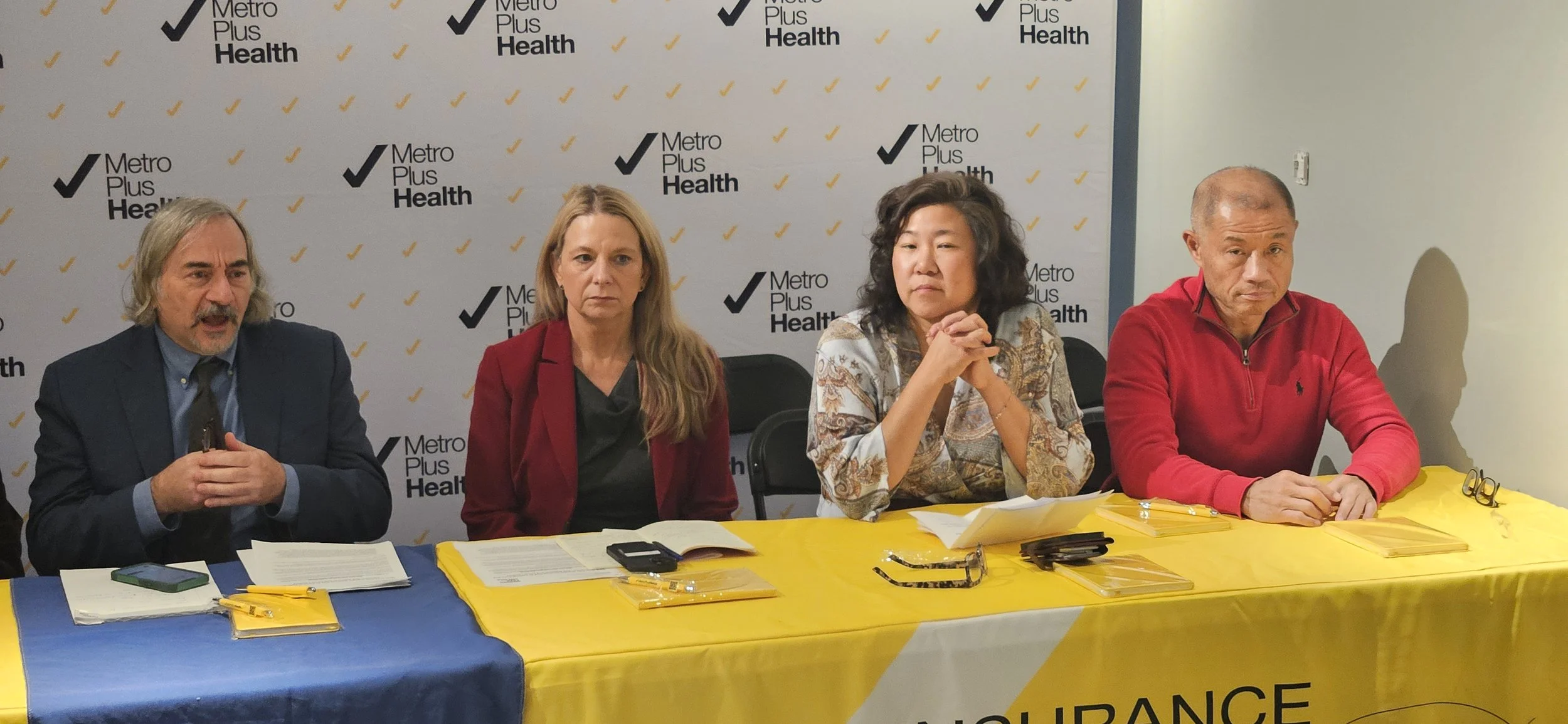
From left to right, Hunger Free America CEO Joel Berg, Commissioner Barbara Guinn, Congresswoman Grace Meng and State Senator John Liu. Eagle photo by Noah Powelson
By Noah Powelson
Over 25,000 Queens residents have lost access to federal food assistance programs over the past year — and elected officials said more could lose the benefit once new cuts go into effect this week.
Queens U.S. Representative Grace Meng and State Senator John Liu called on Congress to delay a rule change that would require the state to cover an additional $200 million in administrative costs for the Supplemental Nutrition Assistance Program.
The Queens elected officials said that tens of thousands of New Yorkers across the city and state have lost access to the SNAP program following last year’s federal budget cuts, and the new administrative costs threaten to further destabilize the program.
Appearing alongside the nonprofit Hunger Free America on Monday, Meng and Liu said that funding cuts for federal safety net programs in President Donald Trump’s “One Big Beautiful Bill” last year resulted in tens of thousands of low-income New Yorkers losing access to critical grocery assistance.
SNAP funding was reduced by roughly $45 million in New York State and roughly $21 million in New York City. According to Hunger Free America, the state has seen a roughly seven percent reduction in SNAP recipients, and New York City has seen a total reduction of 8.7 percent.
In Queens, SNAP recipients decreased by about 25,000, from June 2025 to June 2026, a roughly seven percent reduction.
“Trump’s big, ugly bill enacted some of the biggest cuts to food assistance in our nation’s history at a time when the cost of living is skyrocketing, and more families than ever are struggling to pay the bills,” Liu said. “The result is a marked decline in SNAP participation, not because fewer families need help, but because the Trump administration has made it more difficult for people to get help.”
But advocates said those reductions could increase once new cost-sharing rules go into effect in October. Currently, the federal government covers half the administrative costs to keep SNAP running in each state. But that changes on Oct. 1, and the state will now be expected to cover 75 percent of the administrative costs — an estimated $200 million.
Meng and Liu called on Congress to approve a two-year delay of the cost shift, which would be included in the Farm Bill currently being debated in the U.S. Senate. If the delay isn’t put in place or funding isn't restored, Meng said some of Queens’ most vulnerable residents would be at risk of not being able to put food on their tables.
“This is the largest cut to SNAP in American history, and this cut really targets the most vulnerable in our communities,” Meng said on Monday. “It's our kids, it's our seniors, it's our veterans, it's homeless people.”
Joel Berg, CEO of Hunger Free America, said the cost shift could have “horrendous ripple effects” as it means nonprofits like theirs will see a significant reduction in federal reimbursements.
“SNAP outreach funds are funded out of those administrative funds, and so when the federal reimbursement for the administrative go down from 50 percent to 25 percent that means our share, our reimbursements of our SNAP outreach work went down from 50 to 25 percent,” Berg said. “Which means our little organization with a $5 million budget, we [will lose] a few hundred thousand of federal funds for this vital work.”