Lawsuit alleging courts discriminated against blind juror moves forward
/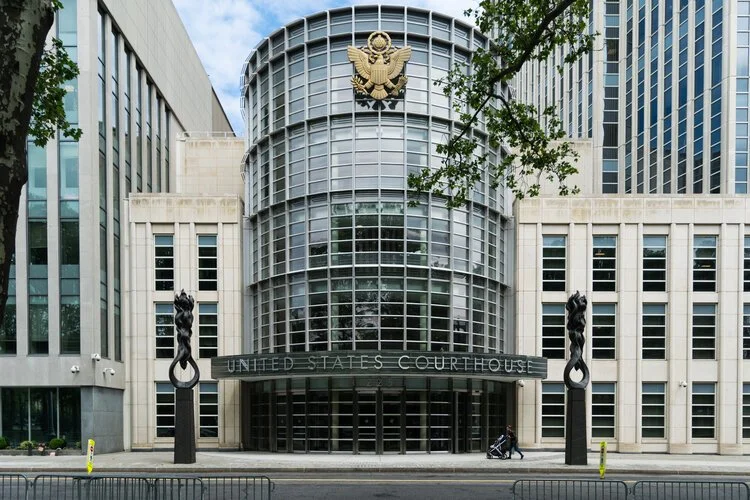
A Brooklyn federal judge greenlit a civil rights lawsuit against the Unified Court System alleging a blind juror did not receive reasonable accommodations. Eagle file photo by Rob Abruzzese
By Noah Powelson
A civil rights lawsuit alleging a blind man was discriminated against and prevented from participating in jury service because of his disability will proceed after receiving the green light from a federal judge on Thursday.
U.S. District Judge Ramon Reyes ruled that Albert Elia’s lawsuit against the state’s court system will move forward after finding there was legal standing for it to be properly examined by a court. Elia, who is blind, claimed a Brooklyn Supreme Court justice illegally told him he could not participate in a grand jury that would require jurors to evaluate images and videos because there were no resources or policies to accommodate his disability.
The lawsuit is the second to be brought by a blind potential juror alleging a lack of accommodation by the state’s court system in recent years.
According to court documents, Elia was sworn in as a juror and appeared for grand jury service on Oct. 7, 2024. He was accompanied by his guide dog and received a general legal orientation for the day.
The first case Elia and the grand jury saw involved a piece of video evidence from a phone that did not have any sound. When Elia asked for the sound to be turned on, the assistant district attorney presenting the case told Elia there was no audio but said they would try to accommodate.
For two more cases, the ADA elicited a witness to provide detailed and descriptive information on the video and photo evidence presented.
Later that day, Elia met with the ADA and the judge to discuss his ability to interpret visual evidence. When asked if he had any equipment to help him with visuals, Elia said he usually used AI technology to describe images or he would get the help of another person to describe something if he wanted a more reliable source.
When Elia was told AI technology could not be used for grand jury proceedings, he requested that other accommodations be made either by having the ADAs have witnesses give detailed descriptions of images or by having someone in the court describe the visuals.
The judge allegedly said that Elia was “at a significant disadvantage” because he would have to rely on other people’s interpretations of image or video evidence.
The judge also allegedly told Elia he would be excluded from deliberating on cases that involved visual evidence. Elia said that since most of the cases would involve some kind of visual evidence, he requested to be discharged, which the judge granted.
Elia, represented by the National Federation of the Blind of New York, then sued the Unified Court System, arguing the lack of clear accommodation policies or resources violated the Americans with Disabilities Act. UCS moved to have the case dismissed, but Reyes found Elia’s case had enough merit to continue.
The state courts currently do not have a policy for blind individuals seeking to perform jury service, and Reyes said that the lack of policy or ability to provide reasonable accommodations directly resulted in Elia’s exclusion.
“The current lack of a reasonable accommodations procedure for blind individuals ensured that the judge could not exercise any discretion,” Reyes wrote in his decision. “A judge cannot use their discretion to grant or deny accommodations that do not (but should) exist. Elia’s exclusion from the grand jury stemmed directly from the failure of the court system to provide reasonable accommodations to ensure Elia had the opportunity to participate in the grand jury.”
In response to an Eagle inquiry, Al Baker, a spokesperson for the Office of Court Administration, said that blind or visually impaired individuals are not excluded from serving on juries.
“The UCS declines to comment on pending litigation; except to say there is no prohibition against blind or visually impaired individuals serving on juries and reasonable accommodations are available,” Baker said.
Elia’s case bears many similarities to another that unfolded in Manhattan Criminal Court in 2023, when a blind woman was dismissed from serving on a criminal jury for a rape case after a judge allegedly told her “counsel was concerned about her ability to review all the evidence in the case.”
The woman, Emeline Lakrout, sued the court system and argued they should have provided reasonable accommodations for her disability instead of dismissing her.
Lakrout’s suit was dismissed by U.S. District Judge Mary Kay Vyskocil in March. The judge said that Lakrout lacked standing to bring her case against UCS because her dismissal as a juror was a matter of judicial discretion.
But advocates say the court system’s lack of policy or technology to assist visually impaired individuals has created “systemic barriers” in the jury process.
Heather Bird, president of the National Federation of the Blind of New York, said that visually impaired New Yorkers have been constantly excluded from participating in jury service for decades, often at the very beginning of the process.
Bird said that oftentimes when a blind person is called for jury service and calls the courthouse asking for an accessible form, court staff frequently tell the individuals they’ll just be excused from jury duty even if they wanted to serve.
“It's a nationwide problem, it's a statewide problem,” Bird told the Eagle. “It can happen at multiple points along the process, usually before you even get in the courtroom.”
While attorneys can also excuse visually impaired people during jury selection, Bird said attorneys choose to excuse someone for all manner of reasons that are often more tactical. The real problem, Bird said, is when court staff excuses a juror because they aren’t prepared to accommodate their disability.
“At least that’s part of the accepted process, but often people don't even get that far,” Bird said.
In August, the New York Civil Liberties Union and other disability advocate groups filed an amicus brief with the Second Circuit Court of Appeals urging the courts to revive Lakrout’s case.
Beth Haroules, the director of disability justice litigation at the NYCLU, said OCA has repeatedly had trouble accommodating certain disabled individuals when they engage with the court system. Haroules also said that cases like Elia’s and Lakrout’s will continue to appear unless meaningful policies are put in place.
“I think it will continue to arise,” Haroules told the Eagle. “I really hope OCA will do the right thing and take the appropriate steps to consult with people with various disabilities, understand what the accommodations are, and understand how to process those requests when they come through.”
“Jury service is a fundamental duty and obligation,” Haroules added. “[Disabled individuals] shouldn't be denied access because the court system simply has not been willing to do the work necessary.”