‘No rights at all’: A Queens woman’s estate belongs to her accused killer. Her family is calling for a change to state law.
/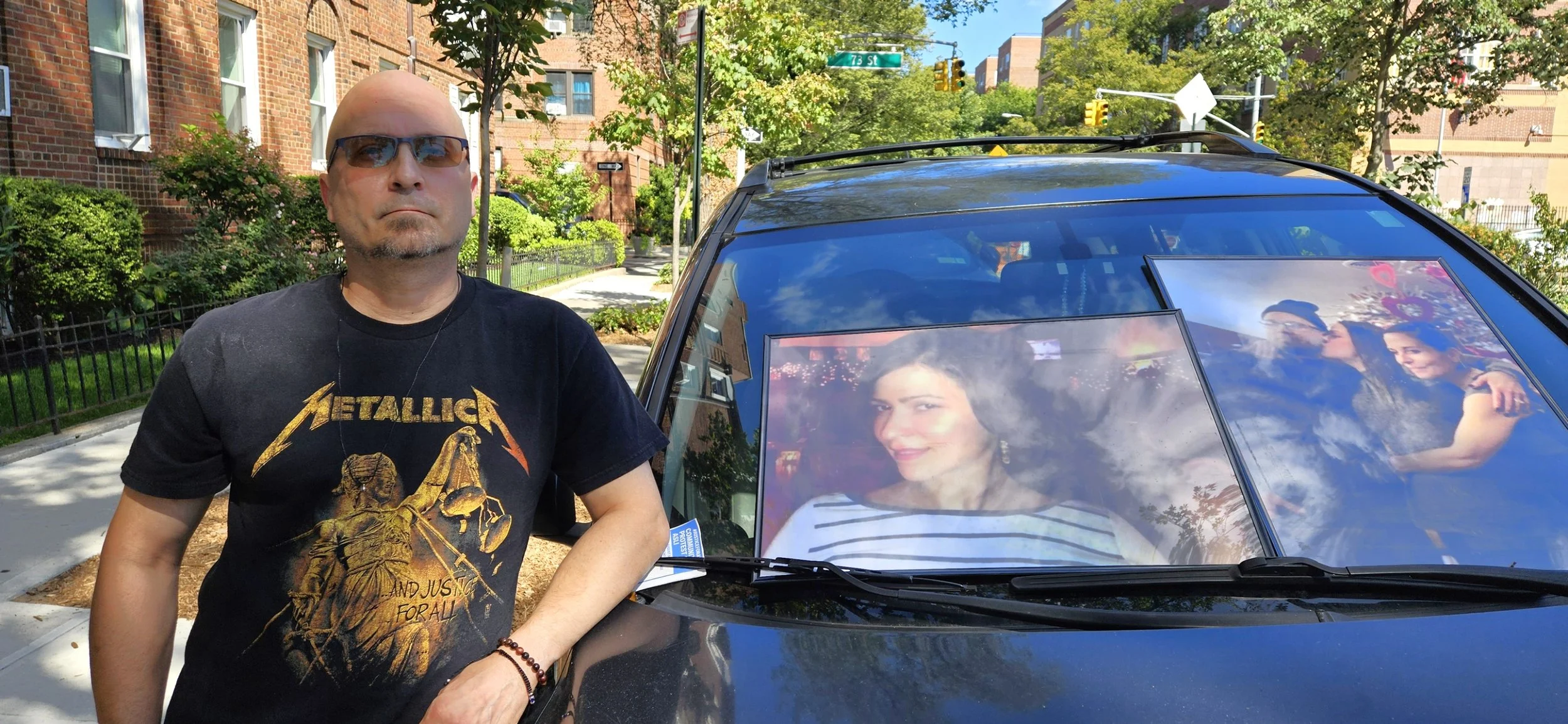
Osman Ak said he was prevented from accessing his sister’s ashes, personal belongings and family heirlooms by the man currently accused of murdering her. Eagle photo by Noah Powelson
By Noah Powelson
It took eight months for police to make an arrest in the murder of Asli Ak, a 48-year-old Queens woman who was found badly beaten in her Jackson Heights home in 2024.
Prosecutors claimed it was her husband, Jose Lequerica, who was behind the brutal assault that left the aspiring real estate agent dead.
But in the time between Ak’s death and Lequerica’s arrest, the husband came into full control of Ak’s estate. As he awaits trial for his wife’s murder, he remains her legal next of kin and in control of her possessions.
Now, Ak’s grieving family is demanding a change to state law so that their relative’s accused killer can no longer control her estate.
Ak had no children of her own, making Lequerica the next of kin with full ownership over all of his late wife’s estate and personal belongings, a status Ak’s family claimed he used in the months following his sister’s death to prevent her immediate family from accessing her personal belongings and important family documents.
Ak’s brother, Osman Ak, claimed Lequerica denied Ak’s family members from sitting by her side when she died in Elmhurst Hospital. He also said Lequerica had his sister cremated, which he claimed was against her and her family’s beliefs. He currently does not know where his sister’s remains are.
Osman Ak also claimed Lequerica denied them access to Asli Ak’s apartment after her death, and refused to speak with them in the months before his arrest. The apartment had a treasure trove of valuable items for the family, Osman Ak said, and claimed they’ve lost access to family photos, important family documents and generational heirlooms that include some items that were over a 100 years old.
He also said his mother’s will, which Ak was in possession of before her death, is currently lost to him.
Lequierca’s possession of Ak’s estate is entirely legal. State law only requires that next of kin rights be transferred to a victim’s family if the next of kin is convicted of the victim’s murder, not accused.
Ak’s brother says the law has prevented his family from properly grieving their sister, aunt and loved one.
“It’s almost like she’s dying twice,” Osman Ak told the Eagle. “My sister’s belongings, her little keepsakes, notes that she saved, little decorations, even family heirlooms that are very sacred to us…supposedly they are gone. I don’t know where they are.”
Osman Ak said he has been consulting with a lawyer and lawmakers to find ways to access his sister’s belongings while they wait for Lequerica’s case to develop, which likely won’t conclude for a year or longer.
Lequerica was arrested and arraigned in July.
According to the Queens district attorney’s office, Ak suffered repeated blows to her head, face, and body on Nov. 16, 2024. Lequierca claimed that he found his wife lying unconscious on the bedroom floor in the morning, but allegedly didn’t call the police for another eight hours.
Lequierca was detained briefly but no charges were brought against him at the time.
Charges were later brought when an autopsy revealed that she had severe head injuries, including a hematoma that caused swelling inside the head, crushing her brain stem.
Lequierca now faces two counts of murder in the second degree.
Lequerica’s attorney, Vivian Cedeno, declined to comment on Ak’s family’s claims.
“This is an extremely tragic situation and we extend our deepest sympathies to the family," Cedeno told the Eagle in a statement. “However, it is important to remember my client is presumed innocent under the law. We ask the public and the media to respect the legal process and avoid rushing to judgement before all the facts are presented in court.”
If convicted, Lequerica faces up to 25 years to life in prison.
But as they wait for the court to play its part, Osman Ak and the rest of his family are taking up a fight to change what is known as the Slayer Law.
Under New York State law, if someone is convicted of the first- or second-degree murder of the person whose estate they inherited, the court can order the inheritance be taken away from the convicted felon and moved to the victim’s remaining family during sentencing. But the law does not apply to those who have not yet been convicted but only accused of first- or second-degree murder.
The Ak family says they are concerned that waiting years for the case to conclude could mean the loss of everything in their relative’s estate.

The family of Asli Ak call on lawmakers to change the state law around next-of-kin inheritance when the victim’s spouse is accused of committing the killing. Photo courtesy of Gofundme/Justice for Asli
Osman Ak said he already doesn’t know what personal items or family heirlooms have been lost in the eight months before Lequerica’s arrest, and demanded legislative action to prevent families from losing valuable and sentimental items in similar situations.
At a protest last month, Osman Ak and others passed out flyers and displayed photos of their late family member, calling on community members and lawmakers to change the law and give immediate family more control over deceased family members’ estates.
Standing outside the apartment complex where police found Ak unconscious and severely wounded, Osman Ak and others explained their situation and called for support for their proposals.
They urged lawmakers to pause next-of-kin authority when a spouse is under investigation for the victim’s death, guarantee families’ rights to be present during end-of-life care and give families rights to the custody of the victim's remains and funeral arrangements.
“It shouldn’t happen in the future, there has to be some kind of change,” the victim’s brother said. “This is not right. A husband or significant other or partner, who may or may have not killed someone through marriage, should not have absolute rights while the family has no rights at all to their belongings.”
Osman Ak said he had already reached out to numerous legislators about this issue, including Queens Assemblymember Steven Raga and Queens State Representative Jessica González-Rojas, and has received some responses.
“I stand with the family of Asli Ak during this heartbreaking time,” González-Rojas said in a statement to the Ak family that was read at the protest. “No one should ever face the pain of losing a loved one to domestic violence. Asli’s family has endured additional heartbreak after being unable to bury Asli per her wishes or access her ashes and treasured belongings.”
“As a community, we must come together to honor her memory and reaffirm our commitment to ending the cycle of violence and ensure justice for her family,” González-Rojas added.
Queens State Senator John Liu has also been in touch with the Ak family, and said he would be meeting with them to discuss their issues.
“Senator Liu is deeply saddened by the horrific loss of Asli Ak and extends his heartfelt condolences to her friends and family,” Scott Sieber, a spokesperson for Liu, told the Eagle in a statement. “Our office has scheduled a meeting with her family so that we can better understand their concerns. While it is too early to discuss any specific legislation, we look forward to meeting with them to discuss the issues they are facing and to explore ways to make sure families of victims are treated with fairness and compassion in these difficult situations.”