Legal orgs call on state leaders for prison reform
/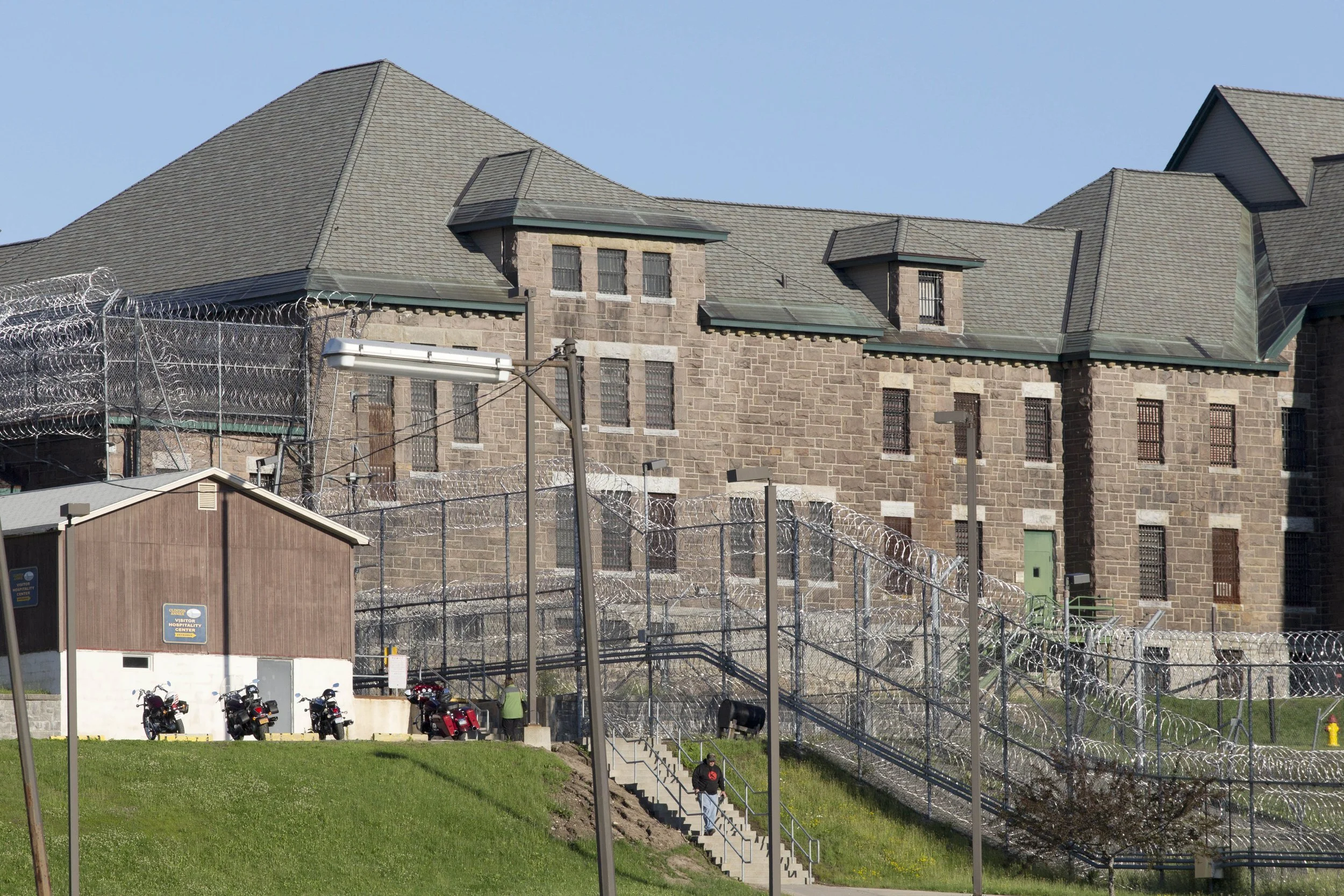
135 legal organizations co-signed a letter to the Department of Corrections and Community Supervision Commissioner and state leaders demanding new pathways be created for decarceration. AP file photo by Mark Lennihan
By Noah Powelson
Over a hundred legal advocacy and prisoner rights groups called on the state to pursue more ways to shrink the state’s prison population, including expanded use of clemency powers.
A week after Governor Kathy Hochul enacted her first round of clemencies this year, 135 organizations co-signed and published a letter to state leaders demanding more be done to address “the urgent crisis of racist brutality, medical neglect, and denial of basic dignity in New York State prisons.”
The letter is the result of months of escalating tensions following the death of Robert Brooks, whose murder by prison guards inside a state correctional facility cast a spotlight on the treatment of incarcerated New Yorkers.
The letter said incarcerated persons inside state prisons continue to be subject to prolonged solitary confinement. Prisoners suffer severe restrictions to accessing family visits, programming, recreation, court trips, medical call outs, mental health call outs, religious services, showers and meals, and the ever-growing prisoner population only exacerbates the issue.
The solution, the letter said, is expanded use of clemency powers that create new pathways to release people from prison. Those who signed the letter also endorsed a number of legislative initiatives, including the Fair & Timely Parole Act, the Earned Time Act, the Elder Parole Act, the Second Look Act and the Challenging Wrongful Convictions Act.
“Over 81 people have died in prison in the roughly eight months since the murder of Mr. Brooks,” the letter reads. “Local jails across the state are overcrowded, with worsening conditions because DOCCS is not intaking many of those sentenced to prison time, and some parole-eligible people in these jails are not even being interviewed.”
“The solution to this crisis is executive and legislative action to release people from prison:
expansive use of executive clemency, compassionate release, home confinement, and work
release,” the letter continues.
Notable organizations who signed onto the letter include the New York Civil Liberties Union, the NAACP New York State Conference, Brooklyn Defender Services – which took over Queens Defenders criminal defense practice earlier this year – and the Legal Aid Society’s Criminal Defense Practice.
"New York State’s prison system remains in a full-fledged crisis, and only decarceration can deliver the immediate relief needed for the people we serve who continue to languish in these deplorable facilities," Tina Luongo, chief attorney of the Criminal Defense Practice at The Legal Aid Society, told the Eagle in a statement. "The Governor must use her immense powers — from clemency to compassionate release — to bring people home. At the same time, it is incumbent upon the Legislature to do its part by advancing pending bills, many of which already enjoy support from law enforcement, to reduce the prison population.”
The letter was addressed to the governor, the Department of Corrections and Community Supervision Commissioner Daniel Martuscello, New York State Senate Majority Leader Andrea Stewart-Cousins and Assembly Speaker Carl Heastie.
The call to action was also supported by Queens State Senator Julia Salazar, the chair of the Committee on Crime Victims, Crime and Correction. During the last legislative session, Salazar introduced a legislative prison reform package which instituted new accountability guidelines in direct response to the deaths of incarcerated persons Brooks and 22-year-old Messiah Nantwi.
“The challenges facing New York State prisons right now cannot be meaningfully addressed without the steps outlined in this letter, which more than 135 organizations signed on to,” Salazar said in a statement. “Having visited facilities across the state, I have heard from incarcerated people about the endless – and unlawful – lockdowns in extraordinarily hot cells, the suspension of college and other programming, visiting limitations, and the deprivation of basic necessities like medical and mental health care. I agree with the signers of this letter — now is a moment for bold action.”
The letter also comes after legal advocates have accused the Governor and DOCCS of failing to keep promises they made to increase the rate of clemency usage and ensure incarcerated individuals’ safety.
The governor began granting clemency on a rolling basis for the first time in 2023, and commuted the sentences of nine people and pardoned 27 others that year. In 2024, Hochul pardoned 21 people and commuted the sentence of just one New Yorker, a reduction in total clemency actions that advocates called a step backwards.
On Friday, Aug. 15, after Hochul granted pardons to 13 incarcerated persons, the governor received a myriad of criticism from advocates in response for not commuting the sentence of any prisoners.
In 2025, 186 commutation applications and 84 pardon applications were submitted to the governor’s office. There are now over 1,800 clemency applications pending with the office, including over 1,330 commutation applications and over 510 pardon requests.
Though commutation applications make up around 74 percent of total clemency applications, they have only accounted for around 14 percent of clemencies granted by the governor dating back to 2023.
“She’s going backwards,” Steve Zeidman, a professor at the CUNY School of Law and the director of their Criminal Defense Clinic, told the Eagle. “She raised hope for the people inside that sentence commutations were real. She raised hopes for their families on the outside. And it turns out, it was false hope.”
In a statement to the Eagle, the governor's office said Hochul would work with the legislature and DOCCS to reduce recidivism, and enhance reentry services for previously incarcerated individuals.
“Governor Hochul initiated significant systemic changes within DOCCS to improve the safety and security of everyone that enters our correctional facilities, and has implemented reforms to strengthen the clemency program by providing applicants with an updated website, including new applications forms, and by creating a panel of experts to advise on cases that come before her,” A spokesperson for the Governor's office told the Eagle. “The Governor is committed to continue working with the Legislature to reduce recidivism, enhance reentry services for previously incarcerated individuals, and improve the prison system through recruitment efforts and policy reforms. As always, the Governor will review all legislation that passes both houses of the legislature.”
DOCCS and its commissioner have likewise received a brunt of outrage and criticism for its handling of the illegal Wildcat prison guard strike earlier this year, in which they issued an emergency suspension of the HALT Act, which limits the length of time a person may be in segregated confinement.
Following a lawsuit filed by the Legal Aid Society on behalf of several incarcerated persons, a judge issued a preliminary injunction to roll back the emergency suspension, and provide information to the extent of HALT’s reimplementation. For the past two months, the Legal Aid Society accused DOCCS of failing to comply with the court orders, and filed a motion on Wednesday demanding the courts force the agency to comply.
“The Department has yet to fully disclose where HALT has been suspended, which protections are being withheld, or when it will come into full compliance with the injunction,” Riley Evans, a staff attorney with the Prisoners’ Rights Project at The Legal Aid Society, said. “Every day that DOCCS remains out of compliance, thousands of New Yorkers are subjected to the torture of solitary confinement in violation of HALT. This enforcement motion is a necessary step to hold DOCCS accountable and enforce the court’s order.”
In a statement to the Eagle, DOCCS said the agency has taken significant steps to support incarcerated individuals and staff and help individuals return to their communities. DOCCS listed many ways they were addressing prisoner safety concerns, including fully implemented body-worn cameras in all 42 DOCCS facilities, retaining a law firm to conduct a review of patterns and practices at DOCCS prisons and forming a committee to review and develop recommendations.
“Under Governor Hochul’s leadership, DOCCS has undertaken significant reforms to improve safety, security, and the overall wellbeing of individuals throughout our correctional facilities,” A DOCCS spokesperson said. “The Governor has also committed $7 million to reorganize and expand the capabilities of the DOCCS Office of Special Investigations with a focus on both data analytics and expanding the unit's capability to proactively identify potential risks.”
DOCCS’ handling of HALT remains a particular point of contention, in the letter to the Governor and DOCCS, who the organizations call for reinstatement.
“New York State promised sweeping changes,” The letter reads. “Instead, officers waged an illegal strike to distract from this promised change; DOCCS illegally suspended the HALT Solitary Law; and incarcerated people still suffer a deadly crisis.”