QueensWay advocates move forward after federal claw back
/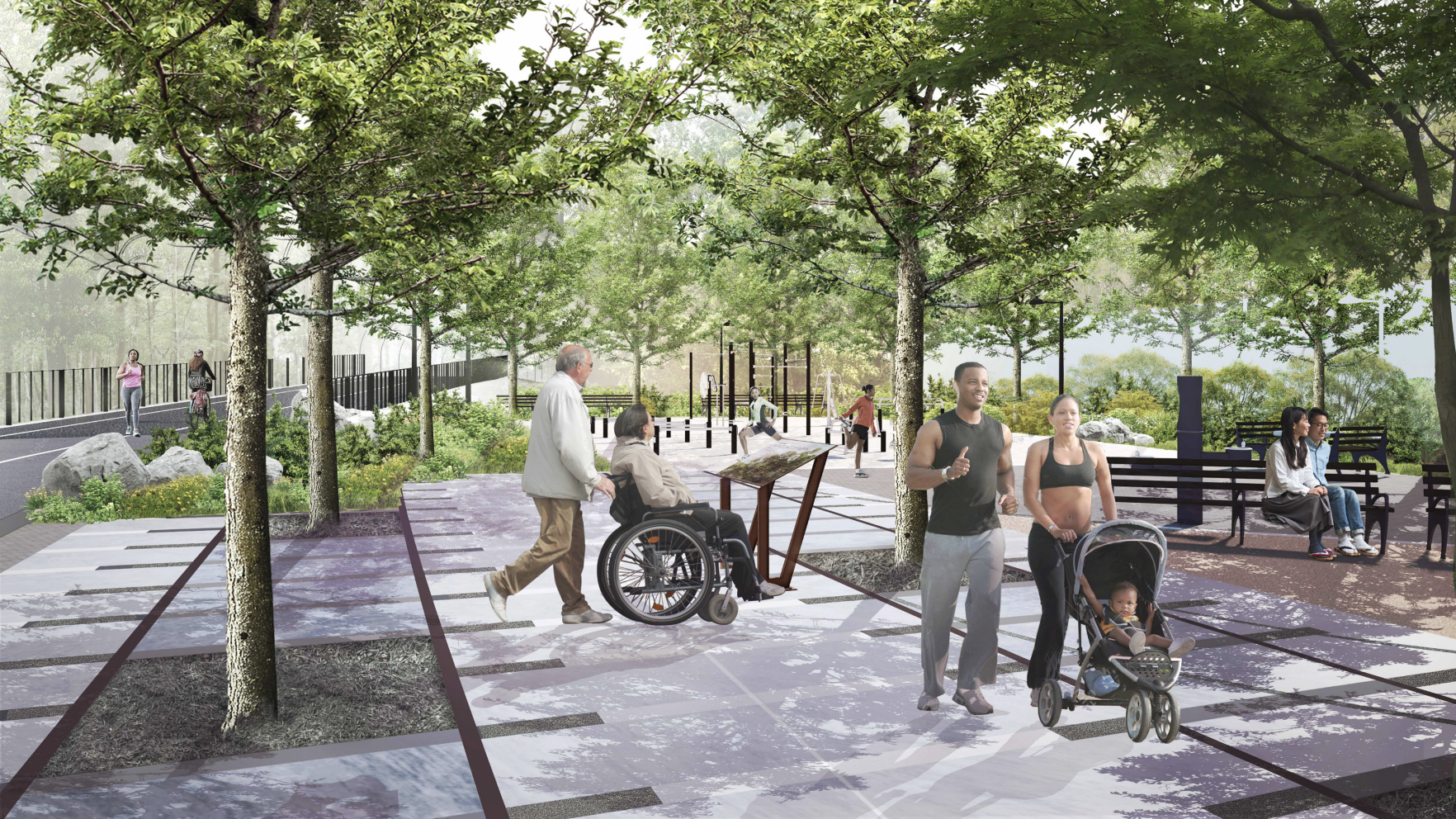
QueensWay activists are still moving forward after losing millions in federal funding. Rendering via the Economic Development Corporation
By Ryan Schwach
Advocates for the QueensWay, a linear High Line-like park planned for Central Queens, are pushing forward after millions of dollars in funding were stripped away by the Trump administration.
Through provisions in President Donald Trump’s “Big Beautiful Bill,” over $117 million in federal funding meant to fund a large portion of the QueensWay was clawed back by the feds.
The federal dollars were intended for the second phase of the QueensWay plan – a 3.5-mile greenway starting in Rego Park and ending in South Ozone Park.
Despite the hiccup, QueensWay advocates are still pushing forward.
“I think while we're disappointed with the claw back of federal funds commitment to building the QueensWay because it remains a core priority for the local community, for businesses and for the city and local officials,” said Karen Imas, a community board member and member of the Friends of QueensWay advocacy group.
Imas said the Friends of QueensWay and other supporters are still focused on completing the first phase of the project, called the Metropolitan Hub, which would establish a 0.7-mile stretch of park on the vacant railroad tracks QueensWay will sit on.
“We're hyper focused on making sure phase one is built, and built well,” said Imas. “And that it reflects the community's desires.”
The Metropolitan Hub was funded by the city in 2022, and is already well into its design process.
“I think there's a lot of enthusiasm and commitment to that phase one on the part of the local community in the city,” said Imas. “We've been at this for 15-plus years advocating for the QueensWay, and it's been in fits and starts and ups and downs, and we're going to continue to find pathways to move the project forward.”
Imas said it is a little “premature” to start looking for ways to fill the still over $100 million hole.
“We've been going down this road for a long time and learning how to navigate these different opportunities,” she said. “We're optimistic that with phase one as a proof of concept, we'll be able to leverage that into future funding opportunities.”
Not everyone is mourning the cuts, though.
The supporters of the QueensLink project, a rival project that is holding onto long-shot hopes to turn the old tracks into a new train route, see the funding cuts as an opening door.
Rick Horan, the QueensLink executive director, called it “good news.”
“I think it buys a bit of time to create the data or the studies that are needed to make a big decision as to its future use,” Horan told the Eagle. “Its a good thing for Queens commuters.”