Where the candidates for District 21 stand on Roosevelt Avenue
/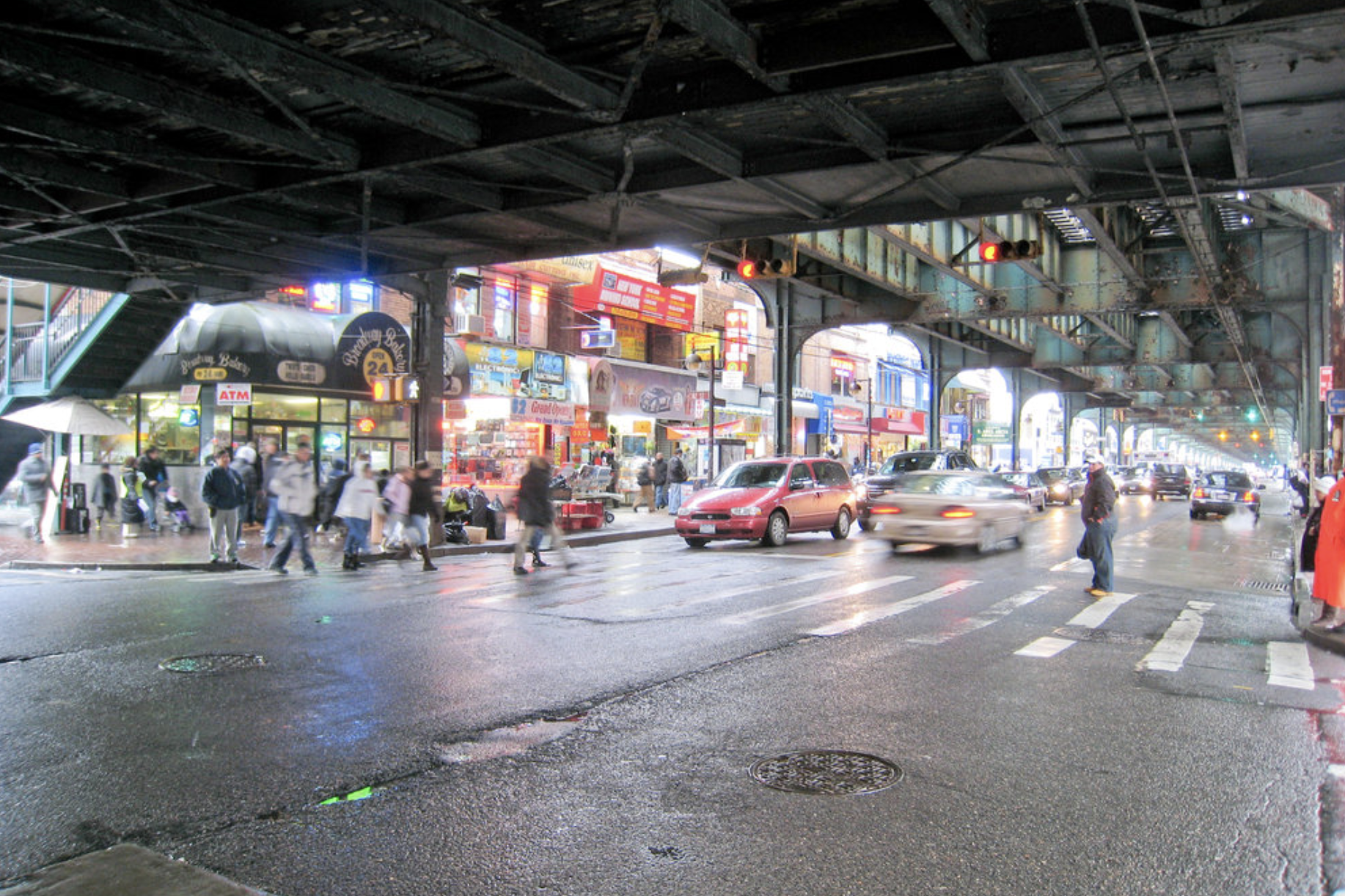
The four candidates in the race for District 21 told the Eagle about how they would get to the bottom of issues at busy Roosevelt Avenue. Photo by Doug Letterman via Flickr
By Ryan Schwach
Queens’ bustling Roosevelt Avenue has always been known for its character, diversity and culture. But in recent years, it’s also gained a dark reputation for being home to brothels, dirty and dangerous conditions and a law enforcement crackdown that has put some locals on edge.
While many see it as a symbol of the World’s Borough, others see Roosevelt Avenue as a hotbed for the borough's quality-of-life concerns.
Over the past year, local, city and state officials have attempted to manage Roosevelt in various ways. Both the mayor and governor sent cops to the corridor. Some local elected officials called for an increase in social services to address the root causes of crime.
Now, four candidates are running to represent City Council District 21, which houses the iconic strip. Each has their own plan for addressing voters’ concerns about Roosevelt.
One candidate, Erycka Montoya, said the city should opt for an approach that involves less police and more resources. Another candidate, Yanna Henriquez, said she supports the effort by the current councilmember, Francisco Moya, to boost police presence on Roosevelt. So did Council candidate David Aiken. Shanel Thomas-Henry, another candidate in the race, said the city should work to strike some balance between the two approaches.
On the periphery of the race is Hiram Monserrate, a district leader in the area who was kicked off the ballot because of a law preventing those previously convicted of corruption, like Monserrate, from running for City Council. Monserrate, who served in the legislature and in the State Senate before being kicked out for committing misdemeanor assault, has made highlighting Roosevelt Avenue’s troubles the focus of his work over the past year.
All four candidates running in the Democratic primary for District 21 were asked the same questions. Montoya, Thomas-Henry and Aiken spoke with the Eagle on the phone. Henriquez did not make herself available for a phone interview but provided written responses to the Eagle’s questions.
Erycka Montoya
Montoya, who is backed by the Working Families Party, is the progressive in the race.
Culture is the first thing that comes to mind when thinking about Roosevelt Avenue, she said.
“Liveliness, so many businesses, entrepreneurship, really great food,” she said. “I am bound to find something to eat that I will enjoy.”
But the road has its concerning aspects, as well, she said.
“Look, there's no doubt that there's several issues in Roosevelt,” she said, highlighting public safety and sanitation.
“We [need to do enforcement] in a way that's thinking about addressing the drivers of any crime, of illicit activity, it’s really critical,” she said. “Sanitation is a really big issue. It is a very dense corridor, and that needs more investment, that needs more frequent pickups to address the density of it.”
Montoya said she was in support of the seven-point plan to address the conditions on Roosevelt created by Assemblymembers Catalina Cruz and Steven Raga and City Councilmember Shekar Krishnan last year.
Their proposal includes increasing lighting along Roosevelt, which lies underneath the above-ground 7 train. It also proposes creating licensing standards for hotels, increasing communication with the NYPD, increased sanitation pickup, increased traffic enforcement and providing more resources for the poorest Roosevelt Avenue residents.
“We need to incorporate the points in order…to address the trauma for victims, as well as the investment for the infrastructure,” she said. “We need holistic solutions.”
“There are also work opportunities, other resources that we need to incorporate, to give folks an alternative out of human trafficking,” she said. “When a brothel is closed and you are able to identify victims of human trafficking, we have to make sure that they are getting the resources that they need to address the trauma that they've been under, and that allows them now to look for other work opportunities, housing opportunities.”
Montoya also said she saw Mayor Eric Adams’ enforcement plan dubbed Operation Restore Roosevelt – which was also supported by Moya – as "incomplete."
“I don't think we can do the enforcement without also the infrastructural pieces, the investment for folks,” she said. “As it stands right now, it is an incomplete plan.”
Yanna Henriquez
Henriquez, a district leader with a close relationship to Moya, went directly to the issues when asked about Roosevelt.
“Sad,” she said. “I see drunks on the corner. I see people rushing home afraid that ICE may catch them. I feel like the heart of what Roosevelt Avenue should mean to our community is missing.”
For her, those issues are not just public safety, but also overcrowded local schools and a lack of affordable housing options.
Unlike her opponents, she is in full support of Operation Restore Roosevelt and called it a “great idea.”
“We need more visible police presence,” she said. “We need more public safety personnel to look and speak like us.”
She also supports a re-zoning in the area that would create more affordable housing projects.
Speaking about Moya, she said he did “the best way he could with the resources provided.”
Shanel Thomas-Henry
Thomas-Henry, who has raised more funds than her opponents in the race, called Roosevelt the “heart of the district.”
However, she said that issues on the road have hurt its image.
“It has turned into something no longer of community pride,” she said. “I think of a corridor that connects so many of our neighborhoods and connects so many of our neighbors, and in recent news and stories, all we hear is the negative of Roosevelt. Rightly so, because it has gotten out of control in terms of the illegal activity happening along that entire stretch.”
She also said that the solutions need to get to the “root of the problem.”
“If a woman is resorting to prostitution because she is trying to feed her family and pay her bills, then we need to put more systems in place that allow for all of our citizens to find living wage professions and jobs that they can do where this is not their only source of income,” she said.
Thomas-Henry also supported the effort to bring better lighting to the stretch.
“We need to make sure that it's well lit, that it's well maintained and it's safe for everyone to traverse,” she said.
She supported Operation Restore Roosevelt but also called it a “short term solution.”
While policing was the focus of that plan, she added that those cops need to be regulars in the community.
“We need more community policing in that corridor so we have officers who are regular,” she said.
“I think we need to come together, sit at the table, and come up with a solution that is not short-term, but a solution that is in the best interest of the community in the long-term,” she said.
David Aiken
Aiken, who has the fewest funds and endorsements in the race, also has his own plans for Roosevelt.
“I think that Roosevelt Avenue needs to be improved,” he said.
While Aiken highlighted the issues with prostitution and cleanliness that harm the community, he also stressed their impact on the business along Roosevelt.
“We need to find a solution that's going to consider the quality-of-life for families there on Roosevelt Avenue, as well as the businesses that invest their time and their money and their livelihood to support themselves and family,” he said. “They live and work in the community as well. They have their livelihoods invested.”
He said that Operation Restore Roosevelt was a “step in the right direction for improvement.”
Aiken hopes that the improvements could eventually get Roosevelt back to the image it once was.
“We need to continue to highlight our diversity and our culture and make an environment that we can all enjoy every day of the week, any time of the day,” he said.
Addressing the feds
The heavy-handed police approach along Roosevelt has led some to fear that the result will be hundreds of locals getting wrapped up in the Trump administration’s mass deportation efforts.
All four candidates said they stand by the city’s sanctuary laws, and do not want to see federal policing on Roosevelt.
“Those individuals have come here to make a better way for their families,” said Thomas-Henry. “Those individuals have come here to escape other atrocities in their countries. We have all come from some place else, and at no point in time should any human being feel unsafe in their home…Since Trump came into office, we've seen a lot of people who don't come outside, those who don't feel safe coming out, children shouldn't feel unsafe not to go to school when you're sick. You should not feel like you can't go to the hospital because of the threat of deportation.”
Both Henriquez and Montoya stressed the need for more know-your-rights and similar training for locals and small businesses.
“We want to make sure that we will continue communicating to our community about knowing their rights,” said Montoya. “When people know what their rights are, they know how to respond, and really believe that people deserve to live without being questioned. I believe that through and through.”