What Mamdani’s Queens office could reveal about his mayoral approach
/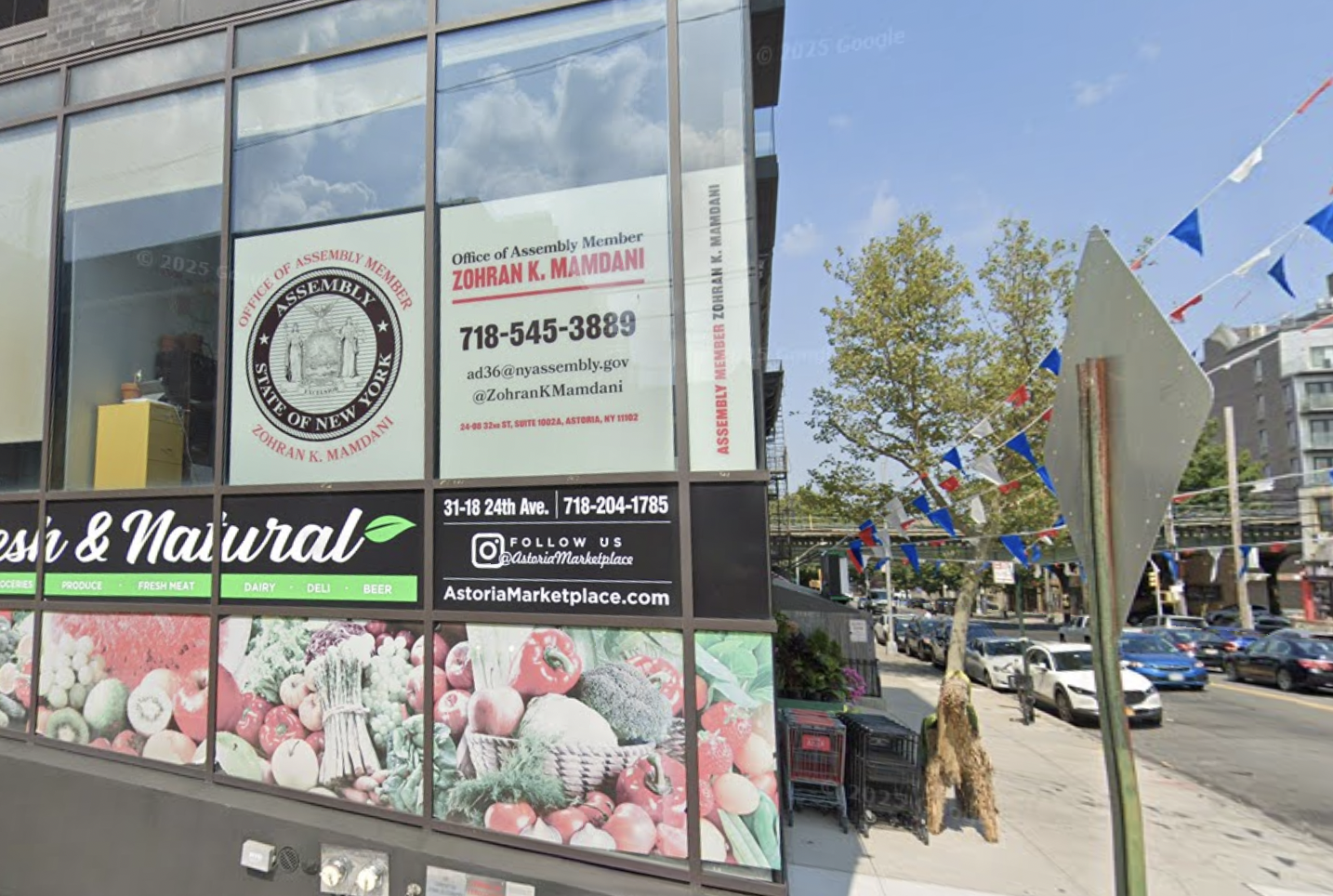
Mayor-elect Zohran Mamdani’s administration is hoping to take lessons he learned as a local official into their new City Hall. Screenshot via Google Maps
By Ryan Schwach
Not so long ago, Zohran Mamdani, who became one of the most popular politicians in the United States this year, represented just a couple of square miles in Queens in the State Assembly, representing a few hundred thousand Astorians in the state’s capitol.
Before having to learn about the city’s byzantine machinations, navigate meetings with the president or map out how he plans to improve the lives of over eight million people living in the five boroughs, he and his staff worked out of an office above a Queens supermarket, taking calls from constituents about their rent, SNAP benefits or local streetscapes.
As Mamdani gears up to become the city’s next mayor, one of the most pressing questions revolves around how his administration will address those everyday issues, the ones New Yorkers often demand be solved quickly but often aren’t.
Mariela Ortiz has something of an idea of how that might go.
For the last three years, Ortiz has worked in Mamdani’s Assembly office as his constituent services director, leading the work to address complaints and issues Astoria residents deemed worthy enough to call their local state rep about.
“I love working with people and addressing people's problems and taking them into the bigger picture, and seeing how we can address them from a systemic approach,” said Ortiz, a trained social worker.
For nearly the entirety of Mamdani’s time representing Queens in the Assembly, any constituent that called his office likely spoke with Ortiz.
She described her approach to the job, which came from her time in social work and working for a shelter that was contracted by the Department of Homeless Services, as a “social services, mutual aid-type of approach,” which Mamdani endorsed.
That approach required lengthy intake conversations with constituents to figure out their issues and address them on a case-by-case basis, rather than just taking a call and directing them to a responsible city or state agency.
“The approach is making sure people are well taken care of,” she said. “And in the process of helping them, increase their understanding and their comfortability with navigating our systems and agencies and bureaucratic processes.”
“Something I hear so often from my constituents, they feel human when they come to our office, whereas everywhere else, they feel like a number, like something a worker has to check off,” she added.
The work required attending Housing Court hearings or going directly to city or state agencies.
“I want them to be well taken care of, and if that means I need to do home visits, I'll do them,” she said.“If that means I need to go to court with them, I'll do that. And I can tell you right now, no other office is doing that.”
Mamdani got involved as well.
Ortiz recalled one instance when the mayor-elect personally called a plumber to get residents of a local apartment building an inspection they needed to get their gas turned on.
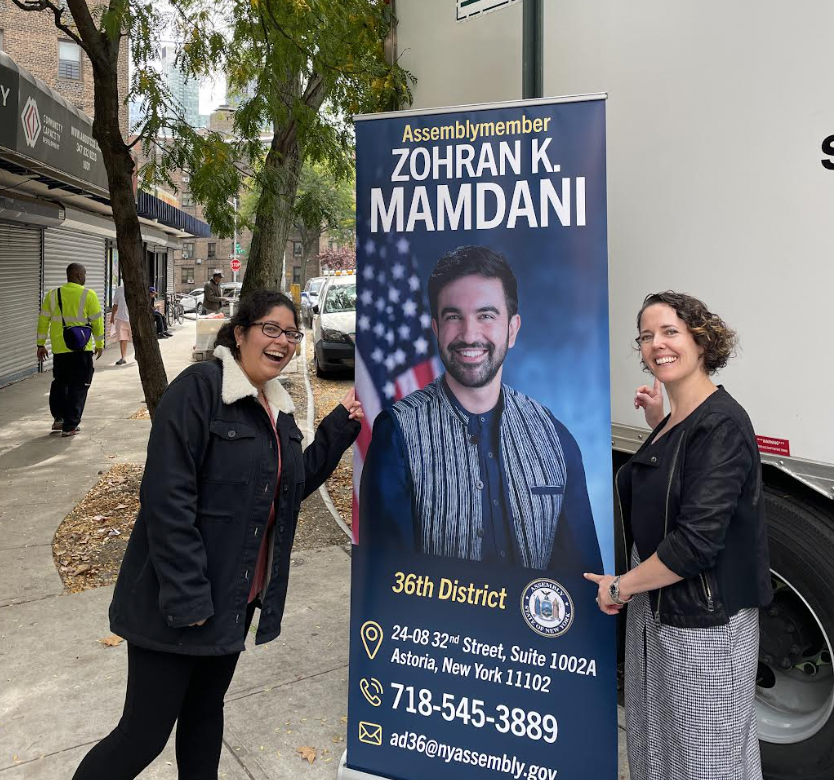
Mariela Ortiz (left), a social worker who ran constituent services for Mamdani’s Assembly office. Photo courtesy of Ortiz
“He called the plumber directly, and the plumber arrived within 15 minutes,” Ortiz said.
Elle Bisgaard-Church, Mamdani’s longtime chief of staff who will continue that role in City Hall, said constituent work was an office-wide effort.
“We would be very diligent in our team meetings about having every team member present when we talked about cases,” she added. “Then we’d look at trends, and then very actively asked if there was actually a legislative fix or a policy fix or an organizing fix.”
She remembered an instance when the office realized that about a quarter of constituent calls were about the costs of utility bills coming from Con Edison.
“We began to investigate what are the ways we could intervene around Con Edison, particularly issues of affordability,” she said. “We began very intensive outreach and tried to make sure that any New Yorker in the district who was eligible for the energy affordability program, we actually were making contact with and helping to complete the paperwork so enrollment could become a reality for them.”
What resulted was actual legislation, a bill Mamdani sponsored in 2024 that sought to protect residents from service shutoffs due to non-payment during summer and winter periods of extreme heat or cold.
The bill is currently in committee in the Assembly as well as the Senate.
Something that was key for both Ortiz and Mamdani in developing the approach was first hand experience helping New Yorkers and understanding the everyday issues they face.
Ortiz saw New Yorkers’ struggles working for DHS, and experienced issues herself, watching her parents deal with wage theft when she was young.
For Mamdani, some of that experience came from Chayya, a Jackson Heights-based nonprofit focused on housing and the economic well-being of South Asian and Indo-Caribbean communities in the city. The mayor-elect worked for the organization before running for office as a foreclosure prevention counselor.
“I think it was really informative for Zohran from a policy perspective, because he saw the issues,” said Will Spisak, Mamdani’s boss at the nonprofit.
“He definitely prioritized progressive housing policy as part of his work, which was in some part, I believe, informed by the work that he was doing at Chayya,” Spisak added. “I think that part of that direct service work that he did as an elected official was likely informed by his experience doing that work prior to running for office.”
Heading into the first days of the Mamdani mayoralty, the focus becomes translating those lessons into the work done at City Hall, where his constituency is growing from a few thousand Astorians to 8.3 million New Yorkers.
Facilitating this transition are Bisgaard-Church, and Mayor Bill de Blasio alum Dean Fuleihan, who will be returning to City Hall as Mamdani’s first deputy mayor.
“I think the Assembly work was a real way to test how we start to build a representative government,” Bisgaard-Church said. “That work was highly informative of how we approached designing the campaign, obviously, with a focus ultimately on affordability and meeting people's needs, rather than many of the other messages one could have run on.”
The new administration has already gotten going on some of the constituent-services like work.
Earlier this month, Mamdani and members of his team held a marathon listening session with New Yorkers in his Assembly district at the Museum of the Moving Image in Astoria.
“It was incredibly informative when you actually sit down with New Yorkers and give them time to talk about what their concerns are and what their aspirations are, and what they think the government can achieve,” Fuleihan said. “You learn a lot and we took tons of notes. We have huge amounts of follow up to do.”
Fuleihan, who has more experience in government than nearly anyone else so far named to the Mamdani administration, said that work starts by setting up the apparatus necessary to address New Yorkers’ issues.

Mayor-elect Zohran Mamdani is going from managing a small office with a few thousand constituents to a massive municipal apparatus with over eight million constituents. Eagle photo by Ryan Schwach
“You keep communicating with New Yorkers so you know what those daily issues are. We tell them how we're addressing it, but you also build a team,” he said. “It's a huge workforce. You build a team with key employees, deputy mayors like myself and others who are held accountable.”
“[Mamdani] is going to demand that we work together and that and that we solve problems, and that as one city, that we are all moving in the same direction when it comes to day-to-day operations of the city,” he added.
Mamdani’s transition team has not specified exactly how that feedback will be collected when the mayor-elect begins the job of governing the city.
“We don't have a full vision yet, but I think you'll expect to see things like innovative public participatory processes and town halls,” Bisgaard-Church said. “The Mamdani spin will be on those.”
The listening session at the Museum of the Moving Image was just a first step, she said.
Ortiz, who has continued to work in the office, said the calls have not stopped after the election.
“We've seen recently with Zohran’s increased name recognition, we have a lot of people who call from outside of the district,” she said, adding she recently took calls from people from Connecticut and Minnesota. “True to our office's values, we try to provide some information, and though I cannot do direct casework, I'll respond.”
She said she is proud of the time she worked under Mamdani, and will continue to support him in his new job.
“When I first started, I was working for a boss,” she said. “Now I work for a celebrity.”