Advocates condemn ‘hollow’ prison reform bill
/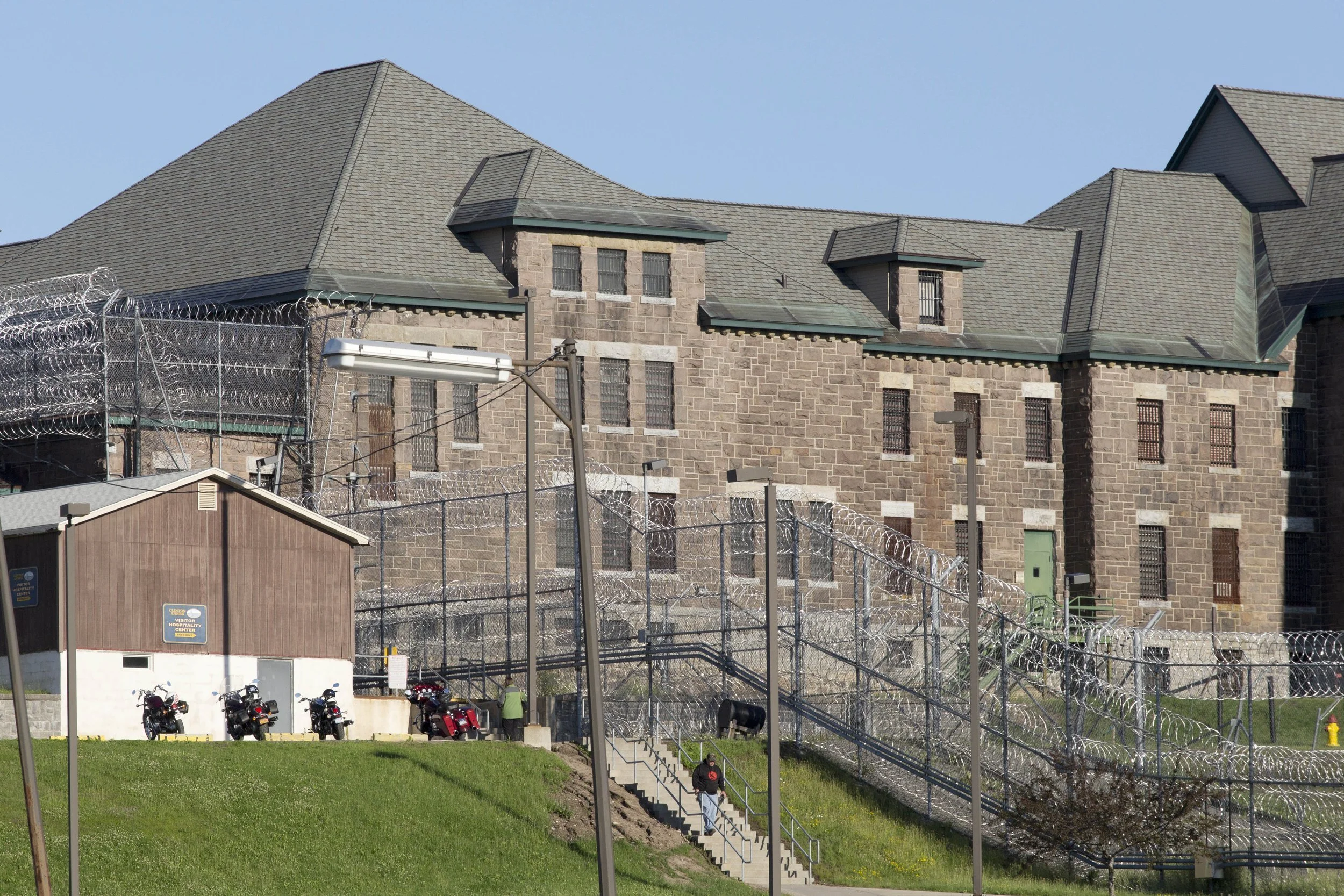
Prison reform advocates condemned changes to the Prison Reform Omnibus Bill, saying it was stripped of key language when it was signed into law. AP file photo by Mark Lennihan
By Noah Powelson
Prison reform advocates blasted last-minute changes made by the governor to a prison reform bill she signed into law last week.
In Albany on Tuesday, prison reform advocates, community leaders and formerly incarcerated people gathered to condemn the recently amended and passed version of the Prison Reform Omnibus Bill, which they say was stripped of key provisions and will allow for abuses in the state’s troubled prisons to continue.
Thomas Kearney, an organizer for the prison reform advocacy groups the New York State Jails Justice Network and the Capital Area Relief & Liberation, called the amended version of the bill a “betrayal” following the deaths of Robert Brooks and Messiah Nantwi, who were killed inside state prisons by correctional officers in the past year.
“Robert Brooks was lynched while restrained and defenseless. Messiah Nantwi also died under state control,” Kearney said. “Neither could flee. Neither could protect themselves. And after these deaths, leadership chose negotiation over transformation.”
While most of the bill's provisions made it through, several key components were amended when Governor Kathy Hochul signed it into law on Dec. 19.
The original requirement to disclose any footage of an incarcerated person’s death to the attorney general’s office was removed from the bill. The law now requires officers to make a “good faith effort” to hand over the footage to the AG’s Office of Special Investigation.
The law was also changed to increase the amount of time the Department of Corrections and Community Supervision has to notify an incarcerated person’s next of kin of their death. The original bill required 24-hour notice, but the signed version increased the time limit to 48 hours.
Additionally, a provision was removed that would have taken away some of the governor’s power to appoint members to the State Commission of Correction. The commission still received expanded membership and are required to conduct investigations of incarcerations status under the new law, as the original bill required.
But advocates said the changes hve stripped the bill of its substance and allowed for the continued abuse of incarcerated persons, who are disproportionately people of color.
“After a torture murder in a New York State prison, the response was not transformation,” Ericka Williams Rodriguez, a representative of NYS Jails Justice Network, said. “It was a bill gutted in back rooms, allowed by lawmakers who know this history and still chose to protect the system that murdered a Black man.”
Brooks was beaten and choked by correctional officers at the Marcy Correctional Facility in December 2024, an attack that was captured on body camera footage and released by the New York’s AG office.
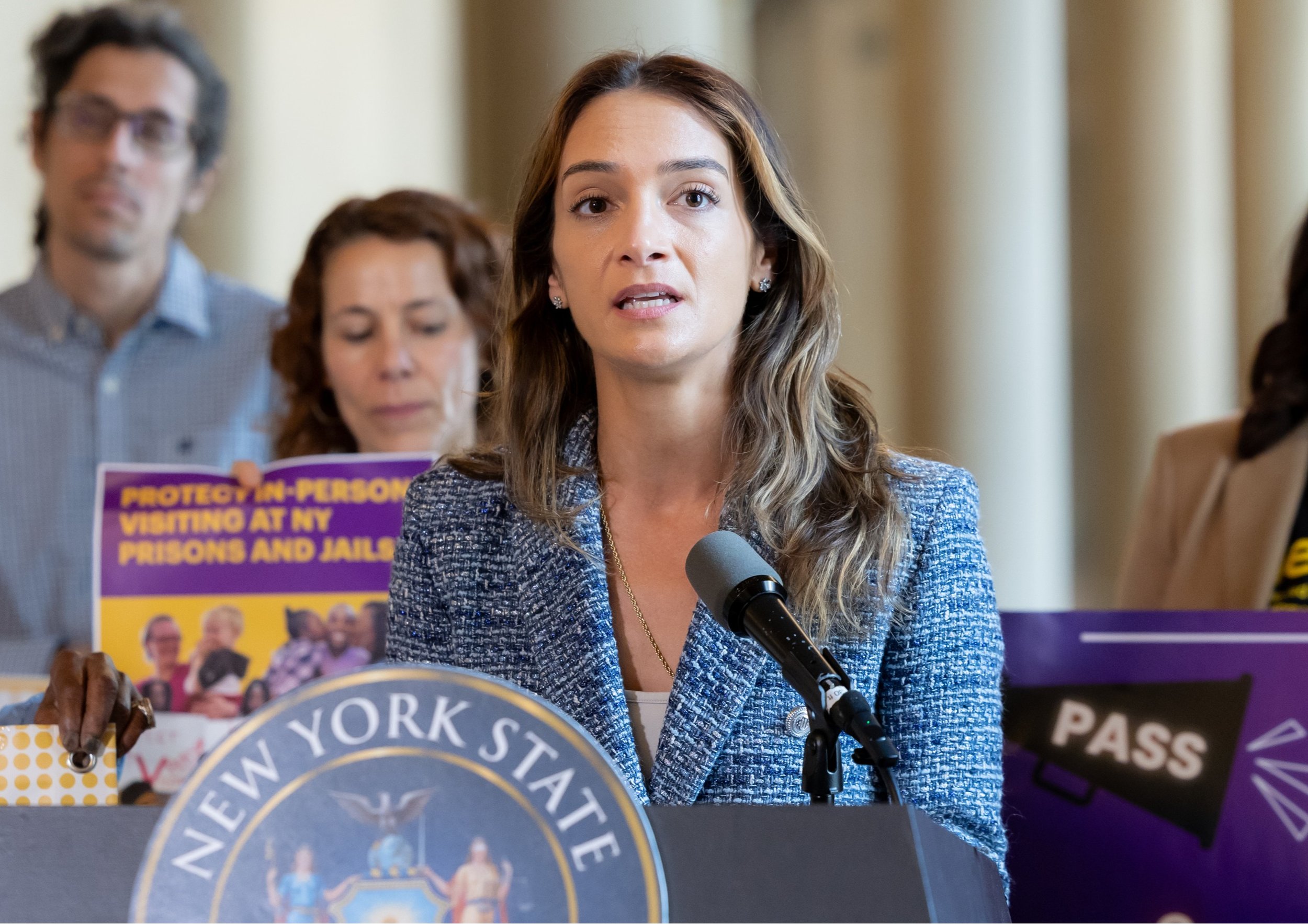
Queens State Senator Julia Salazar said the Prison Reform Omnibus Bill was a significant accomplishment despite last minute changes. Photo courtesy of NYS Senate Media Services.
Nantwi was also beaten by correctional officers inside the Mid-State Correctional Facility in March 2025, and later died due to his injuries. Nantwi’s attack wasn’t captured on video, but several witnesses reported the details of the attack.
Both men’s deaths ignited a fury of outrage and demand for change and more oversight inside state prisons. The Prison Reform Omnibus Bill attempted to answer some of those demands by requiring security cameras in common areas and requiring DOCCS to report data about complaints quarterly to the legislature and the governor.
Advocates and elected officials, including the sponsor of the bill – Queens and Brooklyn State Senator Julia Salazar – said legislation like the Prison Reform Omnibus Bill is needed to ensure the safety of incarcerated people after a tumultuous year in the state’s prisons.
Salazar said that the final version of the bill was not everything she wanted, but maintained that the final version was a significant step forward.
“Although the final legislative package does not include everything we sought, it is still a serious step toward making our State prisons less violent,” Salazar said in a statement when the bill was signed into law. “The amended Prison Reform Omnibus Bill is not the end of our struggle. I look forward to ensuring this law is properly implemented and to building on our fight for reform. Our campaign includes parole justice, sentencing reform, expanded pathways home, and treatment in place of incarceration.”
The governor and Salazar received praise from other groups for the bill’s signing. The Katal Center for Equity, Health, and Justice, thanked the Governor for signing the bill, and said that final law still builds on previous reforms despite the amendments.
The Correctional Association of New York, which was given expanded authority to conduct their own independent investigations into state prisons, also thanked Hochul for signing the bill.
But the Jails Justice Network was not the only group to voice their disappointment at the amended state the Prison Reform Omnibus Bill was passed into law. At the presser on Dec 22, members of the Alternative to Economic and Housing Displacement Inc., the HALT Solitary Campaign, and the Bully Proof, We Bully, She Bully group said the reform package fell far short of promises and that systemic pathways for abuse remain open.
The Legal Aid Society also called the final version of the legislative package “watered-down,” on Friday, Dec. 19, and also condemned the governor and legislature for not working to pass more prison oversight and reform packages this year.
“As we stated when the Legislature passed this package earlier this year, Albany failed to meet the moment by refusing to enact the decarceration measures necessary to meaningfully reduce the prison population —including Fair and Timely Parole, Elder Parole, the Earned Time Act, and the Second Look Act,” the Legal Aid Society said in a statement. “In the wake of the brutal killings of Robert Brooks and Messiah Nantwi, and amid the ongoing suffering endured by so many incarcerated New Yorkers forced to survive in dangerous and degrading conditions, that failure is both glaring and inexcusable.”