Queens Housing Court’s virtual intake spurs delays and confusion, attys claim
/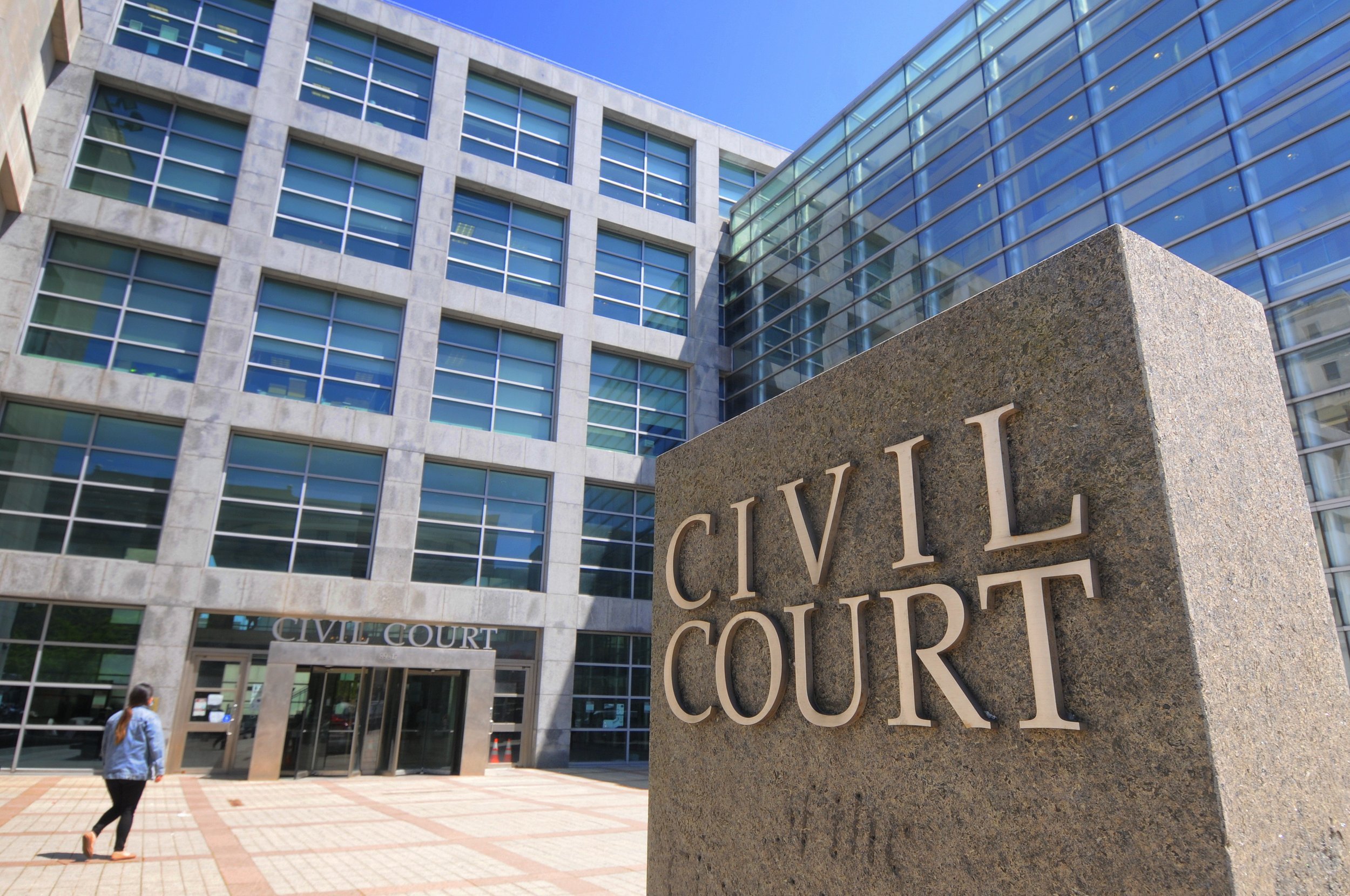
Legal services providers say a change to Queens Housing Court’s intake system brought new problems for attorneys and clients alike. Eagle file photo by Walter Karling
By Noah Powelson
Longer wait times, lost clients searching for their lawyers and less time to prepare for eviction hearings – these are all issues legal services providers say Queens tenants face because of a recent change to the intake process in Queens Housing Court.
Last July, top officials at Queens Housing Court made the intake process, during which tenants are connected with a legal service provider under the Right to Counsel program, entirely virtual. Under the new system, which was once done entirely in-person, tenants give their information to the city’s Office of Civil Justice, which then connects them with a legal aid provider.
The change was seemingly benign and in line with the court system’s broader efforts to modernize their processes. Court officials say the change was implemented primarily to offer litigants who work or have childcare obligations more options to attend their court dates, as well as cut back on overcrowding in the courthouse. But attorneys say the tweak came with inherent systemic flaws that leave tenants lost and attorneys scrambling to prepare for their cases.
Before the move to virtual intake, clients were able to meet in person with a legal aid representative, who could walk them through the steps of the legal process and their case. They would meet their own attorney about a week after intake, giving them a little under a month to familiarize themselves with the case before their next court appearance.
But under the current virtual intake process, attorneys say they haven’t been able to properly discuss cases with their clients until a week or even days before their next court date.
Attorneys at the nonprofit New York Legal Assistance Group said they receive shorter notice when a new client is assigned to them under the virtual system. They often have to waste valuable time trying to contact their clients for basic information they previously received right away under the old system, the attorneys claim.
“It is the norm now for us to get cases three days before the next appearance,” Adina Weisberg, a senior supervising attorney with the NYLAG’s Tenants' Rights Unit, told the Eagle. “It's also causing a lot of anxiety among the tenants. Tenants are coming to court not ever having spoken to an attorney.”
Additionally, new errors appeared that didn’t exist before. Some clients get assigned to two different providers for the same case, some are referred to providers even if they don’t qualify for the RTC program, and others appear in court without speaking to an attorney beforehand, according to the providers.
Dana Christensen, another senior supervising attorney with the NYLAG’s Tenants' Rights Unit, said that all in all, the virtual intake change has created more steps and more work, all while giving legal aid providers less time to prepare.
“Right to Counsel [is based on] the idea that everyone deserves the right to representation,” Christensen said. “And if you're not allowing your attorney to meaningfully meet with you and meaningfully prep for these cases, then we're just back to being in an eviction mill. We're back to being bill collectors and not actually helping our clients enforce their rights.”
But being on a short time frame isn’t the only issue.
Johnathan Fox, director of the Tenants’ Rights Unit at NYLAG, told the Eagle he’s seen a noticeable decrease in the number of clients who are not proficient in English since the intake system went virtual. Fox said the extra bureaucratic steps, and even something as simple as requiring them to scan a QR code for intake, creates new barriers and new ways to confuse and frustrate tenants looking for legal help.
Fox also said legal aid providers were not consulted when the change went into place, and providers have had to put in extra work to fill in the system’s gaps.
“It upended everything,” Fox told the Eagle. “We have to chase [clients] down and naturally people slip through the cracks.”
These issues were brought forward during a City Council hearing held by the Committee of Oversight and Investigations last month. A coalition of legal services providers – which include NYLAG, the Legal Aid Society, Queens Defenders and many others – submitted written testimony at the meeting calling for lawmakers or the courts to collaborate with providers when making future changes.
"At the three-month mark, it is evident that virtual intake in Queens has been highly problematic,” the legal services providers’ testimony read. “Every day in Housing Court unrepresented tenants roam the halls unclear which legal services provider they were referred to and multiple legal services providers are sometimes assigned the same tenant."
“It is essential that [the Office of Court Administration], OCJ, and the providers have open communication so any changes in implementation plans are planned judiciously and solicit input from all stakeholders,” the testimony added.
When the issue came up during the Council hearing, Councilmember Gale Brewer, who chairs the Committee of Oversight and Investigations, appeared frustrated that the alleged problems had not been addressed.
“That’s a fixable thing for God’s sake,” Brewer said.
In response to the claims, the Office of Court Administration said they are working with stakeholders to address issues with virtual intake.
OCA also said representatives for OCJ are stationed at the courthouse to answer litigants’ questions in response to reported difficulties the new intake system has caused.
“We have taken steps to address challenges with legal service providers connecting with their clients and we constantly evaluate the results and adapt the process with the goal of improving it for litigants in housing court and their counsel,” Al Baker, a spokesperson for OCA, told the Eagle in a statement. “We are also exploring with OCJ efficient ways to provide interpreters for litigants who need them and having judges refer litigants to legal services providers at or soon after the first court appearance.”
Some attorneys who spoke to the Eagle called for a return to the old in-person system, while others said virtual could have use, but changes need to be made.
“If they're insistent on doing virtual, I think at the very least we need longer adjournments between the first time they appear virtually and the second time [they appear in person],” Christensen said. “There needs to be a six-week gap because there's just not enough time.”