Demand for parole reform continues ahead of new year
/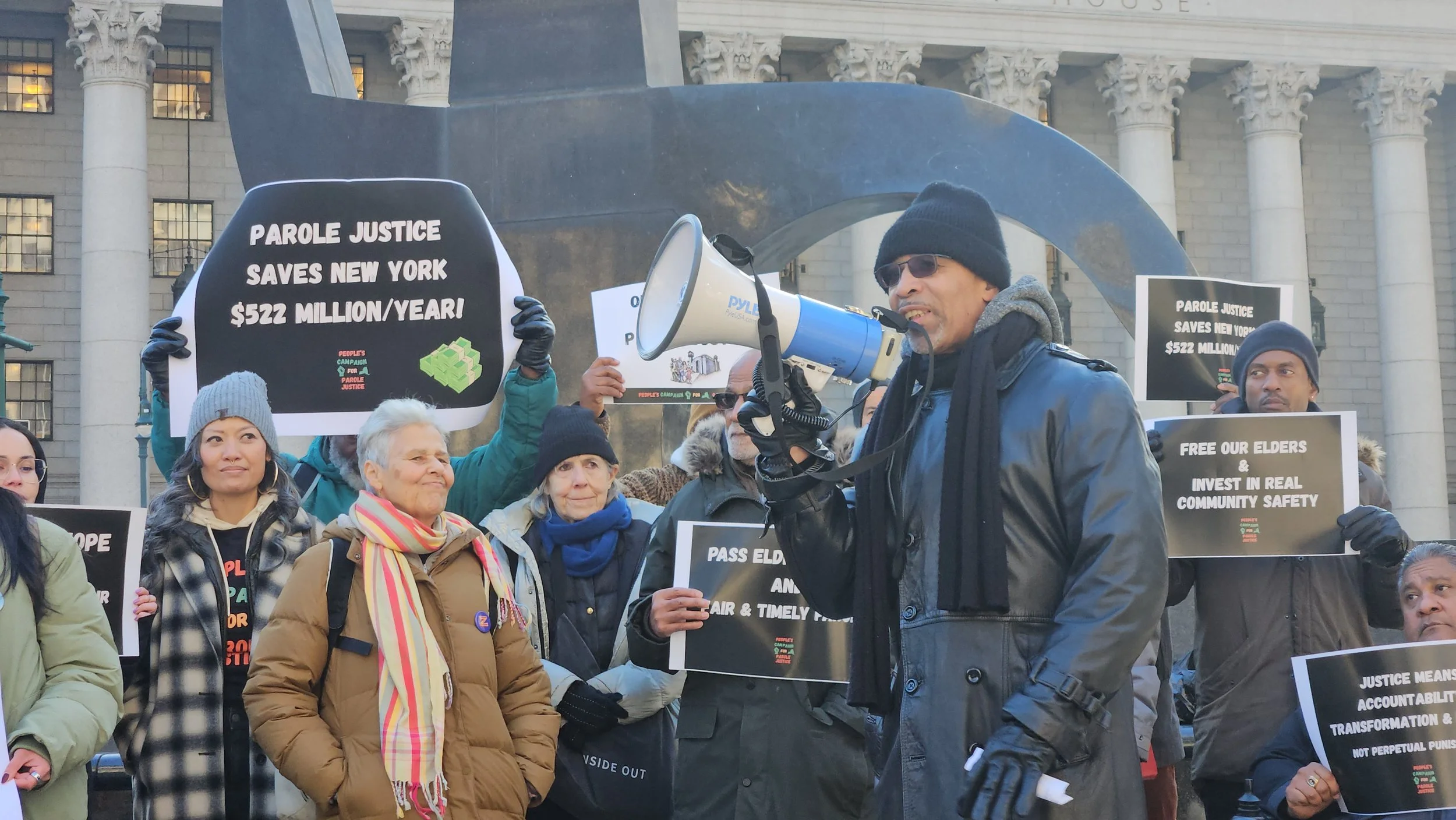
Stanley Bellamy, New York City organizer for the group Release Aging People from Prison, speaks about his incarceration and called for lawmakers to enact two parole reform bills during a rally on Monday, Dec. 1, 2025. Eagle photo by Noah Powelson
By Noah Powelson
With a little over a month until lawmakers return to Albany, lawmakers and advocates reignited a multi-year long effort to reform the parole process for elderly incarcerated individuals.
Elected officials, prison reform advocates and formerly incarcerated New Yorkers rallied at Foley Square outside federal and state courthouses on Monday, calling on the governor and lawmakers to pass two bills into law that would give elderly prisoners new pathways to parole. The rally in Foley Square was just one of seven taking place across the state on Monday, with rallies being held in Hudson Valley, Long Island, outside Sing Sing prison and others.
Rallygoers called for the passage of the Fair and Timely Parole bill and the Elder Parole bill, which have seen slow building momentum since first being introduced in 2017.
The Fair and Timely Parole bill would alter parole reviews and require the board to consider who the incarcerated person has become while behind bars instead of focusing on the crime they were convicted of.
The Elder Parole bill would allow for people aged 55 and older and who have already served 15 or more years of their sentence to receive an evaluation from the state parole board. The evaluation, which would again focus less on the crime they committed more on who the person was in the current day, would look at the person’s potential for parole release.
Advocates say the two bills will provide new pathways to parole for those who’ve taken clear actions toward reform. They also say that they will save the state millions of dollars.
Among those who rallied on Monday was Stanley Bellamy, a Queens man who was released from prison after being granted clemency by Governor Kathy Hochul and being granted release by the parole board. Bellamy, who is the New York City regional community organizer for the group Release Aging People from Prison, was incarcerated at the age of 23 and served time behind bars for over 37 years before he was granted parole.
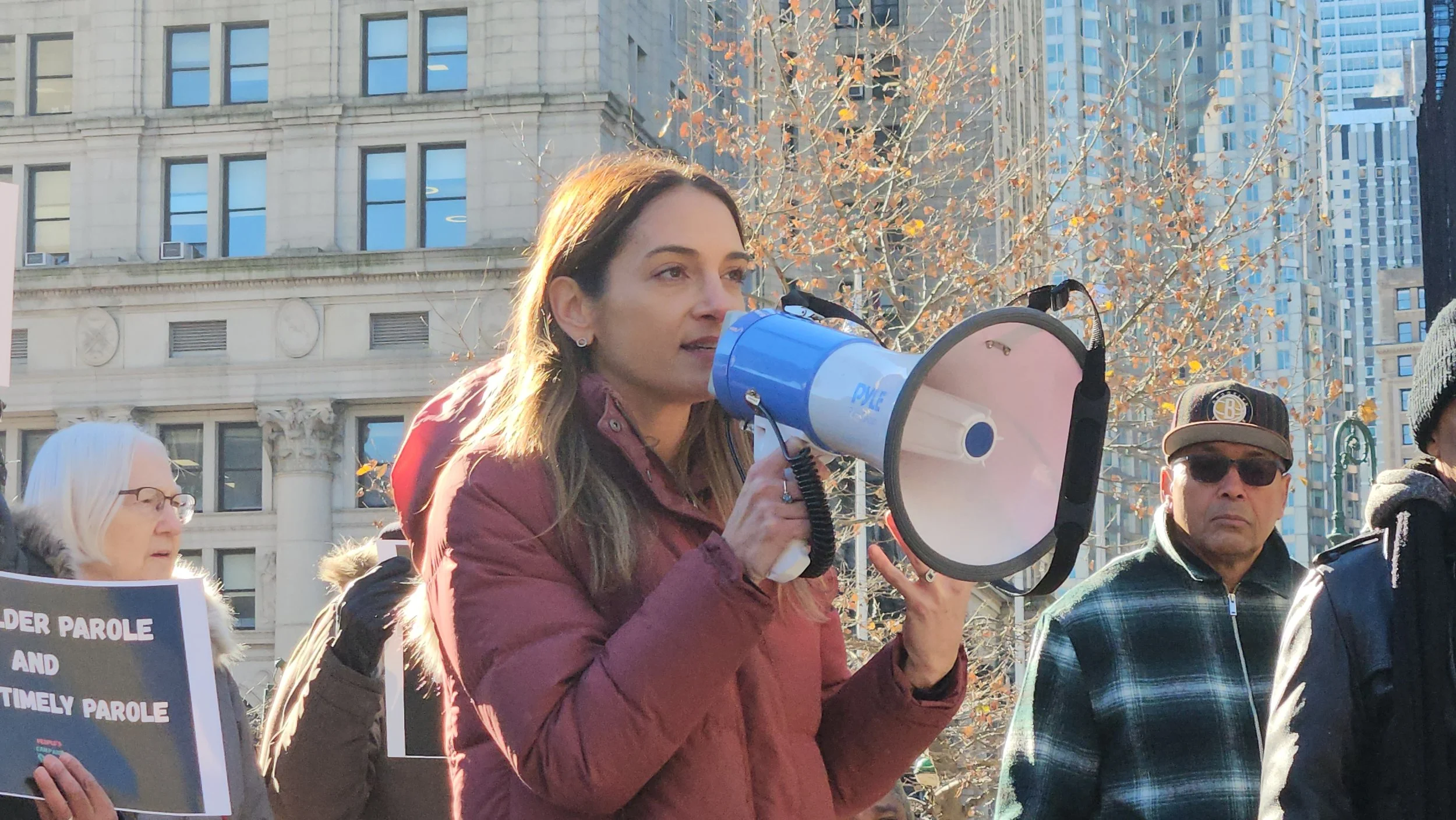
Queens State Senator Julia Salazar is the sponsor of the Fair and Timely Parole bill and said it was “unacceptable” it hadn’t been passed during a rally on Monday, Dec. 1, 2025. Eagle photo by Noah Powelson
Bellamy said that while he was fortunate to receive parole when he did – right before he turned 65 – there are countless others serving time in prisons who went through the same experience he did but are not afforded the same benefit he received.
“There are many people still sitting in prison that came in their late teens and early twenties, and now they are in their sixties and seventies,” Bellamy said on Monday. “These are the individuals we are fighting for to give them a chance, the same opportunity that many of us received, we want them to have that chance. [The Elder Parole bill] will give them that chance.”
A spokesperson for the governor’s office said Hochul will review all legislation that passes both houses of the state legislature.
Both bills were first introduced in 2017, and garnered the support of other legal organizations, including the New York City Bar Association, the National Association for the Advancement of Colored People, Brooklyn Defender Services as well as a number of Queens lawmakers.
Queens and Brooklyn State Senator Julia Salazar, who sponsored the State version of the Fair and Timely Parole bill, said these bills would make communities safer and called her peers in Albany unwillingness to pass them an “unacceptable norm.”
“It is unacceptable that we must continue the fight for parole justice after all these years,” Salazar said on Monday. “Even when we know that legislation is good policy, that it would improve the lives of New Yorkers, that for some reason it is acceptable for us to fail to act. That is a norm all of us must reject.”
Queens Assemblymember Claire Valdez also called on Hochul and other legislators to throw their support behind the bills in the coming legislative session.
“We can’t wait for justice to be done,” Valdez said. “For too long so many of our neighbors, so many of my constituents, have languished in prison…People who pose no risk to their communities and in fact are dedicated to making their community safer by doing violence interruption programs, by doing education, by helping youth that are at risk.
“New York State must lead in this moment a just vision of what community safety really is,” Valdez added.
New York State Senator Brian Kavanaugh and Queens State Assemblymember Jessica Gonzalez-Rojas also joined Salazar and Valdez on Monday to show their support for the two bills.
A fiscal analysis report released by Columbia University’s Center for Justice estimated enacting both the Elder Parole and Fair & Timely Parole bills would save the state roughly $522 million every year by reducing the state’s prison population.
While New York State’s prison population has declined overall over the past decade, the incarceration rate for older persons has, for the most part, remained the same.
In a 2022 report released by the state comptroller’s office, the state’s prison population declined from roughly 62,600 to 31,300 from March 2008 to March 2021. Older populations – categorized as age 55 or older – saw steady growth in state prisons throughout most of this time but recently fell back to previous numbers.
In 2008, there were roughly 7,500 people aged 55 or older incarcerated in state prisons. That number grew as high as roughly 10,300 in 2017, but fell back down to 7,600 in 2021.
But despite fewer older persons being incarcerated in recent years, older inmates make up more of the overall prison population.
While in 2008, incarcerated persons aged 55 or older made up 12 percent of the state’s prison population, the most recent data from the comptroller’s office show they make up 24.3 percent of the prison population as of 2021.
The overall average age of incarcerated persons has also gone from 36 to 40 in the same time span.