My neighbor, the mayor: What it's like to live on the same Astoria block as the mayor-elect
/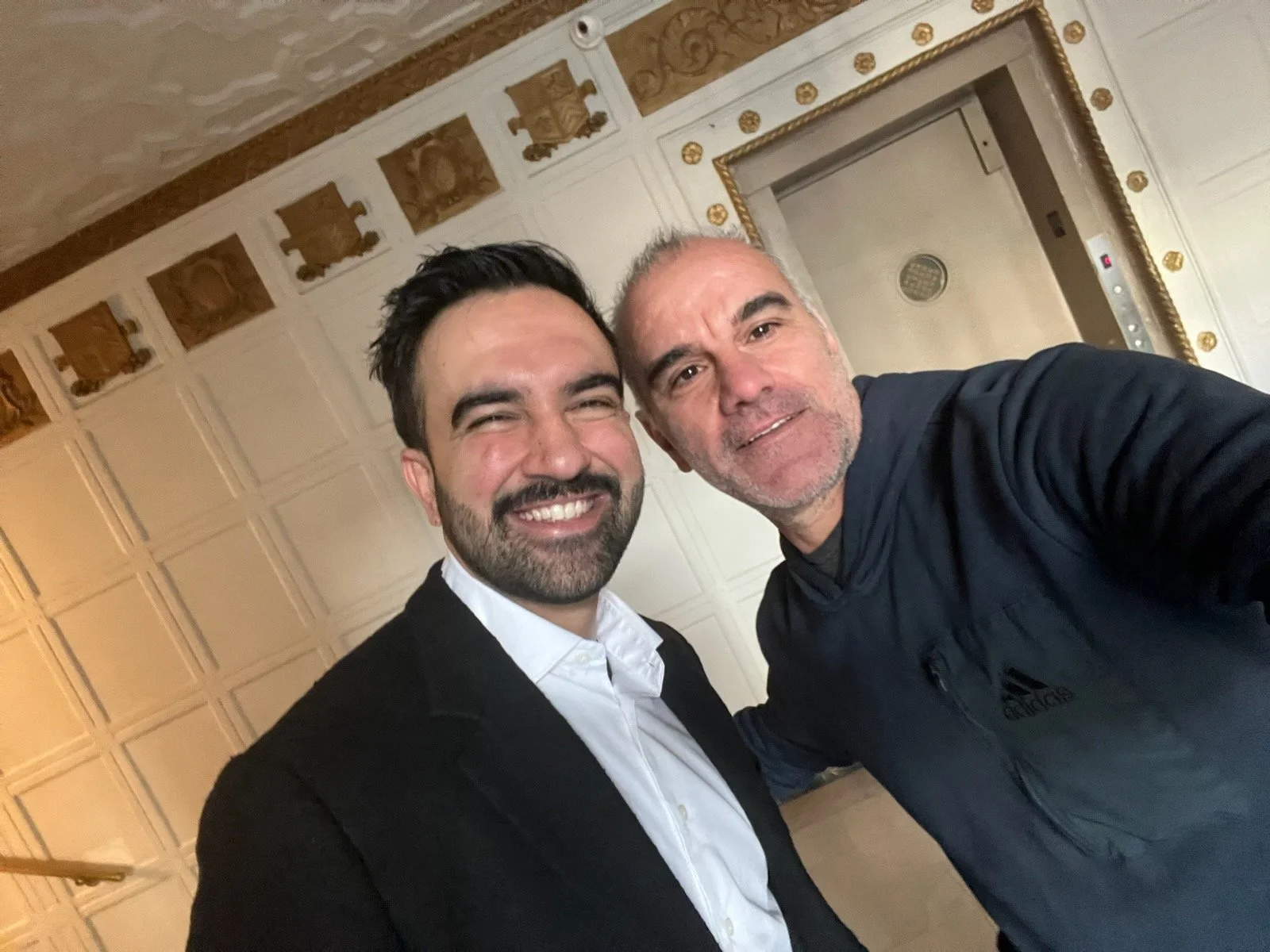
Antonis Armeftis (right) with his neighbor, Mayor-elect Zohran Mamdani. Photo via Armeftis
By Jacob Kaye
Antonis Armeftis was in the basement of his Astoria apartment building doing laundry when he saw a familiar face.
It was the man who lived below him, Zohran Mamdani, who, at that point, was only days away from winning the Democratic mayoral primary. Armeftis had only recently learned that the man was not just another person living in his building, but a budding political star. He didn’t pass up the opportunity to introduce himself and have a friendly chat.
Armeftis didn’t run into Mamdani again until Thursday, when, in the lobby of their apartment building, he asked if they could take a selfie together.
After all, it’s not every day your neighbor is elected mayor of New York City.
For some Queens residents, the assemblymember’s stunning victory on Tuesday, when he defeated former Governor Andrew Cuomo by nearly nine percentage points to become mayor, is a point of local pride. Mamdani is the first Queens resident to be elected mayor in the city’s history.
But for the couple hundred people who live next door, or across the street, or down the block from him, the victory hits even closer to home. In two months, the most powerful person in New York City will know exactly what life is like for the small group of Queens residents who live alongside him every day. As he begins leading a city of 8.4 million people with a $116 billion budget in January, the mayor will know how it feels to walk down their street, catch the train at their subway stop, or eat at their local restaurants.
“I think a big reason why he won is because he knows this place, he knows this city from the ground up,” said Jaime V., who voted for his neighbor on Tuesday. “I’m a regular New Yorker and he lives across the street from me. He’s just a regular guy that has a really important message about affordability.”
Perhaps unsurprisingly, Mamdani received overwhelming support on election day from his neighbors, whom he currently represents in the State Assembly. Of the approximately 500 people in his election district who cast ballots in the mayor’s race, 360 voted for him, according to Board of Elections data.
Among them was Diana Moreno, a member of the Democratic Socialists of America who is running to replace Mamdani in the State Assembly when he vacates the seat in January. Moreno, who lives down the street from Mamdani, said the mayor-elect was one of the first DSA members to make her feel welcome in the organization.
“It’s surreal to know that a friend and fellow organizer who used to hit me up for cash when he ran out of cash to go to the laundromat is now our future mayor,” Moreno said.
Of the half dozen Astoria residents the Eagle spoke with this week, all said they voted for Mamdani – but not just because he’s a local guy.
Kevin D., who was walking his two dogs in front of Mamdani’s building on Thursday, said he thought less about his proximity to the candidate than he did about Mamdani’s campaign promises when voting for him. Like many of the more than 1 million New Yorkers who cast ballots for Mamdani, the Astoria resident said the democratic socialist’s relentless messaging about making the city more affordable resonated with him.
“We need more housing on every front,” he said. “Astoria hasn’t added a lot of units in the past couple of years, so hopefully he can find something that works.”
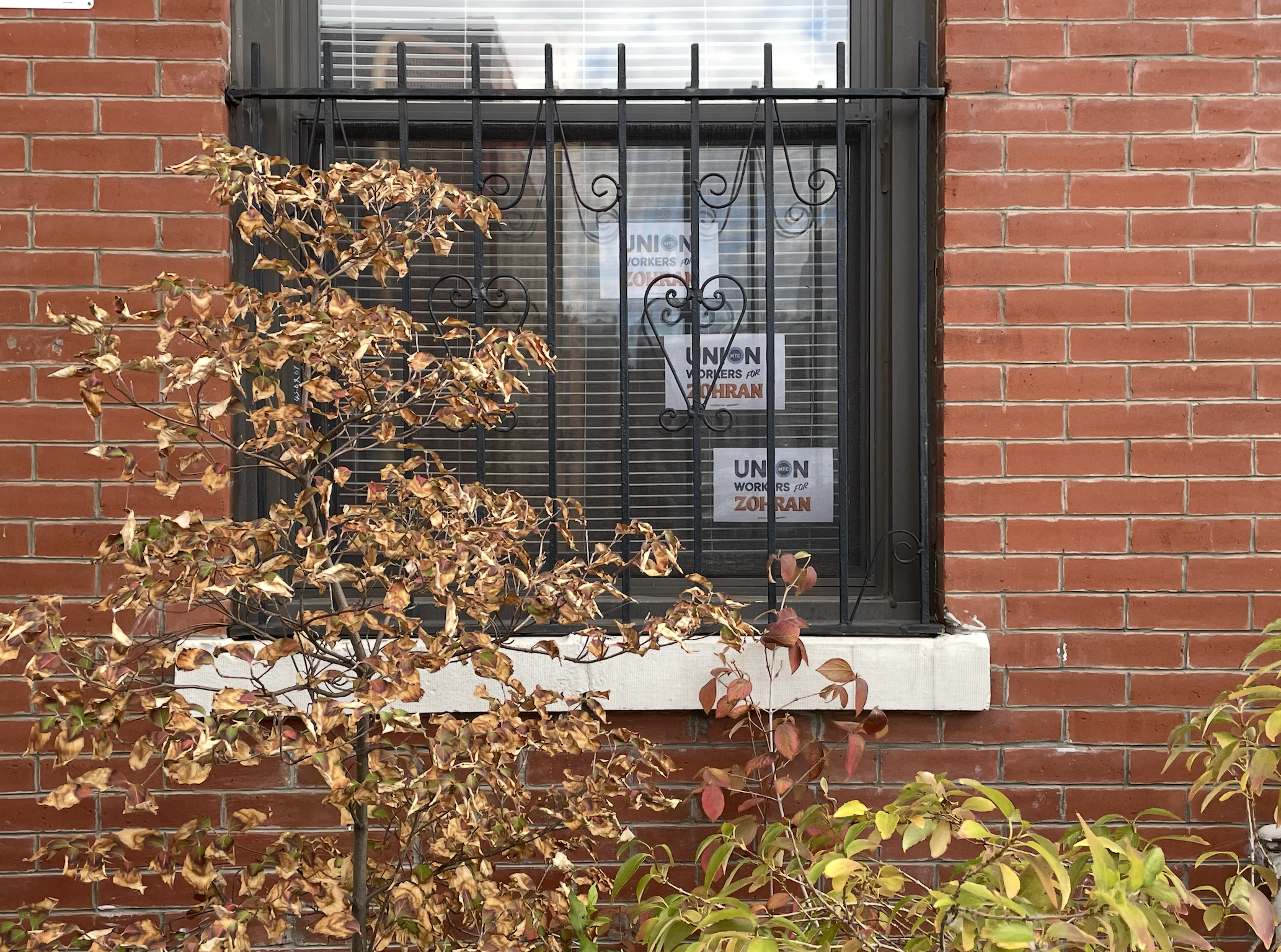
Campaign signs in support of Zohran Mamdani hang in a window down the street from Mamdani’s home. Eagle photo by Jacob Kaye
Housing attorney Valerie S., who voted for Mamdani, said she didn’t feel that her strongest connection to Mamdani was that they lived on the same block – she cared more about the fact that they both live in rent-stabilized apartments.
One of Mamdani’s core campaign promises was to freeze the rent for the more than two million New Yorkers who live in rent-stabilized units. The commitment drew scrutiny from his opponents, who claimed the move would be both illegal and ruinous for the landlords that own the apartments.
At one point during the campaign, Cuomo, who also once lived in a rent-stabilized unit, proposed passing what he dubbed “Zohran’s Law,” which would have required that tenants spend 30 percent of their income on rent in order to move into a rent-stabilized apartment.
“It felt like a throwback to the time that they were trying to overturn the [Housing Stability & Tenant Protection Act], which is the most important housing law that’s protected tenants since 2019,” Valerie said.
“It’s nice to have a neighbor like [Mamdani] because housing policy is really important to me,” she added.
Though it intersects with one of Astoria’s most commercial streets, Mamdani’s block is almost entirely residential. It’s mostly populated by two- to three-story homes that have been split into multiple apartment units. There are also a few four- to six-story apartment complexes scattered throughout, including one where Mamdani lives. A majority of those who live in the area are renters, according to American Community Survey data.
The lawmaker’s neighbors say little has changed on the block since Mamdani went from a little-known assemblymember to one of the most prominent political figures in the country.
There’s the police car that often idles outside of his building, the black SUV that comes and leaves with him, and occasionally the pesky journalist nosing around and asking questions. But everything else is the same.
“My first reaction [after he won the primary] was that I hope this street doesn’t become the center of crazy activity and protests,” said Jaime V., who has lived in the neighborhood for 15 years. “But it’s been fine. There are cop cars all the time parked here. They’re taking up a spot, but it’s whatever.”
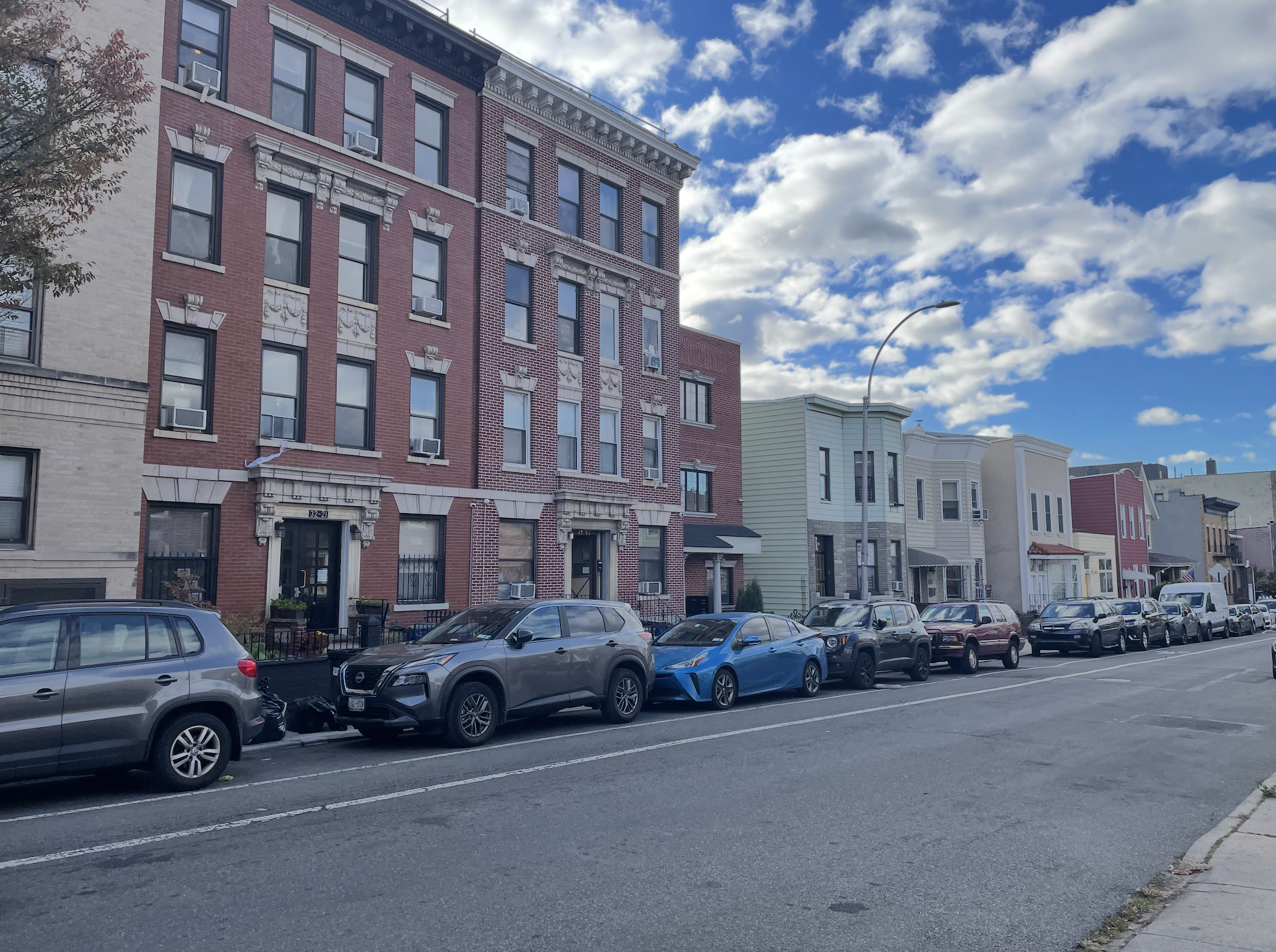
Mayor-elect Zohran Mamdani’s Astoria street. Eagle photo by Jacob Kaye
It’s unclear if the level of calm that currently exists on the block will remain in the future. Whether or not Mamdani moves into Gracie Mansion – the mayor’s residence on the Upper East Side in Manhattan – remains an open question.
On Wednesday, Mamdani told reporters that he would have to first discuss the decision with his wife before making any move.
“I did get a text from my super [after the election],” Mamdani said. “But I have been told time and time again to not measure the drapes, and here I am, the day after, being asked to use a ruler. I will tell you that my focus right now is on the transition.”
Not moving into the mayor’s home would buck tradition and likely create a number of security concerns at his Astoria apartment building.
But for now, Mamdani’s ascension to the most powerful office in the city has yet to phase the sleepy Queens street.
As the Eagle was talking to local residents on Thursday, Mamdani emerged from his building. An excited woman outside asked to take a picture, a request the mayor-elect obliged. He then hopped into the backseat of an SUV and was driven away in seconds, joining his neighbors on their daily commute.