A Queens mayor – one way or another
/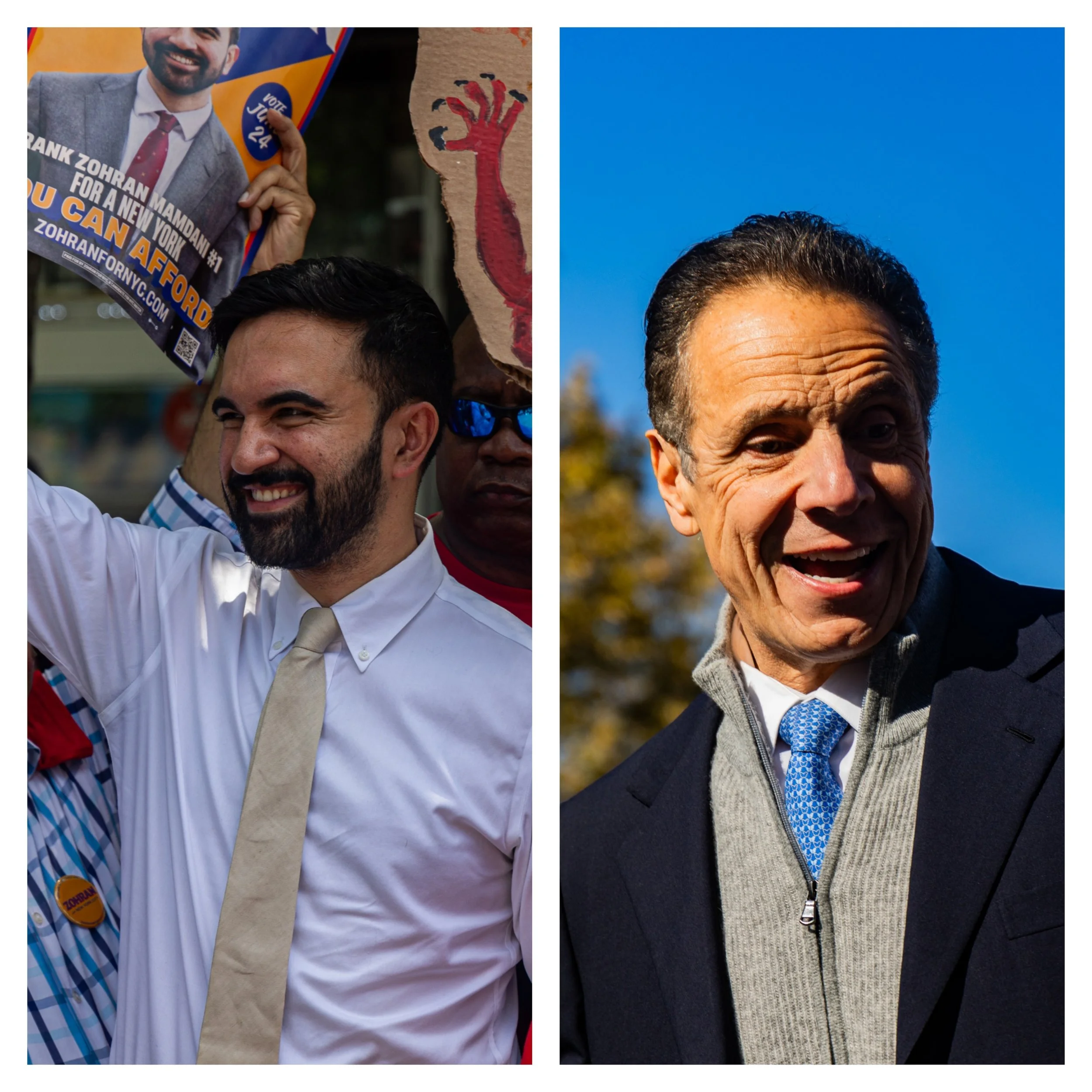
If either Assemblymember Zohran Mamdani or former Governor Andrew Cuomo is elected mayor on Tuesday, it will mean a lot for the borough of Queens. Eagle file photos by Ryan Schwach
By Ryan Schwach
Since Queens became a part of New York City in 1898, none of the 23 men who served as the city’s mayor were born in Queens or represented the borough in political office.
On Election Day, that is likely to change.
While many mayors have connections to Queens – current Mayor Eric Adams and Mayor Abe Beame, who served in the mid-1970s, both lived in Queens – none were born in the borough, like former Governor Andrew Cuomo. And none have ever represented it in office, like Assemblymember Zohran Mamdani.
While Curtis Sliwa, the Republican candidate, isn’t from Queens and hasn’t served in the borough as an elected official, he’s consistently polling third in the race, making it likely that the next mayor will have an unprecedented connection to the World’s Borough.
Most polling in the general election has the 34-year-old Mamdani with a strong lead over Cuomo, though some, including one released Monday afternoon, have the Queens-born independent candidate pulling within just a few points of the assemblymember and Democratic nominee.
But regardless of if Mamdani prevails or Cuomo pulls off a comeback – Queens will be able to claim the mayor of New York City in a way it never has.
Adams arguably has the closest connections to Queens than any mayor before him, having spent much of childhood in Southeast Queens before moving to Brooklyn and representing Queens’ neighbor in the State Senate and as borough president.
Beame has some close ties too. He summered in Queens’ beachside Rockaway peninsula and taught at Richmond Hill High School.
Former mayors’ fingerprints are all over the World’s Borough.
Robert Van Wyck has a highway, Ed Koch has a bridge, David Dinkins has a plaza and Fiorello LaGuardia has an entire airport. Mayor Jimmy Walker, the city’s notorious mayor of the jazz era, once said, “Queens is a fast growing borough, and I predict it will some day be the greatest.”
While mayors throughout history have left their mark on Queens, this election may be the first where Queens leaves its mark on the mayor’s office.
Cuomo was born in Queens in 1957, raised in Holliswood, and attended school in Eastern Queens before going on to serve as a cabinet secretary, state attorney general and the governor.
“It is a pleasure to be home,” Cuomo said from a Queens rally last week. “I am a proud son of Queens, and my father was a proud son of Queens.”
Mamdani moved to Queens in his 20s, and quickly established himself as a political organizer in the borough’s progressive enclave of Astoria as a member of the Democratic Socialists of America.
In 2021, Mamdani unseated Democratic incumbent Aravella Simotas to represent Astoria in the Assembly.
In the last year, Mamdani has skyrocketed from a relatively unknown local elected to a global figure, and the poster child for growing leftist politics in the United States.
“It's been quite the journey,” Mamdani said in a conversation with the Eagle and QNS in July.
Mamdani won the borough in the primary, eight points ahead of Cuomo.
Even with a large field of candidates in the primary, including Council Speaker Adrienne Adams, who represents Southeast Queens, Cuomo and Mamdani essentially split the borough in two along expected Democratic political lines.
Mamdani won the progressive neighborhoods of Astoria and Long Island City, and stretched his coalition through Asian and South Asian neighborhoods in Flushing and Central Queens along Hillside Avenue.
Cuomo won by large margins in the predominantly Black neighborhoods in Southeast Queens, and in the borough's prominent Jewish community.
Both candidates will need to carry those same groups on Tuesday if they hope to be victorious.
During the 10-day early voting period preceding the election, 166,519 Queens residents cast their vote, accounting for 22 percent of the record-shattering citywide early voting turnout.
Citywide, four times more New Yorkers voted early this year than in the last mayoral race in 2021.
Of the 2025 early voters in Queens, about 70 percent of them were registered Democrats, 14 percent were independent and 13 percent were Republican.
Queens’ highest turnout districts during early voting mostly came from Mamdani’s base in Western Queens.
His own 36th Assembly District, and the overlapping 22nd Council District, which is represented by DSA Councilmember Tiffany Cabán, turned out more than any other Assembly or Council district in the borough, according to Board of Elections’ data.
Mamdani’s Assembly neighbor, Claire Valdez’s district, was second among ADs in the borough.
Cuomo-friendly districts in Central and Southeast Queens represented by Assemblymembers Ed Braunstein and Stacey Pheffer Amato had the third and fourth highest turnouts, and Assemblymember Andrew Hevesi’s Forest Hills and Middle Village-centered district fell at number five. Mamdani won that district by a narrow three point margin in the primary.
Outside of Western Queens, it was Queens’ most conservative Council districts with the highest turnout.
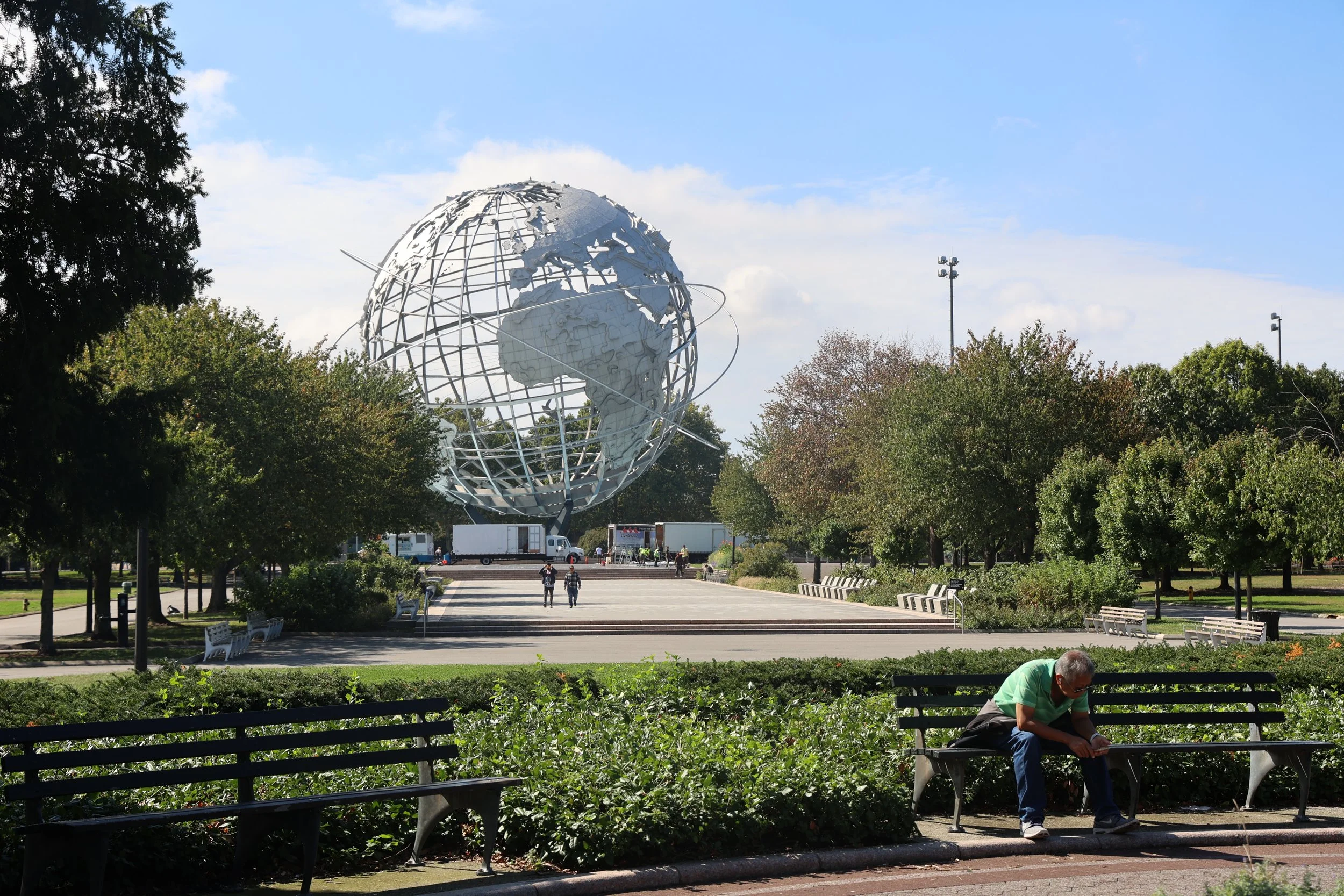
Queens voted in record numbers during the early voting period in Tuesday’s general election. Eagle file photo by Ryan Schwach
Republican Councilmember Vickie Paladino’s northern Queens district was second in turnout, and Councilmembers Bob Holden and Joann Ariola’s districts also rounded out the top five, along with Cabán and Councilmember Julie Won’s districts.
Paladino and Holden’s districts went for Cuomo in the primary, but Ariola’s went to Mamdani by just a single percentage point.
All three of those councilmembers are members of the conservative Common Sense Caucus, which has endorsed Sliwa.
Whoever prevails on Tuesday, whether it be Mamdani or Cuomo, will be in a position to represent Queens.
“I hope it's good for Queens, whether it's Cuomo or Mamdani,” said Queens native political strategist Brian Browne. “I hope they're looking out for Queens, which has a lot of issues, and whoever it is, brings their Queens experience to City Hall.”
While saying he wasn’t tipping any scales, Browne said it would be particularly notable for the first “World’s Borough mayor” to be someone like Mamdani, who was born in Africa and would also be the city’s first Muslim mayor.
“It truly, kind of represents the global New York City,” he said.
In recent years, Queens has enjoyed an outsized stake in New York City, state and even federal political power.
In the City Council, the speaker, minority leader and majority and minority whips all come from Queens.
At the state level, Queens officials hold the roles of deputy majority leader, president pro tempore of the Senate and majority whip and deputy whip.
Local Democratic Party boss Gregory Meeks is one of the more tenured members of the Congress, and Representative Alexandria Ocasio-Cortez remains one of the more influential elected officials nationwide.
While Senate Minority Leader Chuck Schumer is a product of Brooklyn, his old congressional district included parts of Queens in the 1990s.
Queens is also in the White House. While President Donald Trump made a career in real estate in Manhattan and has lived in Florida for many years, he’s still just a boy from Jamaica Estates.
“It properly recognizes Queens' place at the center of the universe,” said another Queens raised political strategist, Evan Stavisky. “Some people thought the sun revolved around the Earth, until Copernicus said the Earth revolves around the Sun, and finally, hundreds of years later, we get to the real truth that everything revolves around Queens.”