As concert season continues, Forest Hills residents still split over stadium
/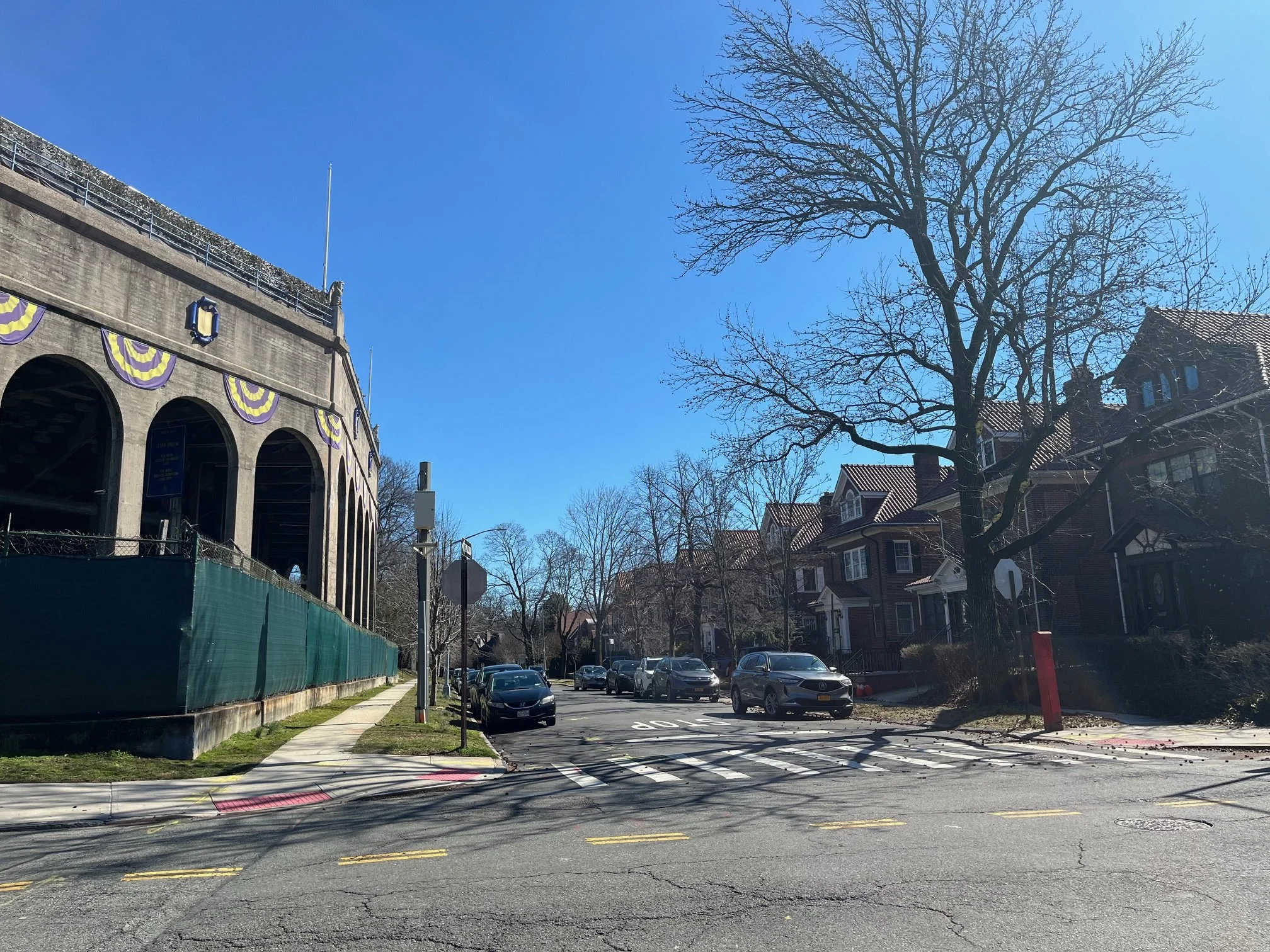
Locals in Queens’ Forest Hills neighborhood are still split over Forest Hills Stadium, which is currently the subject of two ongoing lawsuits. Eagle file photo by Ryan Schwach
By Ryan Schwach
There appears to be no solution in sight in the fight over Forest Hills Stadium.
Several months after a judge ordered the operators of Forest Hills Stadium to do a better job monitoring the sound coming out of the music venue, some residents nearby say the disturbances continue. But as the concert season moves through the summer, others in the neighborhood say the stadium has become an even more vital member of the Central Queens community.
Locals around Forest Hills Stadium, a one-time tennis venue turned Queens entertainment destination, remain torn over the growing hotspot. Forest Hills Stadium, while built in 1923, has become a source of local controversy in the last decade, as the stadium’s owners, West Side Tennis Club and concert promoter Tiebreaker, brought concerts back to the venue and have steadily increased the number of shows from just five concerts in 2014 to 31 in 2023.
Since then, two different contingents of residents have brought lawsuits against the stadium, claiming its concerts get so loud that the windows on their homes shake. They also claimed that the large crowds that descend on the venue run amok and cause street closures that limit residents’ access to their own homes.
Both lawsuits remain ongoing, but in April a Queens judge partially ruled in favor of an injunction in one of the cases. The judge ordered the parties to find an independent monitor to keep track of the sound emanating from the stadium, to be paid for by the plaintiffs – the order was later vacated after the residents who brought the case declined to pay for the monitor. The judge also ordered the stadium to set up barricades to discourage concertgoers from going into most residential areas in the neighborhood.
Now well into this year’s concert season, a new online petition began to circulate in support of the venue, and has thus far garnered over 21,000 signatures. The venue has also pulled support from the powerful Queens Chamber of Commerce, whose president recently called the stadium “a good neighbor, who delivers for our community every day.”
“A tiny fraction of individuals – no matter how unreasonable – can accomplish big things if left unchecked,” Queens Chamber of Commerce President Thomas Grech said in an op-ed published by QNS. “With unrealistic lawsuits and willful disinformation being wielded against Forest Hills Stadium, we must all stand up and show our unity and resolve.”
“Over the course of the season, the venue creates thousands of jobs for local residents, and as president of the Queens Chamber of Commerce, I know the catalyzing impact the venue has had on local small businesses,” he added. “Events at Forest Hills Stadium draw attendees from all over who dine, drink and shop in our community.”
However, some residents told the Eagle that the court orders handed down earlier this year have yet to lead to any true relief.
“In my opinion, it's actually worse,” said Russell Gundlach, a resident of Forest Hills Gardens, a private neighborhood whose land the stadium resides on and the group behind one of the two lawsuits.
The judge in the case brought by a group dubbed “Concerned Citizens of Forest Hills” shut down an injunction about a week before the judge in the other case, brought by Forest Hills Gardens Corporation, approved their request for an injunction.
Gundlach says that, like years before, concert-goers have continued to commune outside of his building, using it as a “picnic ground.”
“It's become a place where it's like being in the middle of a concert venue,” he said. “All of that noise is outside of my apartment all night long, where, if they were just going and coming to the events, it wouldn't be as disruptive.”
Gundlach said he has had to manage his own life around the concert season. A few years ago, while working as a caregiver to his aging parents, he had difficulty driving to and from his Forest Hills home to his parents' on the border of Woodside and Maspeth.
“I was thinking about bringing [my dad] to my apartment and having him stay here with me, because we have handicapped access, we have elevators and everything,” he said. “But I ended up deciding not to do that because of the disruptions with the concerts and having to take him back and forth to doctor's appointments with a broken hip.”
Jerry Mastriano, another longtime local, feels similarly.
“I've seen people peeing, s–– and vomiting in the neighborhood, in some cases in my building where I live,” he said.
Immediately following the judge’s order in April, Mastriano, who has lived in the area for 25 years, thought he had heard a difference in the concert noise, but now feels like there hasn’t been sufficient change.
“I noticed for the first week or two, it seemed like the volume had been reduced slightly, but then I guess it depends on the performers,” he said. “By the time of the last few concerts in June, they were loud again. It was like the way it always was.”
In the past, the stadium and advocates for it have argued that those residents with complaints shouldn’t be living near a concert venue if they don’t want to deal with the issues associated with it.
However, many apartment owners in FHGC moved into the community during a lull in concerts and events at the stadium.
Both Gundlach and Mastriano moved in around 1998 – there were no concerts between 1997 and 2013.
Now, there are over 30 per year.
“When I bought my apartment, there were no concerts and there were no tennis matches anymore,” said Gundlach. “I did not anticipate that that would change.”
While some locals would absolutely prefer no concerts at all, Mastriano and Gundlach hold a middle ground. They feel there should still be a few concerts, but not nearly as many as there are currently.
“I'd like to see its limitations, like 10 or 15 concerts a year,” Gundlach said. “I'm trying to be reasonable, but they go past that, it's just an impact on the neighborhood.”
But others have argued that the stadium’s impact has been mostly positive.
In the last month, the stadium’s owners have circulated an online petition seeking support for the stadium, which it says is “threatened with a frivolous lawsuit and is at risk of being shut down” – neither lawsuit requested a judge shut down the venue.
The petition, as of press time, had over 21,800 signatures, with numerous comments and testimonies from people expressing their love for the stadium.
“This concert venue is my favorite in [New York City],” said a commentator named Eunice.
Others highlighted its importance to the local community.
“A famous and historic venue of 101 years that is still an operating entity is amazing,” said Brendan English, who claimed to be a resident of Forest Hills for 30 years. “It provides the community with entertainment, cultural and economic benefits that allows me and other citizens to see great shows without traveling too far from home.”
According to the stadium, around 60 percent of signatures came from residents living in the local 11375 ZIP code.
But the lack of consensus over the stadium is not new.
In March, Queens Borough President Donovan Richards stated at a town hall that there was “no easy answer” to the problems.
“I don’t envy anyone who lives outside of a stadium,” Richards said. “I have to figure out a way [to resolve the issue] because the stadium isn’t going anywhere.”
Richards said he wants to “strike a balance,” and wants to get groups together to discuss the complaints, but doesn’t want to be “in a room with people at each other’s throats.”
As the concert season continues, Gundlach says there hasn’t been enough organized discussion on the matter.
“It's a lot of people talking to each other, and sometimes people are informed, sometimes people are uninformed about what's going on,” he said.
Next weekend, the stadium will play host to a pair of concerts headlined by Australian rock group King Gizzard & the Lizard Wizard.
One of the band’s most popular records, “Nonagon Infinity,” is a concept album about a never-ending rock show.
Correction: An earlier version of this story stated that Forest Hills Stadium had been ordered by a judge to monitor sound levels at the stadium. That is incorrect. The judge ordered the parties to find an independent monitor, to be paid for by the plaintiffs, not the stadium. Additionally, a pervious version of the story stated that an injunction had been granted in a case brought by Concerned Citizens of Forest Hills. That is incorrect.